
Last updated September 23, 2026
Free visual inspection and a written scope of work before any mitigation begins - photos, moisture readings, and drying logs go in your claim file
The scope we write is the scope we bill. Anything new gets shown to you, in writing, before we touch it.
The Complete Guide to Damage Restoration in Miami
The average Miami water-damage claim that goes disputed does so not because the damage wasn’t real, but because no one can prove when it started, how wet it got, or when it stopped. Three numbers. A proper drying log captures them on day one, yet most homeowners never see one until their adjuster asks questions they can’t answer. In this guide, we’ll walk through the complete damage restoration process in Miami as a sequence of documented handoffs - and point you to more guides & resources for related topics - from the first moisture reading to the final Certificate of Completion - so you know what paperwork should exist at every phase and why missing any single document can stall your claim for months.
Quick Answer
Damage restoration in Miami is a four-phase process: emergency mitigation (stopping active water or contamination), structural drying (removing moisture to documented standards), remediation or cleaning (addressing mold, smoke, or biohazard), and reconstruction (returning the space to pre-loss condition). Each phase requires specific documentation - moisture maps, daily psychrometric logs, clearance readings, and written scopes - to satisfy both Miami-Dade building codes and insurance claim requirements. In Miami’s 76% average relative humidity, drying targets must be adjusted below national baselines, and unpermitted rebuild work can create title problems at resale.
Table of Contents
- Miami’s Damage Landscape: Two Seasons, Different Rules
- The Four Phases of Restoration (And the Documents Each Needs)
- How Miami’s Humidity Changes Drying Science
- How to Read Your Restoration Documents
- Miami-Dade Permits, Codes, and Title Problems
- The Insurance Handoff: From Invoice to Paid Claim
- Choosing a Restoration Contractor in Miami
- Common Mistakes to Avoid
- When to Call a Professional
- Frequently Asked Questions
- The Bottom Line
Miami’s Damage Landscape: Two Seasons, Different Rules
Miami doesn’t have one damage season. It has two, and they demand completely different initial responses.
June through November: Hurricane and tropical storm season. The threat is wind-driven rain, storm surge, and roof breaches that introduce water while power is out. In this season, the priority sequence is safety assessment, temporary envelope protection (tarping, board-up), water extraction, and then drying - but drying can’t begin until power is restored or generator-supplied dehumidification is deployed. We’ve seen homes in Coral Gables and Pinecrest sit for 72 hours post-storm with active water intrusion because crews prioritized extraction without addressing the open roof. The moisture map taken at arrival becomes critical evidence: it establishes the storm as the proximate cause, not a pre-existing maintenance issue.
December through February: The overlooked season. South Florida’s brief cold snaps cause pipe freeze anomalies in buildings with uninsulated attic runs or northern-exposed plumbing. Unlike storm damage, pipe bursts often release pressurized water for hours before detection. The response priority is isolation (shutting the main), extraction, and immediate documentation of the pipe location and material - because insurers frequently dispute whether the break resulted from “sudden and accidental” discharge or gradual corrosion. In our experience, pipe burst jobs in Miami’s older condo stock, particularly in buildings constructed 1960-1985, require more extensive drywall removal than storm jobs because water travels horizontally through slab-to-wall interfaces.
Understanding which season caused your damage determines what your documentation must prove. Storm claims need weather records and arrival photos showing the breach point. Pipe claims need material evidence and proof of sudden failure. A contractor who treats both the same way is a contractor who hasn’t read our Damage Restoration Warning Signs: A Miami Homeowner’s Reference Guide.
The Four Phases of Restoration (And the Documents Each Needs)
Every complete restoration follows this sequence. Skipping a phase or missing its documentation creates a gap that insurers, adjusters, and eventually home buyers will find.
Phase 1: Emergency Mitigation
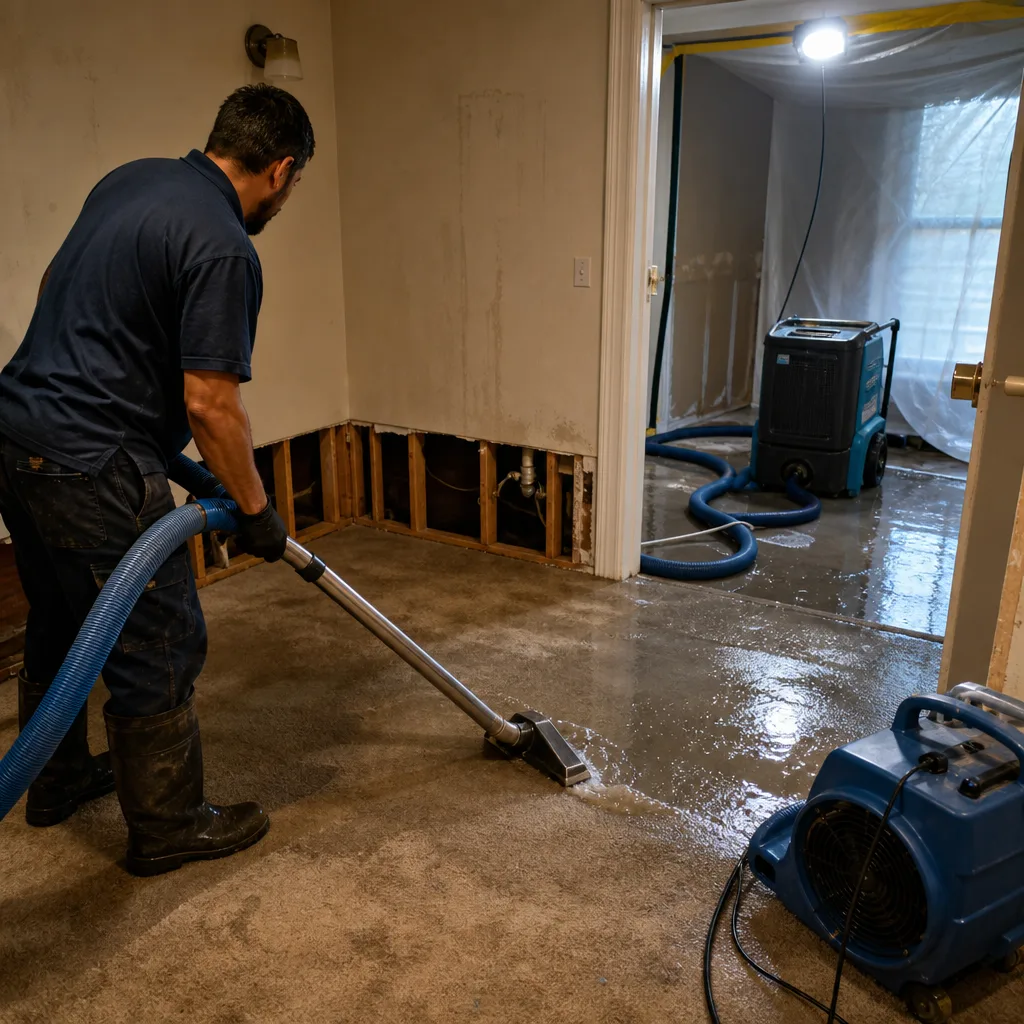
This is stopping the bleeding. For water damage, it means extraction, containment, and establishing the moisture map. For fire, it’s board-up and soot containment. For biohazard, it’s OSHA-compliant isolation and disposal setup.
The document that matters: the arrival moisture map (water) or scope of initial stabilization (fire, biohazard). This must include:
- Date and exact time of arrival
- Ambient conditions: temperature, relative humidity, dew point
- Affected room list with square footage
- Material classification by trade name: Category 1 (clean water), Category 2 (gray water), Category 3 (black water/sewage)
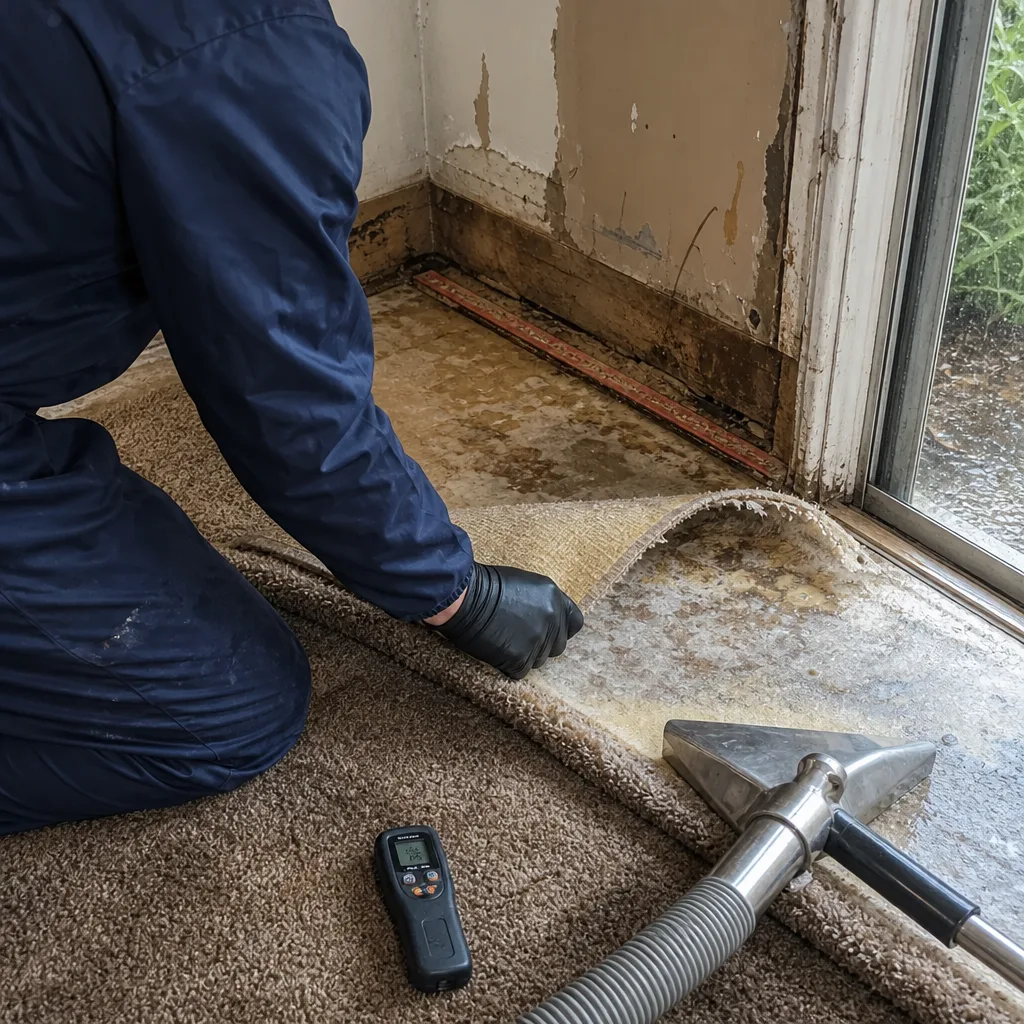
- Photos with date stamp showing each affected area before any work begins
Without this baseline, you cannot prove the damage was caused by the event you’re claiming. We’ve reviewed competitor files where the first photo shows wet carpet already pulled back - useless for proving origin.
Phase 2: Structural Drying
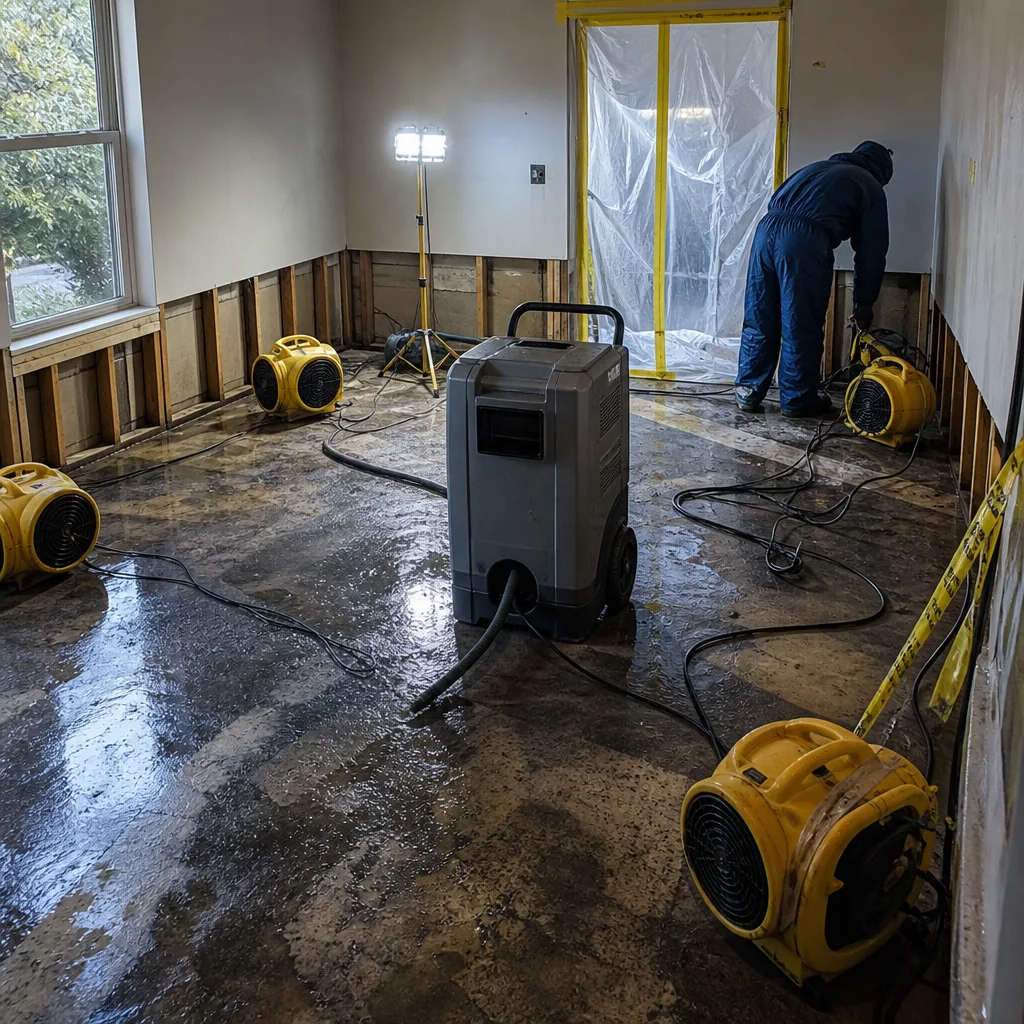
This is where Miami’s climate makes national standards insufficient. IICRC S500 provides drying targets based on regional averages, but Miami’s baseline 76% relative humidity means materials start closer to saturation. We adjust our target equilibrium moisture content (EMC) downward and extend our dehumidifier capacity calculations by 20-30% over what the same job would require in Phoenix or Denver.
The document that matters: daily psychrometric logs. These record:
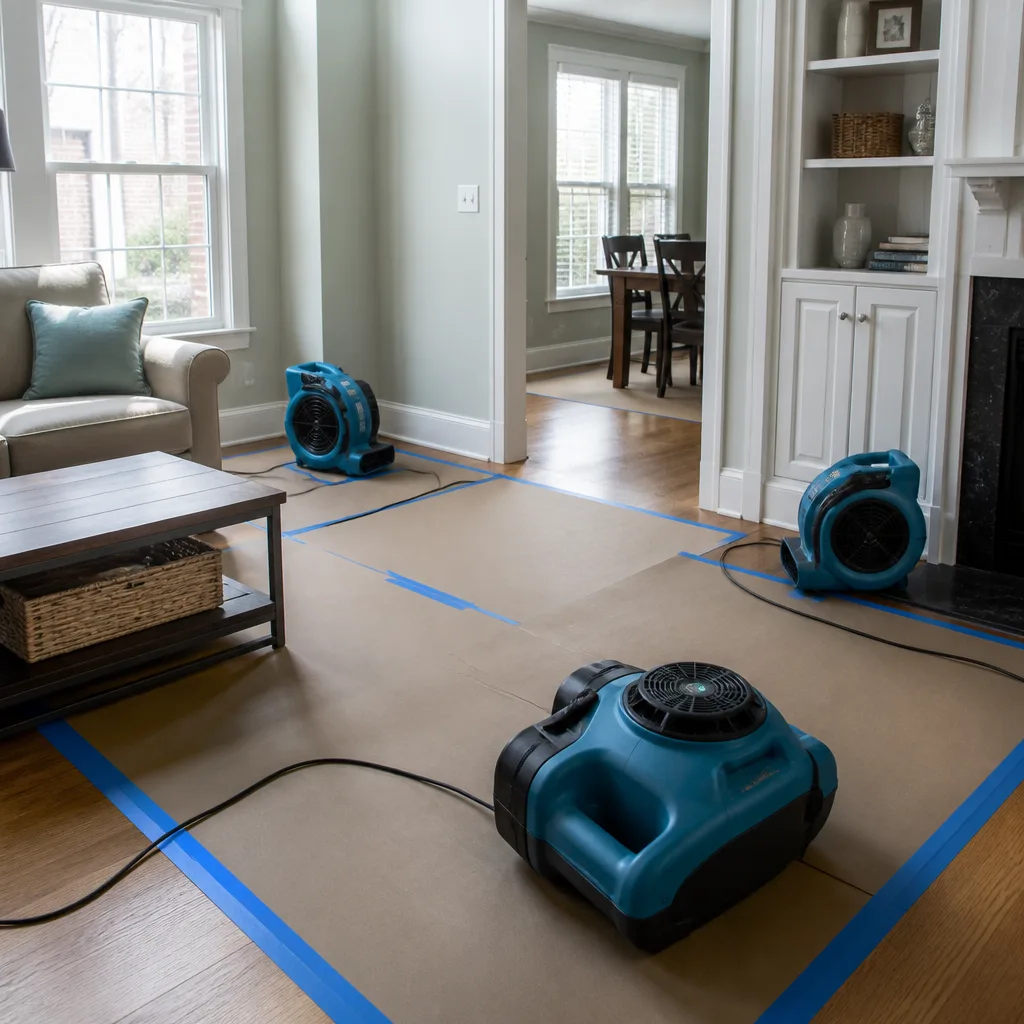
- Equipment inventory by serial number (Dri-Eaz, Phoenix, or equivalent dehumidifiers; air movers; Injectidry cavity drying systems)
- Hourly or twice-daily readings: temperature, RH, specific humidity, and vapor pressure differential
- Moisture content readings of affected materials (wood, drywall, concrete) compared to unaffected control samples
- Adjustments made to equipment placement or target settings
Psychrometric data is simply the measurement of how air holds and releases moisture. Vapor pressure differential is the engine that drives drying: the difference between the moisture in the wet material and the moisture in the air. When that differential narrows, drying slows. The log proves you didn’t stop early.
Phase 3: Remediation or Cleaning
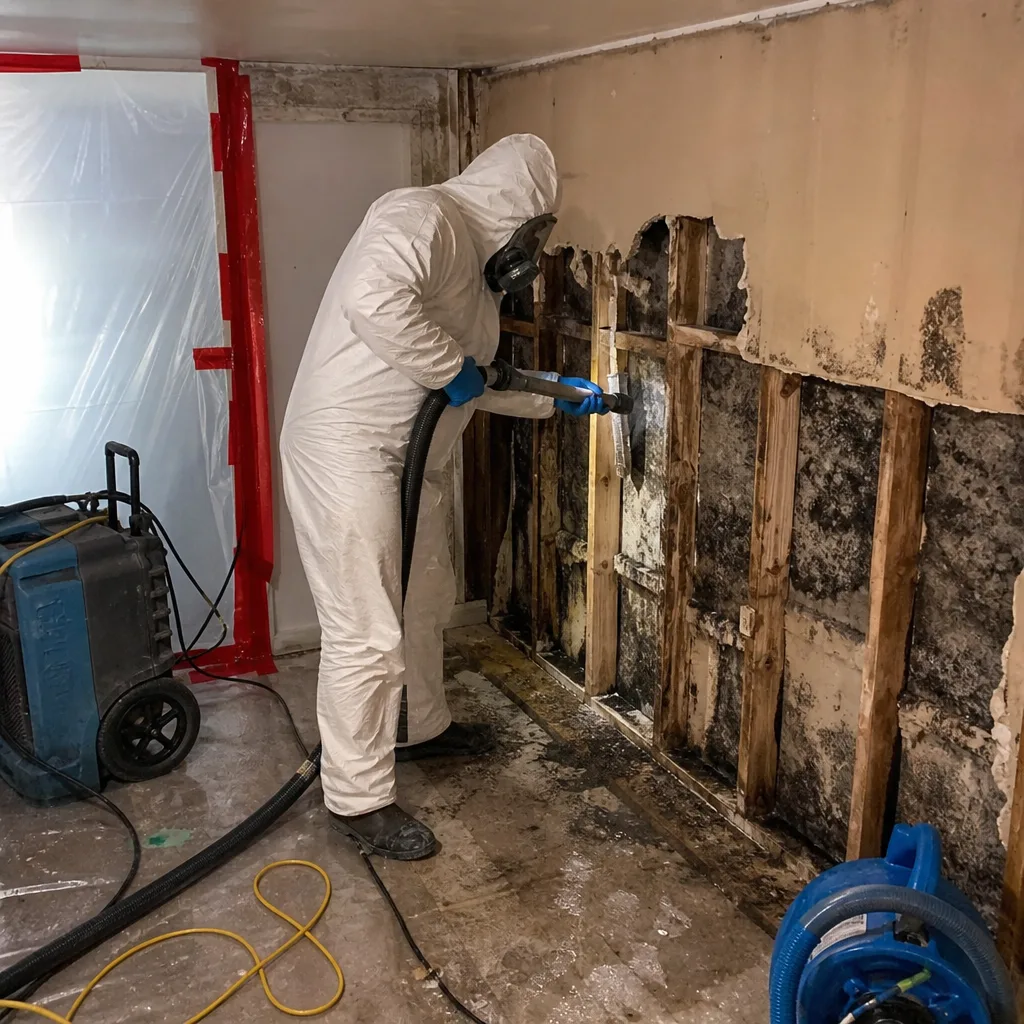
Once dry, damaged or contaminated materials are addressed. For mold, this means remediation per IICRC S520 - not “mold removal,” which is impossible (mold spores are everywhere), but source removal and clearance testing. For fire, it’s soot and odor removal. For biohazard, it’s full decontamination and ATP testing.
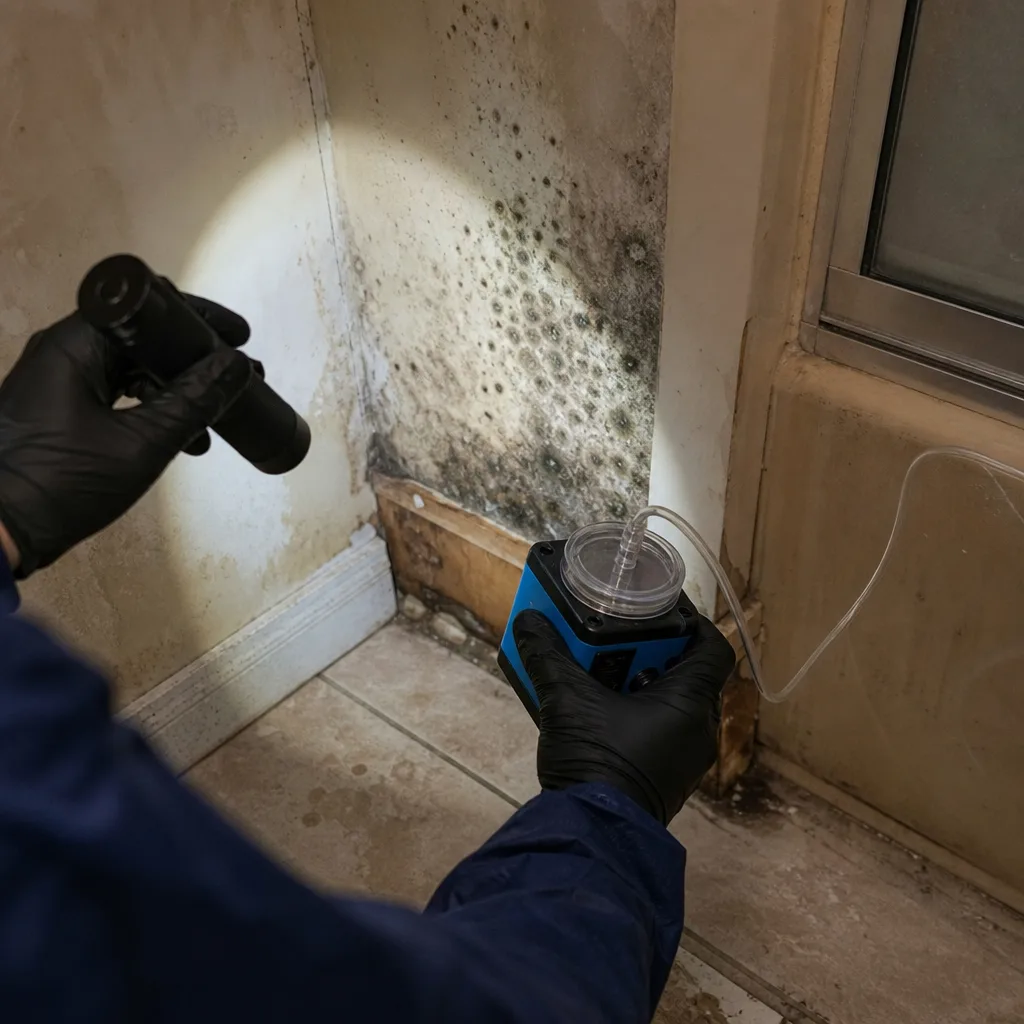
The document that matters: clearance readings or post-remediation verification. For mold, this means air sampling or ERMI/HERSTMI-2 dust analysis with laboratory results. For water, it means moisture readings at or below dry standard. No clearance, no certificate. No certificate, no proof the phase completed.
Phase 4: Reconstruction
Returning the space to pre-loss condition. In Miami, this phase triggers building department involvement, which we’ll cover in the permits section below.
The document that matters: the Certificate of Completion with three mandatory items we’ll detail later, plus all permit closeouts.
Water Damage Restoration in Miami follows this exact sequence, with each phase gated by documentation before the next begins.
How Miami’s Humidity Changes Drying Science
Most homeowners, and too many contractors, think drying means running fans until things feel dry. In Miami, feeling dry is a trap.
At 76% average relative humidity, the air outside your home is often nearly saturated. A dehumidifier doesn’t just remove moisture from wet materials; it must overcome the ambient moisture load trying to re-enter the structure. This is why we deploy commercial-grade refrigerant dehumidifiers (Dri-Eaz LGR 7000XLi, Phoenix R200) that achieve specific humidity levels residential units cannot touch, and why we calculate the grain depression - the actual moisture removed, measured in grains per pound of dry air - rather than just running equipment for a standard three-day cycle.
Here’s what Miami’s climate means in practice:
- Concrete slabs: In Miami’s high water table, slab moisture vapor emission rates run higher than national baselines. We test with calcium chloride kits or in-situ RH probes, not surface meters, because surface readings lie in humid air.
- Stucco and exterior sheathing: Our tropical moisture means exterior walls often hold latent moisture even when interiors read dry. We use thermal imaging to identify boundary layer moisture that surface readings miss.
- HVAC systems: Running air conditioning during drying seems logical, but uncontrolled AC can create cold surfaces below dew point, causing secondary condensation. We coordinate with HVAC settings as part of the psychrometric plan.
- Tertiary drying: This is the final phase where materials reach equilibrium with the controlled environment. In Miami, tertiary drying takes 24-48 hours longer than IICRC tables suggest for drier climates. We document this extension in the daily log so insurers don’t question the equipment rental period.
A contractor who quotes three days of drying in Miami without inspecting ambient conditions is guessing. The guess becomes your problem when the adjuster denies the extended equipment charges.
How to Read Your Restoration Documents
Documentation isn’t for the contractor’s file. It’s your evidence. Here’s how to read the three documents that determine whether your claim pays and your home is truly restored.
The Moisture Map
Look for a floor plan or room list with numbered readings. Each reading should identify the meter used (pinless radio frequency, pin-type resistance, or thermo-hygrometer), the material tested, and the reading in the appropriate scale (moisture content percentage for wood, relative readings for drywall, degrees Fahrenheit for infrared). Red flags: no control readings from unaffected areas, no material identification, or readings taken after extraction began.
The Daily Psychrometric Log
This should read like a lab notebook, not a invoice summary. Each entry needs: date, time, technician name or ID, equipment serial numbers, room readings, and any adjustments. If you see identical readings day after day, ask whether anyone actually visited. In our files, no two days produce identical numbers - humidity fluctuates, equipment cycles, materials release moisture unevenly.
The Certificate of Completion
Never sign without verifying three measurable items appear:
- Dry standard achievement: Specific moisture content numbers for each material, compared to the control sample or published dry standard, with the measurement method noted.
- Clearance documentation: For mold, lab results; for water, final moisture readings; for fire, post-cleaning inspection; for biohazard, ATP pass or equivalent.
- Scope completion verification: A room-by-room checklist matching the original written scope, signed by the technician and the homeowner, with any deviations noted and explained.
Missing any of these three items means the certificate is incomplete. An incomplete certificate won’t satisfy a meticulous adjuster, and it won’t protect you if problems emerge later. Our Mold Remediation in Miami includes post-remediation verification as standard, not optional.
Miami-Dade Permits, Codes, and Title Problems
This is the section most restoration guides skip, and it’s where Miami homeowners get surprised at closing.
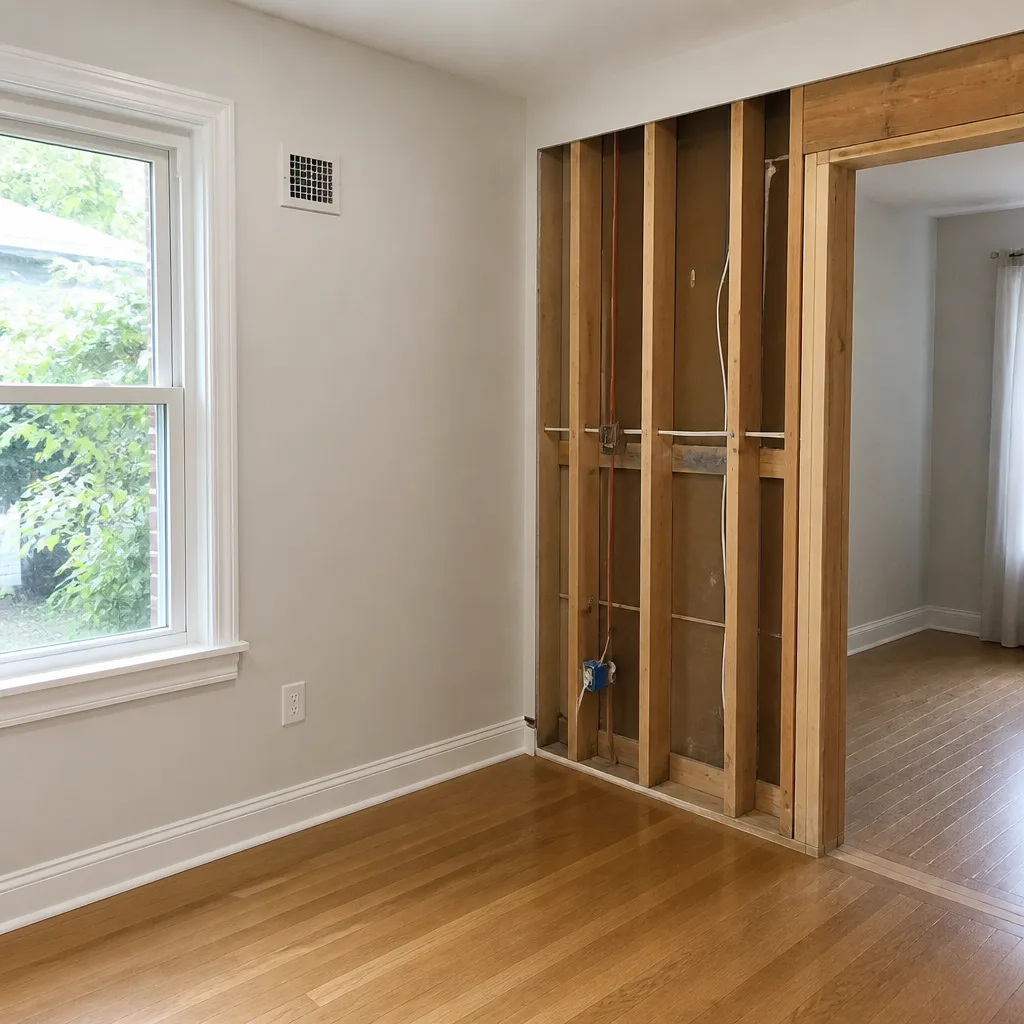
Miami-Dade County requires permits for any work affecting structural elements, electrical, plumbing, or HVAC - which means most reconstruction after significant water, fire, or storm damage. Drywall replacement in a water-damaged condo? If it involves more than 10 square feet in a common wall or any ceiling in a multi-family building, it likely needs a permit. Electrical outlet replacement after fire damage? Permit. Plumbing reroute after slab leak? Permit.
The permit process in Miami-Dade involves:
- Application with scope of work, contractor license verification, and property owner authorization
- Plan review for structural, electrical, or plumbing modifications
- Inspection scheduling at rough-in and final completion
- Certificate of Completion or Certificate of Occupancy update for significant work
Here’s what competitors don’t tell you: unpermitted drywall replacement, even for water damage, creates a title cloud. When you sell, the buyer’s title search may flag work without permit closeout. In Miami’s condo market, where lien searches are standard, this can delay or derail closing. We’ve been called to document and permit-retrofit work done by unlicensed crews who promised speed over paperwork.
Our approach: every reconstruction phase begins with permit application, not after the fact. The permit number goes on your written scope. The inspection sign-offs go in your file. At closing, your title agent sees complete documentation.
This is particularly critical in Miami’s historic districts - Coconut Grove, Coral Gables, parts of Little Havana - where additional architectural review boards may have jurisdiction over exterior repairs. A contractor unfamiliar with Miami-Dade’s layered approval process can cost you months.
The Insurance Handoff: From Invoice to Paid Claim
The restoration industry talks about “working with your insurance” as if it’s a relationship. It’s not. It’s a documentation transfer, and the quality of that transfer determines payment speed.
Here’s the sequence that works:
- Initial scope with pricing: Delivered in writing before work begins. This is Haven Standard, Clause 1, and it’s non-negotiable in our process. The scope uses Xactimate or equivalent pricing standard, with line items for each phase.
- Photo documentation on every visit: Date-stamped, geotagged, showing condition before work, during work, and after completion. Not a few photos. A complete visual record.
- Daily drying logs: As detailed above, proving the work met technical standards and justifying the duration.
- Direct adjuster coordination: We provide documentation packages directly to your adjuster in the format their desk requires, reducing back-and-forth that delays payment.
- Supplement documentation: When hidden damage emerges - and it always does in Miami’s construction, where water travels unpredictably through concrete and stucco - we document with photos, moisture readings, and written explanation before proceeding, not after.
The most common reason claims stall: the contractor’s invoice describes “drying services” without the logs that prove services were necessary and complete. An adjuster with a file full of psychrometric data, moisture maps, and photo sequences has what they need to approve. One with a single-page invoice has questions, and questions mean delays.
We also provide a Free Second Opinion on any competitor’s written estimate. Bring us their scope and we’ll review it against what we find on site, at no charge. Often we find missed items - mold in cavity spaces, structural drying requirements, permit needs - that would have become change orders or uncovered costs.
Fire & Smoke Damage Restoration in Miami requires additional documentation for contents inventory and smoke damage testing, which we coordinate directly with your adjuster’s contents specialist.
Choosing a Restoration Contractor in Miami
Miami’s restoration market includes everything from national franchise networks to one-truck operators to specialized firms. Here’s how to evaluate them based on what they can show you, not what they claim.
Verify license and insurance on the spot. Florida requires a state-certified contractor license for structural work. Ask for the license number and verify it through the Florida Department of Business and Professional Regulation. Ask for certificates of general liability and workers compensation insurance, with your property address listed as additional insured if work is underway. Any hesitation is a stop sign.
Demand the documentation preview. Before hiring, ask to see a redacted example of their standard deliverables: a moisture map, a daily drying log, a completed Certificate of Completion. If they don’t have examples, they don’t produce them routinely.
Ask about equipment specificity. Which dehumidifier models? Which air movers? How many per square foot? Vague answers (“industrial-grade equipment”) suggest rental-grade hardware, not the Dri-Eaz, Phoenix, XPOWER, B-Air, and Injectidry systems that produce documented results.
Confirm 24-hour live response for emergencies. Water doesn’t wait. Our phones are answered live, 24 hours a day, 7 days a week, by a person who can dispatch - not a voicemail tree promising callback during business hours.
Check the warranty terms. Our 365-Day Done Right Promise, backed by The Haven Standard, is a written warranty - signed, dated, and specific about coverage. Verbal assurances evaporate when problems emerge.
Understand the pricing commitment. Haven Standard, Clause 1: written price before work begins, every time, with no scope-creep additions once the crew is inside. If a contractor won’t commit to this in writing, you’re accepting open-ended billing.
In Miami’s market, where hurricane season creates demand surges and fly-by-night operators appear overnight, these verifications protect you from the crew that extracts your water, disappears with your deposit, and leaves no documentation for your claim.
Common Mistakes to Avoid
- Waiting for the insurance adjuster before starting mitigation. In Miami’s humidity, mold growth begins in 24-48 hours. Document the damage, begin extraction, and let the adjuster review the documentation. Waiting risks secondary damage that insurers may attribute to your delay.
- Accepting a “free” mold test from a contractor who also does remediation. This is a conflict of interest. Independent pre- and post-remediation testing is the standard we follow, with lab results from accredited facilities.
- Skipping the moisture map to save time. We’ve seen homeowners in Brickell and Wynwood skip this step, then face claim denials when insurers argue the damage predated the claimed event. The 30 minutes to document baseline conditions saves months of dispute.
- Hiring unpermitted reconstruction to “keep it simple.” In Miami-Dade, this creates title problems at resale and potential code enforcement action. The permit process adds time upfront but protects your property value.
- Assuming dry carpet means dry structure. Carpet dries fast. The pad beneath, the subfloor, and the wall baseplate may remain saturated. Surface-dry appearance is the most common cause of hidden mold in Miami homes.
- Not requesting daily logs during drying. Without them, you have no proof the equipment ran as billed, and no defense if an adjuster questions the rental duration.
- Signing a Certificate of Completion without the three required items. An incomplete certificate is worse than none - it suggests work was done but not verified.
When to Call a Professional
Call immediately when: water is actively flowing and you cannot locate the shutoff; sewage or Category 3 water is present (health hazard, no safe DIY option); fire damage has affected structural elements or HVAC systems; mold is visible over more than 10 square feet; or any biohazard situation including unattended death or crime scene. These scenarios involve genuine safety risks - electrical hazards in water, pathogens in sewage, structural instability after fire - and require trained response with proper PPE and disposal protocols.
For water damage under 50 square feet from a clean source with immediate shutoff, you may attempt extraction and drying with adequate equipment, but document everything and monitor with a moisture meter. If readings don’t drop to dry standard within 48 hours, professional drying is indicated.
DryMark Restoration Miami offers free estimates in Miami - call (786) 250-0820. Every estimate includes a written scope with pricing before any work begins, per Haven Standard, Clause 1. We also provide a Free Second Opinion on any competitor’s written estimate.
Frequently Asked Questions
Water damage mitigation in Miami typically ranges from $1,200 for limited extraction and drying of a single room to $8,000+ for whole-house drying with extensive material removal. Mold remediation averages $15-$30 per square foot of affected area, with containment and air scrubbing adding $500-$1,500. Fire and smoke restoration varies widely based on structural involvement, but initial board-up and stabilization typically starts at $800-$2,000. Reconstruction costs depend on material selection and permit requirements. Call (786) 250-0820 for a written estimate specific to your situation - estimates are free, and we provide a Free Second Opinion on any competitor’s written quote.
Most standard homeowner policies cover sudden and accidental water damage, fire, and storm damage, but coverage limits, deductibles, and exclusions apply. Gradual damage - slow leaks, maintenance-related mold - is typically excluded. The key to full coverage is documentation that proves the event was sudden, the response was immediate, and the work was necessary and properly executed. Our documentation package - moisture maps, daily logs, photo records, and written scopes - is designed specifically to satisfy these evidentiary requirements. We coordinate directly with adjusters to present documentation in their preferred format.
For active water damage, sewage backup, or fire stabilization, our phones are answered live 24 hours a day, 7 days a week, with dispatch available for emergency response. Exact arrival time depends on location, traffic, and current storm conditions - during hurricane aftermath, Miami’s road network can add significant delays. We provide estimated arrival windows and update if conditions change. For non-emergency assessments, we typically schedule within 24 hours. Reconstruction work is scheduled after scoping and permitting, not dispatched as emergency response.
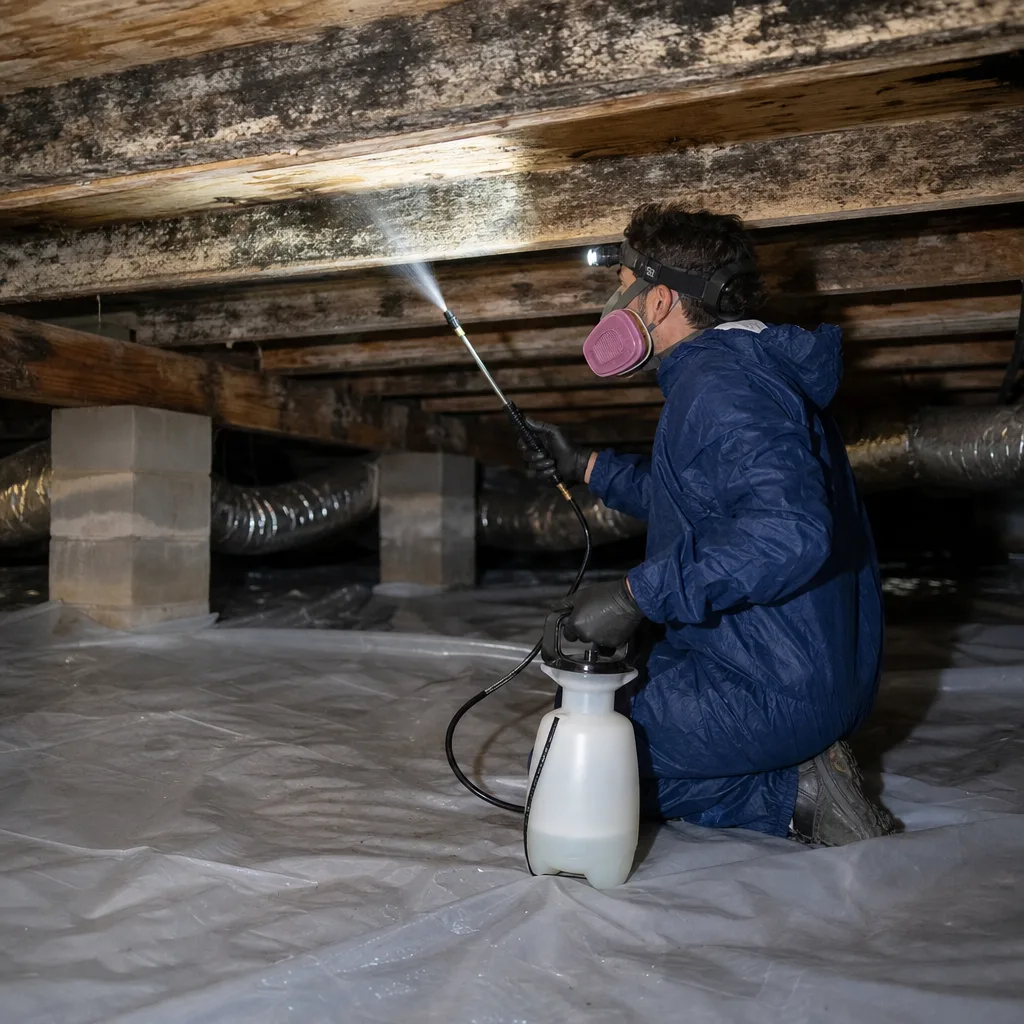
For visible mold exceeding 10 square feet, or mold resulting from Category 2 or 3 water damage, professional remediation is indicated. DIY cleaning with bleach or vinegar disturbs spores without removing the source, often spreading contamination and creating health risks. Professional remediation includes containment with negative air pressure, HEPA filtration, source removal, and post-remediation verification testing. In Miami’s humidity, incomplete remediation virtually guarantees recurrence. We provide independent post-remediation verification with laboratory results.
You retain responsibility for your claim, but a qualified contractor should handle documentation and technical communication directly with your adjuster. We provide complete documentation packages - moisture maps, daily psychrometric logs, photo records, written scopes, and change order justifications - directly to adjusters in Xactimate or their preferred format. This reduces your administrative burden and accelerates payment. You remain in control of settlement decisions; we ensure the adjuster has evidence to approve justified charges.
Three items: dry standard achievement with specific moisture content numbers and measurement methods; clearance documentation appropriate to the damage type (lab results for mold, final readings for water, post-cleaning inspection for fire); and scope completion verification with a room-by-room checklist matching the original written scope, noting any deviations. Without all three, the certificate is incomplete and may not support your claim or protect against future disputes. We review each item with you before signature.
The Bottom Line
Damage restoration in Miami is not a single event but a documented sequence: mitigation with baseline mapping, drying with daily psychrometric logs, remediation with clearance verification, and reconstruction with permit compliance and completion certification. Each phase hands off to the next through paperwork that proves what was done, how it was measured, and why it was necessary. In a market where 76% humidity makes drying harder, two distinct damage seasons require different response priorities, and unpermitted work can cloud your title, the homeowner who understands this sequence controls the outcome. Demand documentation at every phase, verify the three mandatory items on your Certificate of Completion, and never sign a scope without a written price - Haven Standard, Clause 1 exists precisely because the alternative costs more than money.
Need a written estimate or a Free Second Opinion on a competitor’s quote? Call DryMark Restoration Miami at (786) 250-0820. Every estimate includes a written scope with pricing before work begins, documented photo records on every visit, and our 365-Day Done Right Promise backed by The Haven Standard.
Written by Alicia Brennan, Owner at DryMark Restoration Miami, serving Miami since 2011.