
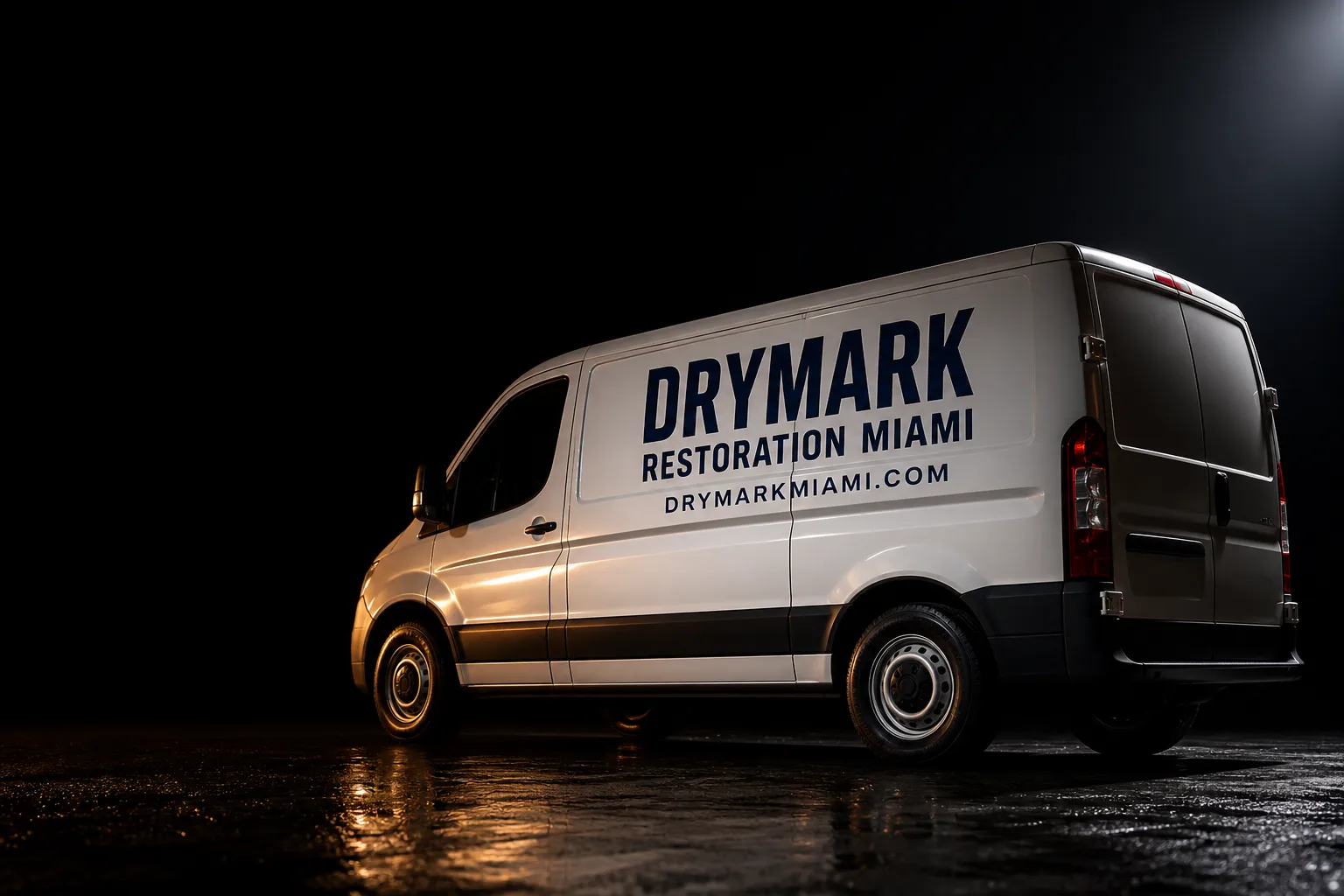
Free visual inspection and a written scope of work before any mitigation begins - photos, moisture readings, and drying logs go in your claim file
The scope we write is the scope we bill. Anything new gets shown to you, in writing, before we touch it.
24/7 Emergency Mold Remediation in Miami
Call (786) 250-0820 now - we answer live, 24 hours a day, 7 days a week, with no voicemail trees. Our crews dispatch from our Miami (South FL) office and typically arrive within 45 minutes across the metro area. Every call starts with a free visual inspection, and we deliver a written price before any work begins - Haven Standard, Clause 1. In Miami’s climate, mold colonizes in 24 to 48 hours after water intrusion, so the first hour determines whether we’re containing a small zone or remediating an entire structure. Salt-laden water from Biscayne Bay storm surge or king-tide street flooding adds corrosion damage to the equation, which means waiting even a few hours can turn a contained removal into a full decontamination with material replacement.
Understanding Mold Remediation Severity in Miami Properties
Miami-Dade’s dominant housing stock - CBS (concrete block and stucco) construction built from the 1950s through the 1980s, slab-on-grade, flat or low-slope built-up roofs - creates specific mold pathways that inland protocols miss. Roof membrane failures and stucco-crack infiltration during tropical downpours channel water into wall cavities with no basement to absorb it. The water table sits just feet below grade, so slab moisture wicks upward through furring strips and into drywall.
We classify every Miami water intrusion by IICRC S500 standards. Saltwater from Biscayne Bay surge or king-tide street flooding is automatically Category 3 - grossly contaminated - mandating full decontamination and complete material replacement, not dry-out-and-salvage. Pre-Hurricane Andrew homes (pre-1992) lack code-mandated roof-to-wall straps and impact-rated openings, so the same storm produces wider water paths and more extensive mold colonization than post-2002 Florida Building Code structures. Our containment protocols, air scrubbing with HEPA-negative pressure, and post-remediation clearance testing adjust scope accordingly.
Why Miami Property Owners Choose DryMark Restoration Miami
- 45-minute response commitment across Miami - from Brickell to the Roads to Miami Beach - because our crews stage locally, not from Fort Lauderdale or Broward County.
- 24/7 live answer by a real person, never an automated system; our phone lines have no voicemail trees, no next-business-day callbacks while water is still moving.
- IICRC-certified crews holding WRT (Water Damage Restoration Technician), AMRT (Applied Microbial Remediation Technician), and FSRT (Fire & Smoke Restoration Technician) credentials - license numbers provided on request.
- Free visual inspection on every call, with a written scope and price delivered before any equipment enters your property.
- Direct insurance billing and adjuster coordination - we document every loss with photos, moisture readings, and drying logs from hour one.
- One team from containment through reconstruction - no handoffs between remediation and rebuild contractors that delay your certificate of occupancy.
Our Mold Remediation Process
1. Inspection & Assessment
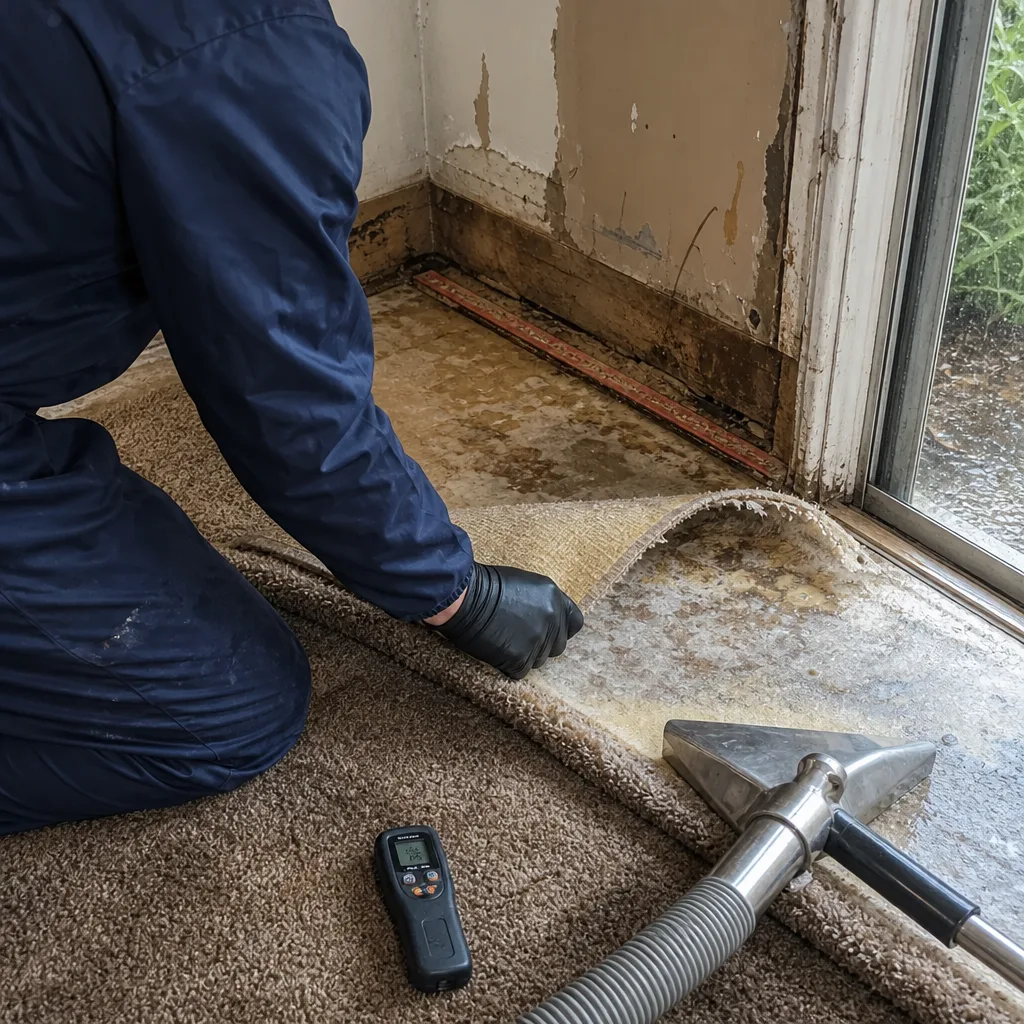
We arrive with thermal imaging cameras, penetrating and non-penetrating moisture meters, and hygrometers to map affected materials. In Miami’s CBS construction, we pay special attention to slab moisture wicking and stucco-crack pathways that hide colonization behind apparently dry surfaces. Every reading is logged.
2. Containment & Air Filtration
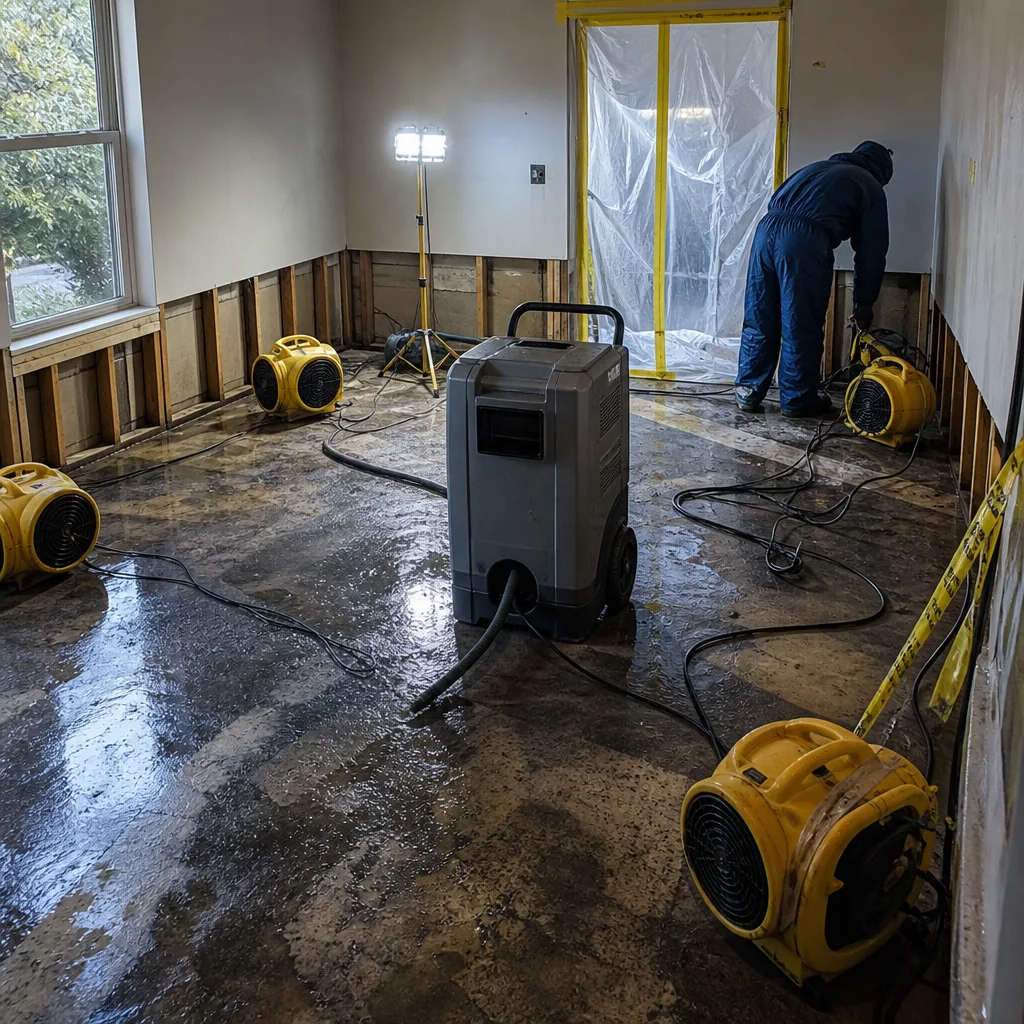
We establish polyethylene containment barriers and run HEPA-negative air machines to prevent cross-contamination. For Category 3 saltwater intrusions, containment is full-room or full-unit, not spot isolation, because brackish water carries bacterial and chemical loads that standard mold protocols don’t address.
3. Drying & Dehumidification
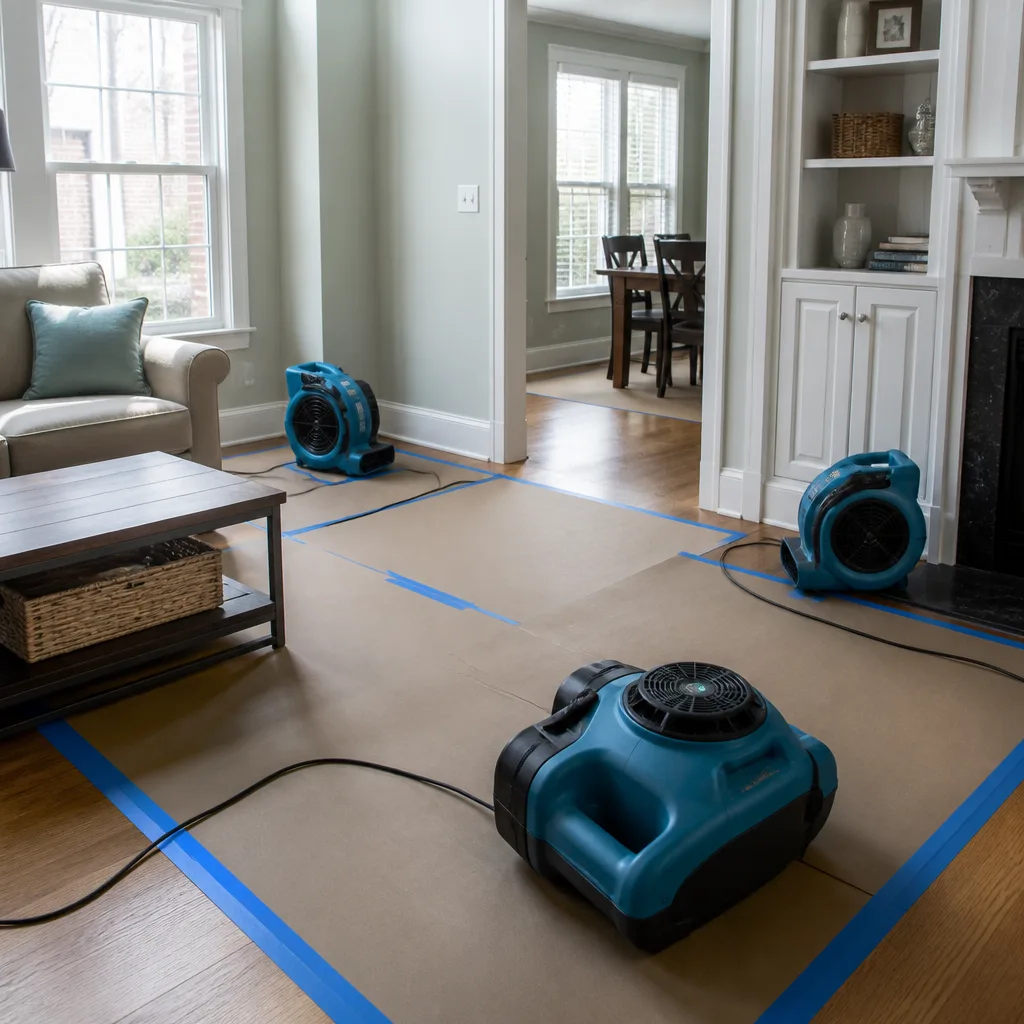
We deploy Dri-Eaz and Phoenix LGR dehumidifiers alongside XPOWER and B-Air air movers, calculating equipment counts from psychrometric data - temperature, relative humidity, and vapor pressure differential - to drive evaporation rates. Miami’s ambient humidity above 80% means dehumidifiers run continuously, not cyclically.
4. Removal of Contaminated Materials
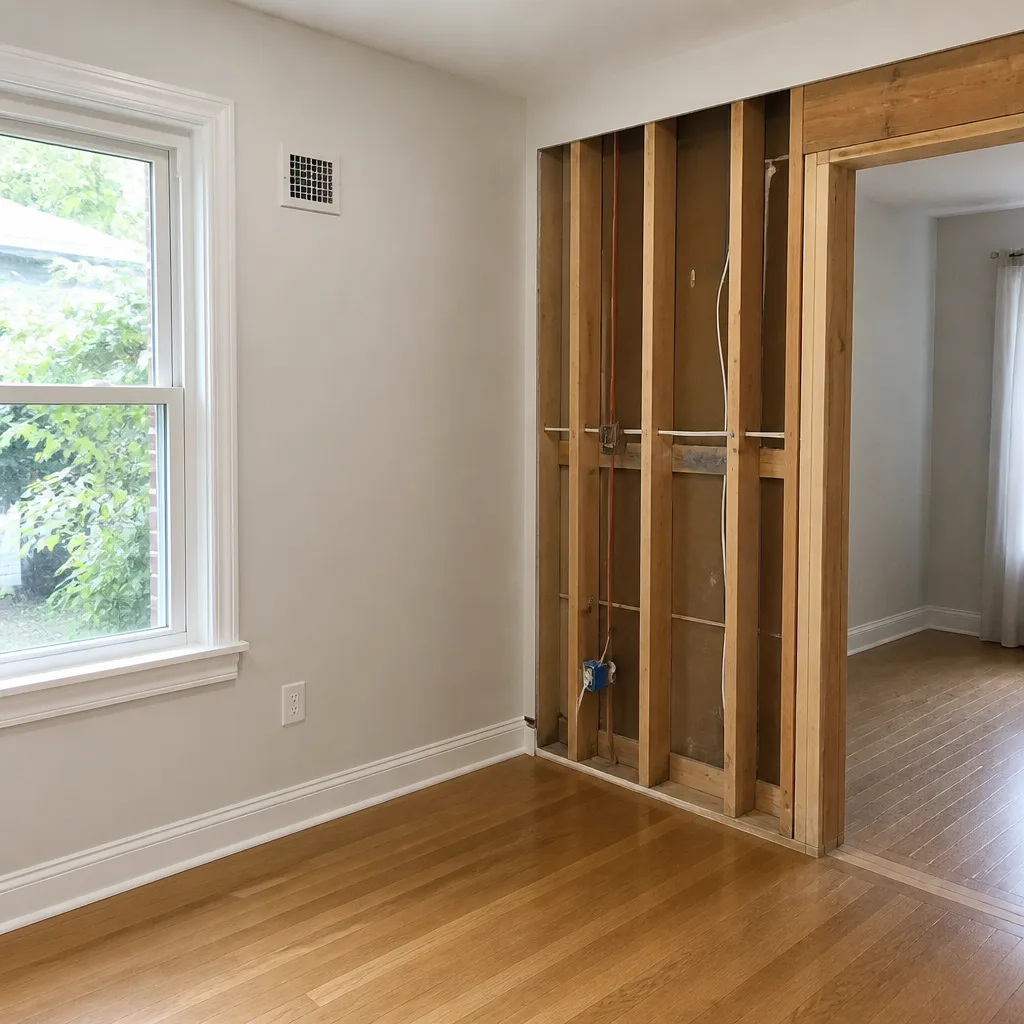
Category 3 water mandates removal, not cleaning: drywall, insulation, baseboards, and any porous material contacted by saltwater. We also remove garage-door hardware - springs, hinges, rollers, tracks - when salt corrosion has compromised structural integrity. Non-porous surfaces receive antimicrobial treatment.
5. Antimicrobial Treatment & Air Quality Restoration
We apply EPA-registered antimicrobial agents to all remaining structural materials, then run HEPA air scrubbers to capture airborne spores. Post-treatment, we conduct clearance sampling - air spore counts and surface swabs - to verify remediation success before containment comes down.
6. Repairs, Reconstruction & Documentation
Our rebuild team replaces removed materials to pre-loss condition, from drywall and insulation to garage-door hardware upgrades. Every visit produces a photo record, a drying log, and a written scope update - the documentation package that turns your restoration invoice into a payable insurance claim.
Need Emergency Mold Remediation in Miami Now?
Crews minutes away, answering live 24 hours a day. The sooner we start, the less it costs.
Working With Your Insurance Company
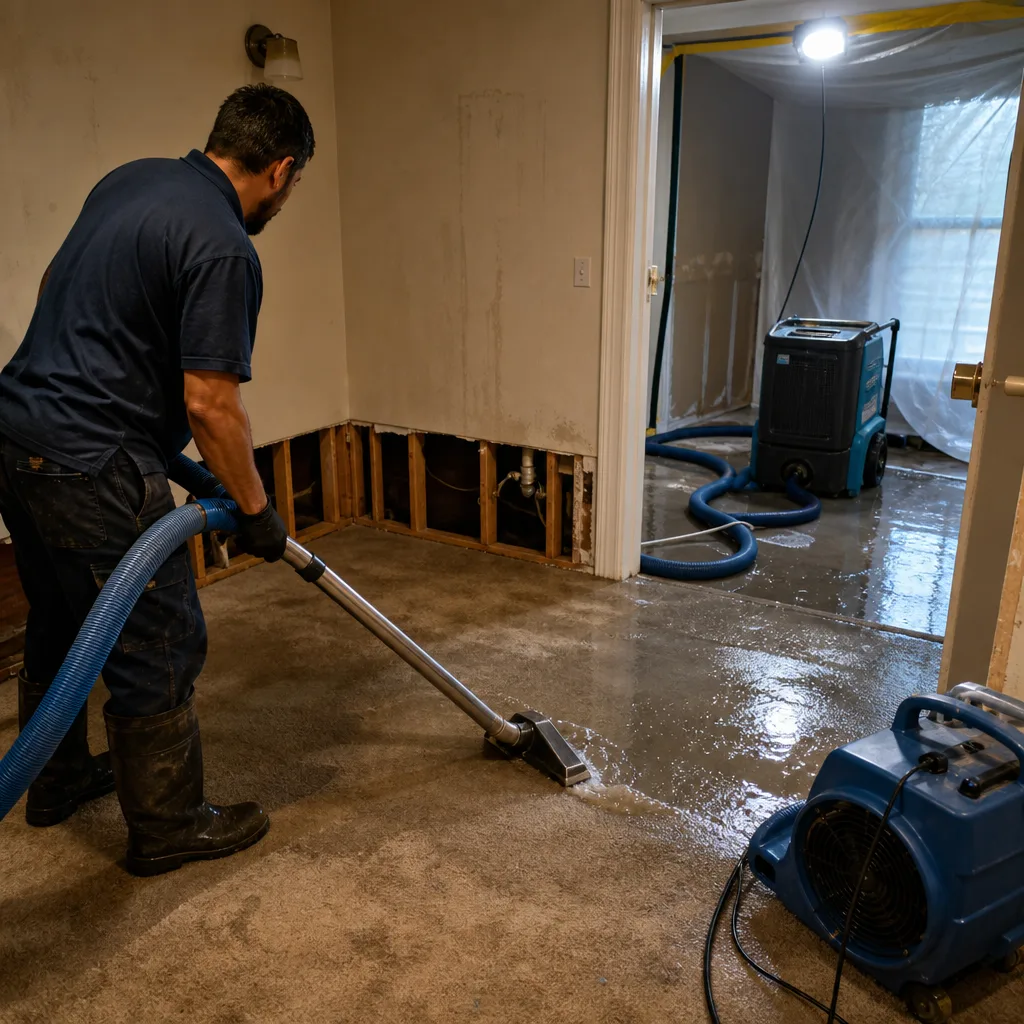
We built our documentation protocols around what insurers actually pay - and what they deny. Alicia Brennan founded Back to Dry Restoration in 2011 after working as a claims adjuster and watching homeowners lose legitimate coverage over missing photos, incomplete moisture logs, and scopes that didn’t match the damage. Every Miami job we handle starts with photo documentation in the first hour, continues with daily drying logs showing psychrometric readings and equipment placement, and ends with a line-item scope tied to industry-standard estimating platforms.
We speak directly with your adjuster, provide supplemental documentation when scope disputes arise, and never ask you to front costs beyond your deductible when coverage is confirmed. Our photo record is a standard deliverable, never an upsell.
What We Provide Your Insurer
- Thorough documentation of the loss
- Photos of all damage, room by room
- Moisture readings and drying logs
- A detailed, line-item scope of work
- Direct coordination with your carrier
Built for Miami’s Loss Calendar
June through October is our heavy season - not coincidentally, the wet season and Atlantic hurricane season arrive together. Tropical systems and afternoon thunderstorms produce roof failures and stucco-crack flooding across the city. September and October bring king tides: saltwater pushes through street drains in Miami Beach, Brickell, and the Roads with zero storm activity, flooding ground-floor garages and units repeatedly at the same addresses. We maintain repeat-call schedules for properties on those blocks.
November through May brings lower humidity but not safety - cold fronts with wind-driven rain exploit pre-existing roof membrane damage, and the holiday travel season means water intrusions go undetected for days. January and February are our highest-mold-discovery months: owners return from travel to find colonies established behind cabinets and in wall cavities. Year-round, Miami’s heat and humidity above 80% compress every timeline. Drying equipment runs harder here. Mold grows faster here. The gap between intrusion and irreversible damage is shorter than virtually anywhere else in the country.
Mold Remediation Across Miami’s Neighborhoods
In Miami Beach, king-tide flooding through street drains hits ground-floor condos and garages multiple times each October. The saltwater is Category 3 by definition, so we see full-gut remediation of drywall and insulation, plus replacement of corroded garage-door hardware that inland contractors might try to dry and save. Our crews know which Beach blocks flood first and stage equipment accordingly.
Brickell high-rises present vertical water migration - a failed roof membrane or window seal on a 40-story building can affect units twenty floors down through the curtain wall. We coordinate with building engineers and work after-hours to minimize disruption to occupied commercial and residential floors.
The Roads, south of Brickell and east of I-95, holds some of Miami’s oldest residential stock - pre-1926 construction and 1950s CBS with original flat roofs. On a king-tide call in the Roads, our tech found 3 inches of saltwater in a ground-floor garage and mold already on the base of the drywall. Moisture mapping showed the slab and furring strips were saturated, so we extracted the standing water, set containment, ran Dri-Eaz dehumidification and XPOWER air movers, and replaced the wet drywall and salt-corroded hinges and rollers. We finished with antimicrobial treatment and logged daily moisture readings until the structure was dry.
Coral Gables and Key Biscayne properties - many with significant price points and finished basements (rare in Miami, built above the water table on filled land) - require careful moisture mapping to protect investment-grade finishes. Hialeah’s industrial and residential mix sees more roof-failure and HVAC-condensation mold than flooding.
Specialized Mold Remediation Services We Offer in Miami
Mold Inspection & Testing
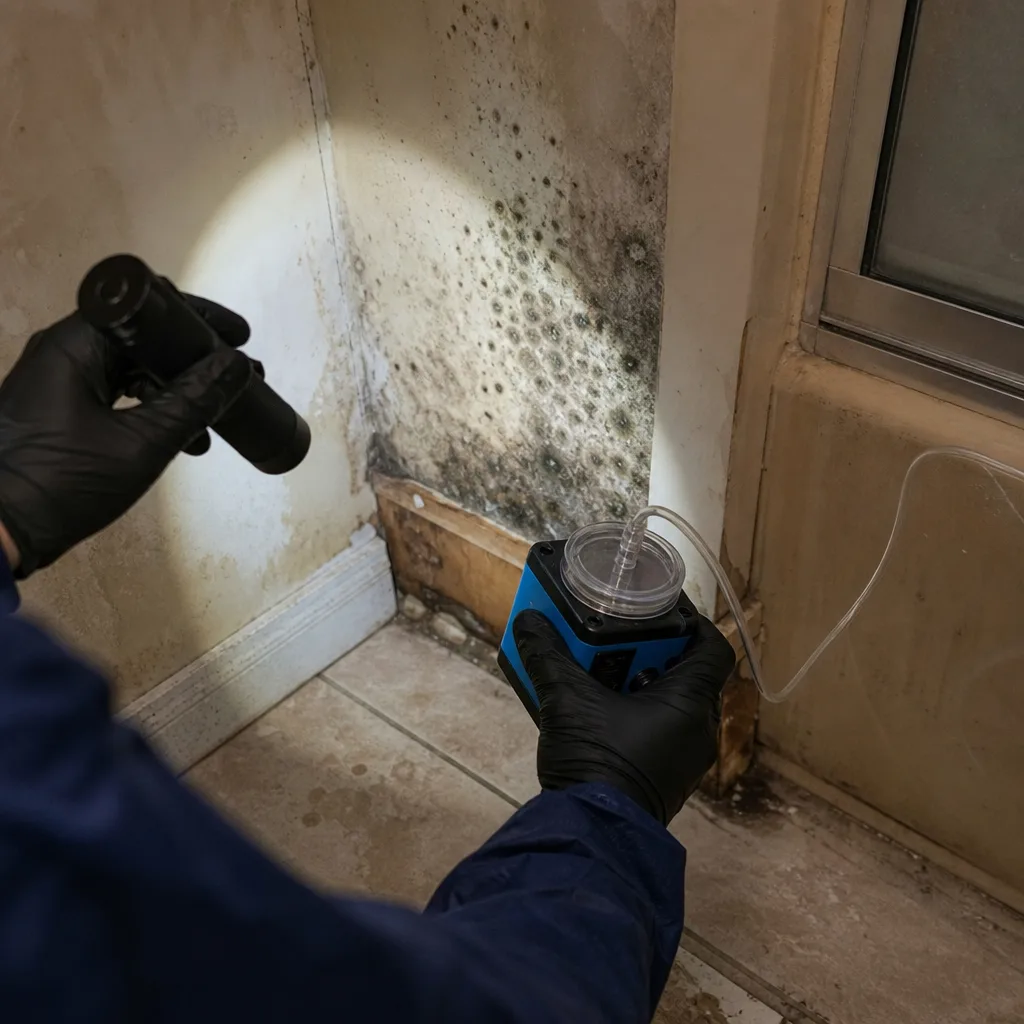
We don’t guess. Our inspections combine thermal imaging, moisture mapping, and air/surface sampling with laboratory analysis. In Miami’s salt-air environment, we specifically test for corrosion-compromised wall cavities where salt residue wicks moisture and sustains hidden colonization long after surfaces read dry. A typical mold inspection in Miami runs $350-$650 for residential properties up to 3,000 square feet.
Mold Removal
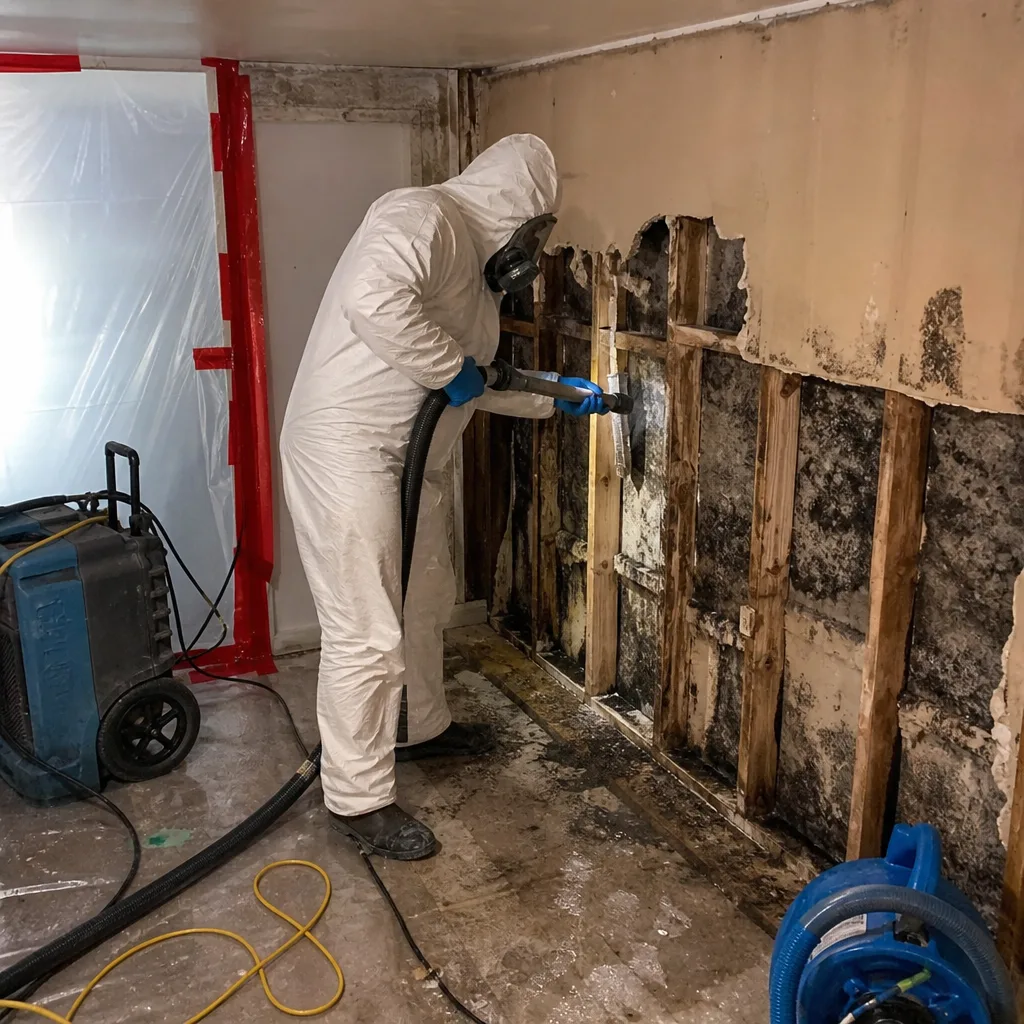
Containment, HEPA-negative air, removal of contaminated materials, antimicrobial treatment, and clearance testing - executed to IICRC S520 standards. For Miami’s Category 3 saltwater intrusions, removal scope is broader than inland: we replace, not clean, porous materials and corroded hardware. Small-scale contained removal starts around $1,800-$3,500; whole-unit remediation after major flooding runs $8,500-$18,000.

Black Mold Remediation
Stachybotrys chartarum and other toxigenic species require enhanced containment, full-face respirator protocols, and extended air scrubbing. We treat black mold with the same documentation rigor as any loss - daily photos, moisture logs, and written scope updates - because insurers scrutinize these claims closely.

Air Quality Restoration
Post-remediation, we run HEPA air scrubbers and conduct clearance sampling: airborne spore counts compared to outdoor baseline, plus surface swabs in previously affected areas. In Miami’s high-humidity environment, we also assess whether the HVAC system has distributed spores through the ductwork, which may require separate cleaning scope.

Crawl Space Treatment
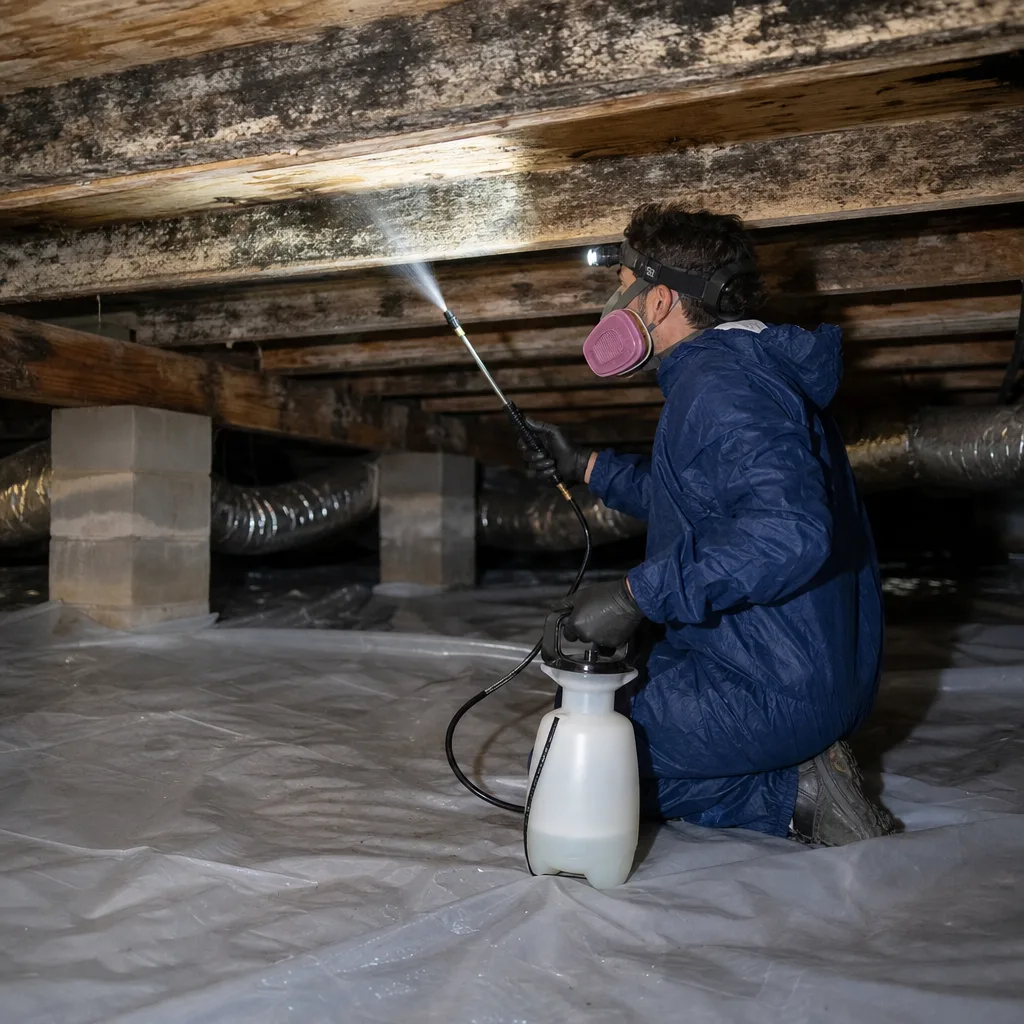
Rare in Miami’s slab-on-grade construction, but present in some Coral Gables and Key Biscayne filled-land properties. We seal vapor barriers, install dedicated dehumidification, and treat structural wood with borate-based preservatives where moisture has supported fungal growth.
Moisture & Humidity Control
Remediation fails if the moisture source persists. We identify and document the intrusion pathway - roof membrane, stucco crack, slab wicking, or HVAC condensation - and specify permanent correction in our written scope. For properties with chronic humidity, we specify and install whole-home dehumidification sized to Miami’s latent load.
What happens when you call
- 1
A real person answersNo phone trees - you reach a local pro.
- 2
You get an upfront price rangeHonest numbers before anyone is dispatched.
- 3
A background-checked tech heads outLicensed & insured, dispatched right away.
- 4
You approve before work beginsNothing starts until you say go.
Mold Remediation Costs in Miami, FL
Small, contained mold removal in Miami - a single bathroom or closet, no structural involvement - typically runs $1,800-$3,500. Moderate remediation affecting multiple rooms with drywall and insulation replacement costs $4,500-$9,000. Major whole-unit or whole-house remediation after Category 3 flooding, with full decontamination, material removal, and reconstruction, ranges $12,000-$35,000+ depending on square footage and finish level.
What moves the price: extent of colonization (surface vs. structural), Category 1 vs. Category 3 water classification, accessibility (high-rise vs. single-story), and whether asbestos or lead-containing materials require abatement coordination. Insurance typically covers mold remediation when it results from a covered water loss - burst pipe, storm damage, appliance failure - but may exclude long-term maintenance-related moisture. We review your policy, document the loss origin, and coordinate with your adjuster. Every estimate starts with a free visual inspection and a written price before work begins.
We Also Serve Cities Near Miami
Our Mold Remediation in Miami crews respond throughout the metro area, including Miami Beach with its king-tide vulnerability, Coral Gables and its historic residential stock, Key Biscayne with its filled-land foundations, and Hialeah with its mix of industrial and residential properties. Dispatch and scheduling are coordinated from our Miami (South FL) office.
Serving Miami, FL - Our Local Coverage Area
We’re based in the Miami area and know this community well. Use the map below to see our service coverage - if you’re nearby, we can almost certainly help.
Miami Mold Remediation Questions, Answered
Does the saltwater that comes up through Miami Beach street drains during king tides really require removal, not just drying?
Yes - saltwater from Biscayne Bay or king-tide street flooding is automatically Category 3 (grossly contaminated) under IICRC S500 standards, which mandates removal of porous materials and full decontamination, not drying and salvage. Salt residue also corrodes metal hardware and wicks moisture into wall cavities long after standing water is gone. Call (786) 250-0820 for a free inspection and written scope.
How fast can mold grow after a water intrusion in Miami compared with other cities?
Mold colonizes in 24 to 48 hours in Miami, faster than most US markets because year-round temperatures above 75°F and ambient humidity above 80% create optimal fungal growth conditions continuously. The gap between intrusion and irreversible secondary damage is shorter here than virtually anywhere else in the country. Call (786) 250-0820 - our 45-minute response is built for this timeline.
Why does coastal Miami’s salt air affect garage-door hardware and mold inspections?
Salt air accelerates corrosion of springs, hinges, rollers, tracks, and opener chains by years compared with inland Florida, and salt residue in wall cavities wicks moisture from humid air to sustain hidden mold colonization after surfaces appear dry. Our inspections specifically test for this corrosion-compromised, salt-retaining condition that standard moisture meters can miss. Call (786) 250-0820 for inspection protocols designed for coastal construction.
What is different about mold remediation in Miami’s concrete-block-and-stucco homes with no basements?
CBS slab-on-grade construction has no basement to absorb water, so roof leaks and stucco-crack infiltration channel moisture directly into wall cavities and slab-adjacent materials. The water table sits just feet below grade, making slab wicking a persistent moisture source that changes drying protocols - more equipment, longer runtimes, and careful moisture-mapping of furring strips and baseplates. Call (786) 250-0820 for a scope written to Miami’s actual building stock.
Does the age of a Miami home change the scope of mold remediation after a storm?
Yes - pre-1992 homes lack Florida Building Code-mandated roof-to-wall straps and impact-rated openings, so the same storm produces more extensive water intrusion and wider mold colonization paths than post-2002 construction. Older homes also more commonly have original flat-roof membranes at end of service life. We assess building age in our initial inspection and adjust containment and removal scope accordingly. Call (786) 250-0820 for a written scope that accounts for your home’s construction era.
How long does mold remediation take in Miami?
Small contained removals: 2-3 days. Moderate multi-room remediation: 5-10 days including drying and clearance testing. Major Category 3 whole-unit projects: 2-4 weeks including reconstruction. Miami’s high ambient humidity extends drying timelines compared with drier markets - our equipment runs continuously, not cyclically, and we log daily moisture readings to prove completion. Call (786) 250-0820 for a timeline estimate specific to your loss.
Can my family stay in the home during mold remediation?
For small contained removals with localized containment, often yes. For whole-room or whole-unit remediation, especially with Category 3 water and toxigenic species, we recommend temporary relocation until clearance testing confirms safe reoccupancy. We specify this in our written scope before work begins - no surprises once containment is up. Call (786) 250-0820 to discuss your specific situation.
What certifications do your Miami mold remediation technicians hold?
Our technicians hold IICRC WRT (Water Damage Restoration Technician), AMRT (Applied Microbial Remediation Technician), and FSRT (Fire & Smoke Restoration Technician) credentials, with license numbers provided on request. All work is documented to IICRC, RIA, and IFA standards. Background checks and verification are completed before any technician arrives at your property. Call (786) 250-0820 for credential verification.
Ready for a written price before any work begins? Call (786) 250-0820 now. We answer live 24/7, dispatch crews across Miami within 45 minutes, and deliver a free visual inspection with a documented scope and price - Haven Standard, Clause 1. Ask about our Free Second Opinion on any competitor’s written estimate.
Written by Alicia Brennan, Owner at Back to Dry Restoration, serving Miami since 2011.
Mold Remediation in Nearby Areas