
Last updated September 23, 2026
Free visual inspection and a written scope of work before any mitigation begins - photos, moisture readings, and drying logs go in your claim file
The scope we write is the scope we bill. Anything new gets shown to you, in writing, before we touch it.
Damage Restoration Cost Breakdown: The Miami Homeowner’s Reference for 2026
Two Miami homes with identical square footage and identical visible water damage can legitimately differ by $18,000 in restoration cost. The difference is almost never contractor markup. It’s almost always three variables that rarely appear on the front page of an estimate: the moisture category assigned to the loss, the classification of affected materials, and whether mold was present at drying clearance. In Miami’s climate, where indoor humidity sits above 60% for eight months of the year and a Category 1 water loss can become Category 3 in 72 hours, these variables aren’t academic. They determine whether your insurer pays the full invoice or deducts 30% for undocumented drying duration. This guide breaks down what restoration actually costs in Miami in 2026, line by line, and shows you how to read a bid instead of just accepting it. For Damage Restoration Warning Signs: A Miami Homeowner’s Reference Guide, see our companion resource.
Quick Answer
Water damage restoration in Miami typically ranges from $3,200 for a contained Category 1 loss with clean water and no mold, to $28,000 or more for a Category 3 flood with structural drying, controlled demolition, and mold remediation. The per-square-foot cost multiplier moves from roughly $4-$7 for Category 1, to $8-$14 for Category 2, to $12-$22 for Category 3, before reconstruction. Most Miami homeowners pay between $6,500 and $14,000 for a standard whole-room mitigation with drying, demolition, and basic reconstruction.
Table of Contents
- How IICRC Water Categories Drive Miami Restoration Costs
- Line-Item Cost Benchmarks for Miami in 2026
- Why Equipment Documentation Belongs on Every Invoice Line
- The Three Most Common Miami Insurer Deductions (and How Documentation Prevents Them)
- Public Adjuster Costs vs. What Undocumented Claims Lose
- How Miami’s Climate and Geography Affect Drying Strategy and Price
- How to Read a Restoration Estimate Line by Line
- Reconstruction: When the Drying Ends and the Build-Back Begins
How IICRC Water Categories Drive Miami Restoration Costs
The IICRC S500 Standard sets three water categories, and in Miami they function less like labels and more like price multipliers. Understanding them is the single most important step in evaluating any estimate.
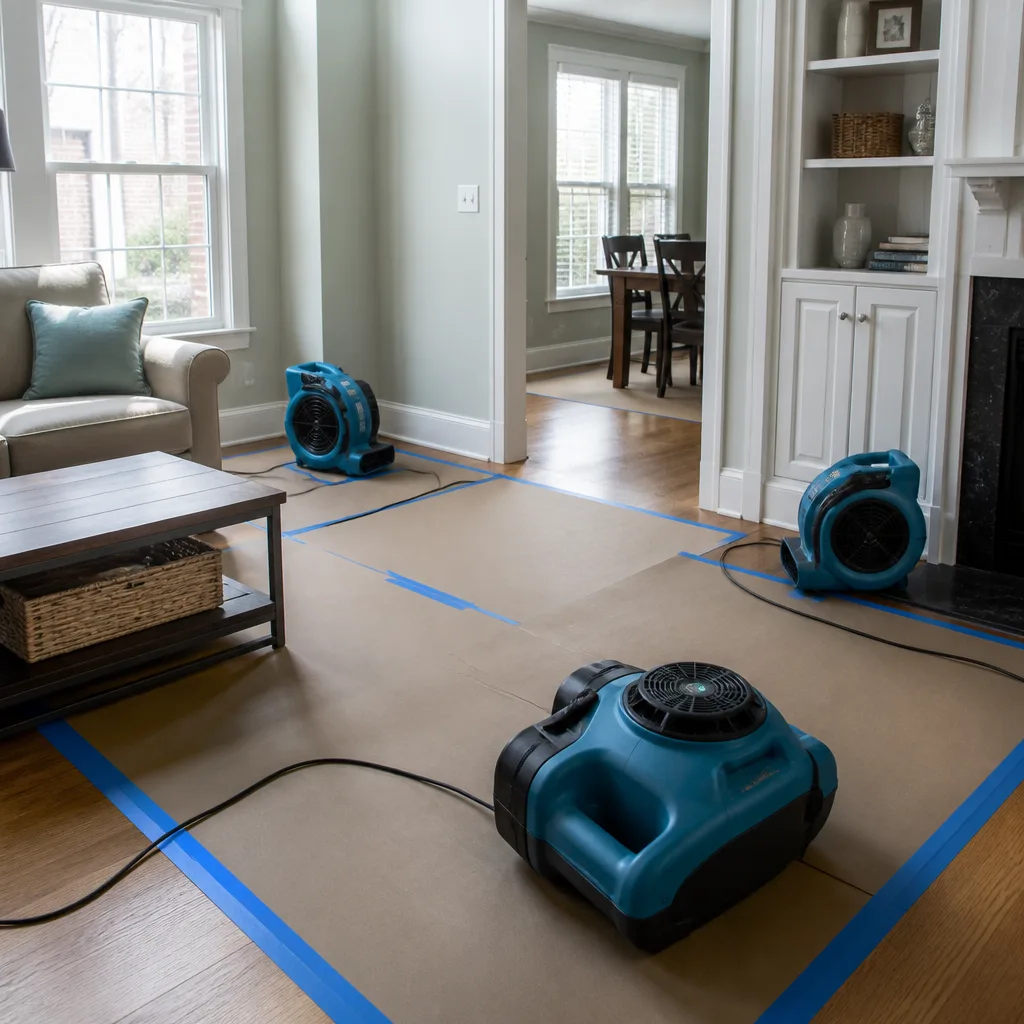
Category 1: Clean Water - Originates from a sanitary source: broken supply line, tub overflow without contaminants, melting ice. In Miami, Category 1 losses are increasingly rare because our heat accelerates microbial growth. A supply line break in a Coral Gables home on Friday evening becomes Category 2 by Monday morning if the HVAC was off over the weekend. Category 1 mitigation runs $4-$7 per square foot for drying only, with minimal demolition. Equipment typically includes LGR dehumidifiers and axial air movers, with drying targets reached in 3-5 days.
Category 2: Gray Water - Contains significant contamination: dishwasher discharge, washing machine overflow, sump pump failures. The IICRC requires removal of affected porous materials that can’t be cleaned, plus antimicrobial treatment. In Miami, Category 2 losses are the most common call we receive - the washing machine hose in a Brickell high-rise, the dishwasher leak under a Coconut Grove kitchen’s original terrazzo. Costs run $8-$14 per square foot. Demolition expands: baseboards, lower drywall sections, and sometimes cabinetry. Drying extends to 5-7 days with HEPA air scrubbers added to the equipment list.
Category 3: Black Water - Grossly contaminated: sewage backup, floodwater, seawater intrusion, or any water that has stood more than 48 hours in Miami’s climate. This is where costs escalate sharply. Category 3 requires full removal of porous materials, professional-grade cleaning of non-porous surfaces, and often whole-room disinfection. In Miami’s low-lying neighborhoods - Miami Beach, Key Biscayne, parts of Little Havana and Allapattah - seasonal flooding and king tide intrusion make Category 3 losses common from June through November. Costs run $12-$22 per square foot before reconstruction, with drying phases extending 7-14 days and requiring specialized equipment like Injectidry systems for hardwood floor rescue or cavity drying.
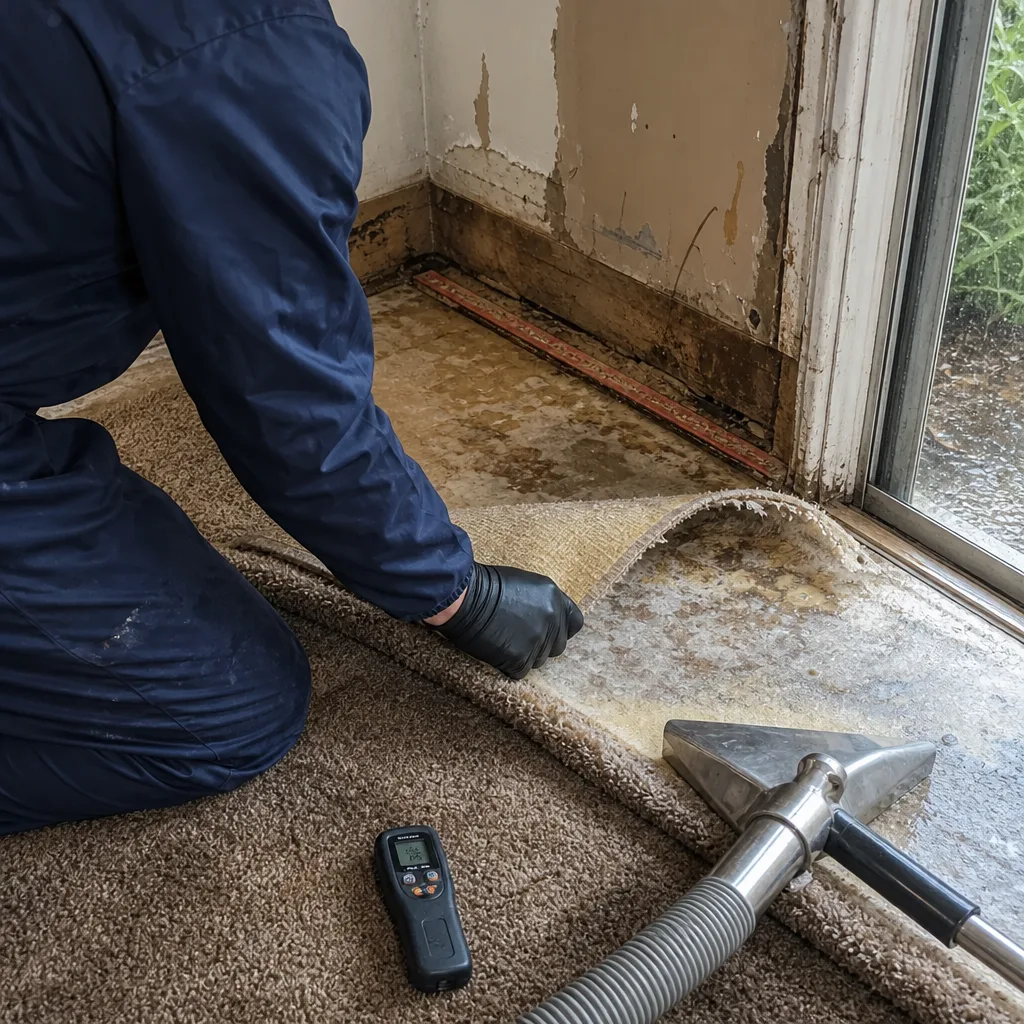
The critical point: a contractor who doesn’t test and document the category assignment is a contractor who can’t defend the invoice to your adjuster. We document category determination with moisture readings, temperature, relative humidity, and photographic evidence at arrival - Haven Standard, Clause 1 requires the written price, but the documentation behind it determines whether that price gets paid.
Line-Item Cost Benchmarks for Miami in 2026
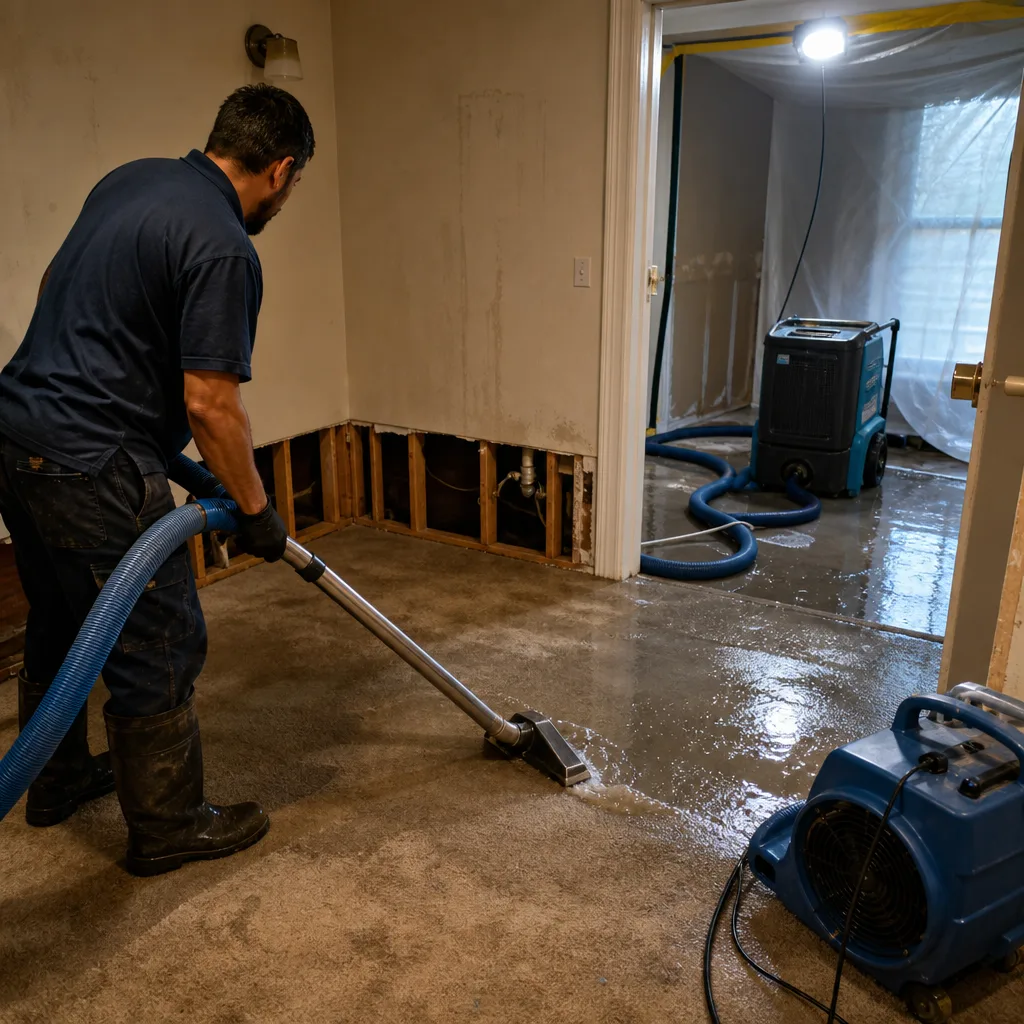
These are the numbers that should appear on a properly itemized Miami restoration invoice. If they’re absent, or buried in a single lump sum, you can’t verify what you’re paying for.
Emergency Mitigation - Equipment (Per Day Rates)
| Equipment Type | Typical Miami Rate | Notes |
|---|---|---|
| LGR dehumidifier (Dri-Eaz, Phoenix) | $95-$145/day | Psychrometric data logged daily; 1 per 400-500 sq ft |
| Axial air mover (B-Air, XPOWER) | $25-$40/day | Placement mapped to room diagram; 1 per 50-70 linear ft |
| HEPA air scrubber | $85-$125/day | Required for Category 2+; CFM and filter change logged |
| Injectidry hardwood/cavity drying system | $185-$275/day | Specialty deployment; vapor pressure differential monitored |
| Desiccant dehumidifier (large loss) | $220-$350/day | Commercial or whole-home losses; ducted delivery |
Controlled Demolition
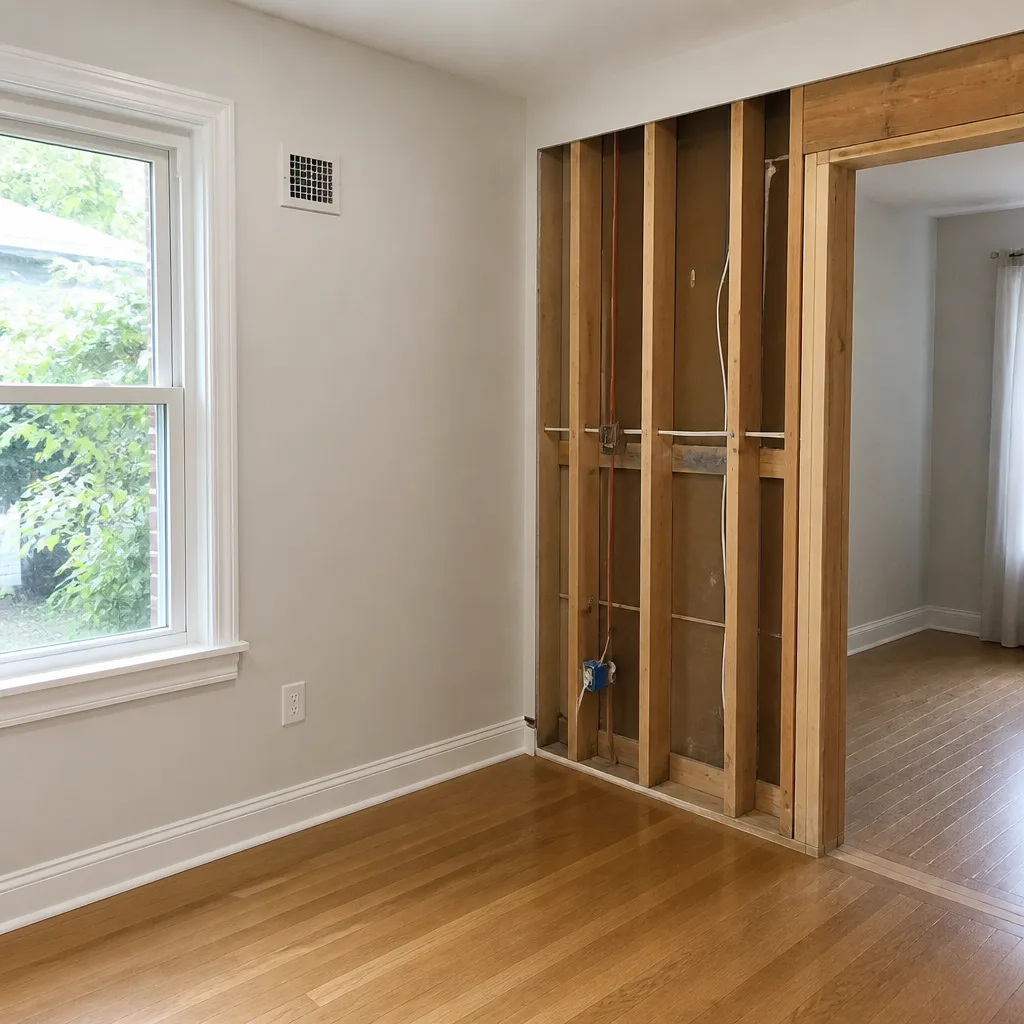
- Drywall removal: $2.50-$4.50 per linear foot (includes disposal, varies by height and double-layer assemblies common in pre-1980s Miami construction)
- Baseboard removal and disposal: $1.75-$3.00 per linear foot
- Hardwood flooring removal (nail-down): $3.50-$6.00 per square foot
- Tile removal (including thinset): $4.50-$8.00 per square foot; higher for Cuban tile or terrazzo, which requires specialized handling in historic Miami neighborhoods
- Insulation removal (blown or batt): $2.00-$3.50 per square foot of cavity
- Cabinetry removal (per linear foot of run): $45-$85; higher for custom millwork common in Pinecrest and Palmetto Bay
Mold Treatment (When Required)
- Containment barrier installation: $3.50-$6.00 per linear foot of poly wall
- Negative air machine (NAM): $110-$160/day
- HEPA vacuuming and surface treatment: $1.50-$3.00 per square foot of affected area
- Soda blasting or dry ice blasting (structural framing): $4.50-$7.50 per square foot
- Antimicrobial sealant application: $1.00-$2.00 per square foot
- Post-remediation verification (PRV) air sampling: $350-$650 per set of samples; required for clearance in most Miami-Dade jurisdictions
Reconstruction (Per Square Foot by Finish Grade)
- Basic reconstruction (standard drywall, paint, baseboard): $18-$32 per square foot
- Mid-grade (moisture-resistant drywall, upgraded trim, paint): $32-$55 per square foot
- High-grade (custom finishes, hardwood, stone, matching historic materials): $55-$110+ per square foot; Miami’s Art Deco and MiMo districts often require specialized material sourcing
These ranges reflect Miami’s 2026 labor market, where skilled trades remain tight following post-Hurricane Irma demand surges and ongoing construction growth. A written price before work begins, with every line item specified, is Haven Standard, Clause 1. Anything less is an estimate you can’t verify.
Why Equipment Documentation Belongs on Every Invoice Line
An invoice that lists “dehumidifier, 5 days, $475” is unverifiable. An invoice that lists “Phoenix 200 HT LGR dehumidifier, SN# 28471, deployed Living Room northwest corner, 5/14-5/19, daily grain depression readings: 28, 31, 34, 36, 38” is a document an adjuster can pay without a phone call.
The difference matters because insurer desk adjusters in Florida are trained to flag three documentation failures: equipment without serial numbers or model identifiers, drying duration without daily psychrometric data, and placement locations described vaguely or not at all. Each failure triggers a deduction or a request for additional documentation that delays payment by weeks.
Here’s what proper equipment documentation includes, and why each element has a cost implication:
- Make, model, and serial number - Establishes equipment capacity and verifies the machine exists. A Phoenix 200 HT produces different grain depression than a rental-store unit, and the invoice should say which was used.
- Placement location by room and orientation - Determines whether the number of air changes per hour was sufficient for the affected volume. “Living room” is insufficient. “Living room, northwest corner, aimed toward wet wall shared with Kitchen” is sufficient.
- Daily readings: temperature, relative humidity, specific humidity, grain depression - These are the psychrometric data points that prove drying progress. Without them, an adjuster can argue the equipment ran longer than necessary. With them, drying duration is self-evident.
- Equipment removal date and final moisture content readings of affected materials - Establishes that drying goals were reached before equipment was retrieved, preventing “dryout incomplete” disputes that arise months later.
At DryMark Restoration Miami, this documentation is standard on every job, included as a deliverable, never an upsell. The daily drying log, the photo record on every visit, and the equipment placement diagram are part of the invoice packet we submit to your adjuster. In our experience, documented claims settle 40% faster than undocumented ones, and at higher percentages of submitted cost.
The Three Most Common Miami Insurer Deductions (and How Documentation Prevents Them)
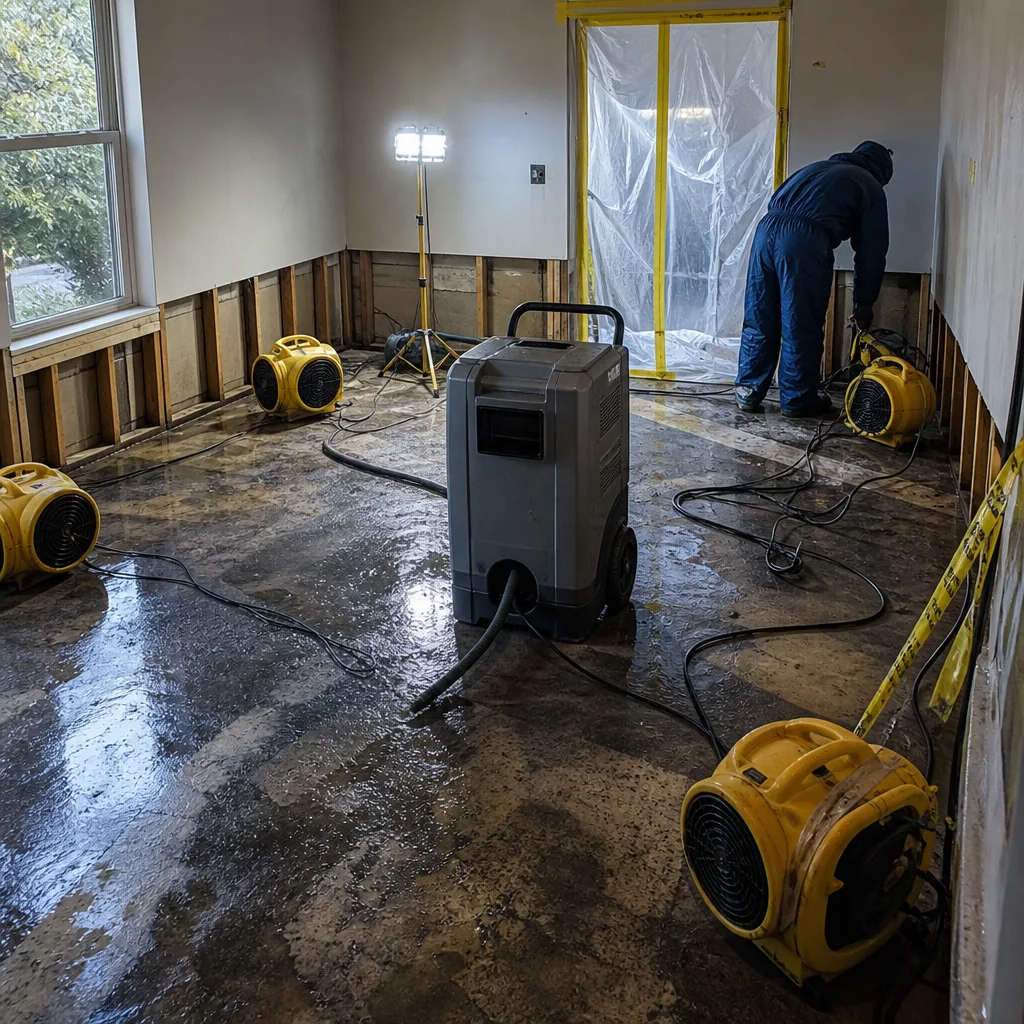
Florida insurers apply specific deduction patterns to restoration invoices, and Miami’s high claim volume makes local adjusters particularly efficient at finding documentation gaps. Here are the three deductions we see most often, with the documentation that prevents each.
Deduction 1: Undocumented Drying Duration
The adjuster’s position: if you can’t prove the structure was wet enough to need 6 days of dehumidification, we’ll pay for 3. The defense: daily moisture readings of affected materials, plotted against drying goals, with equipment removal contingent on reaching those goals. We use moisture meters with calibrated probes at standard depths, and we photograph each reading location so the adjuster can verify we didn’t cherry-pick dry spots. The Haven Standard requires this documentation on every job; without it, we won’t submit the invoice.
Deduction 2: Equipment Deployed but Not Logged
The adjuster’s position: you billed for 4 air movers, but your photo shows 3. We’ll deduct one. The defense: equipment inventory sheets signed at deployment and retrieval, with serial numbers, photographed in place. This is why we document make, model, and placement on every visit. A B-Air Grizzly or XPOWER X-34AT photographed in position on Day 1, Day 3, and Day 5, with the drying log showing it remained in service, closes this deduction entirely.
Deduction 3: Reconstruction Invoices That Don’t Separate Trade Work
The adjuster’s position: your “reconstruction” line item of $18,400 includes electrical, plumbing, and finish carpentry, but we can’t verify each trade’s scope or price against our estimating software. We’ll apply a blanket 25% reduction. The defense: trade-specific line items with separate scopes, separate material lists, and separate labor calculations. Drywall installation at $X per square foot, electrical rough-in at $Y per outlet, plumbing reconnect at $Z per fixture. This separation also matters for your own verification - you can compare each trade line against independent quotes.
These deductions are not adversarial games. They’re the standard workflow of insurers who process thousands of Miami claims annually and have learned that undocumented invoices often contain errors. Proper documentation doesn’t guarantee full payment, but it shifts the burden: instead of you proving you did the work, the adjuster must prove the documentation is wrong.
Public Adjuster Costs vs. What Undocumented Claims Lose
When a claim settles low, many Miami homeowners hire a public adjuster to reopen it. The standard fee in Florida is 10% of claim proceeds for reopened claims, or 20% for new claims involving an emergency - a significant cost that comes out of your recovery, not the insurer’s pocket.
Here’s the comparison that matters. On a $45,000 restoration claim with documentation gaps, a typical insurer deduction runs 20-35% of submitted costs, or $9,000-$15,750. Hiring a public adjuster at 10% to recover that deduction costs $4,500 if fully successful, and success is not guaranteed. The net recovery might be $5,250-$11,250, minus the delay of 60-120 days for the reopened claim process.
Compare that to a fully documented claim submitted correctly the first time. The deduction risk drops to 5% or less, typically on disputed line items rather than whole categories. On the same $45,000 claim, the homeowner might see a $2,250 deduction, with no public adjuster fee and settlement in 14-21 days.
The documentation investment - daily drying logs, photo records, equipment serials, trade-separated reconstruction - costs nothing additional when it’s built into the contractor’s standard process. At DryMark Restoration Miami, it’s included on every job because Alicia Brennan founded the company in 2011 specifically to close the documentation gap that costs homeowners their claims. The public adjuster option remains available, but our goal is to make it unnecessary.
How Miami’s Climate and Geography Affect Drying Strategy and Price
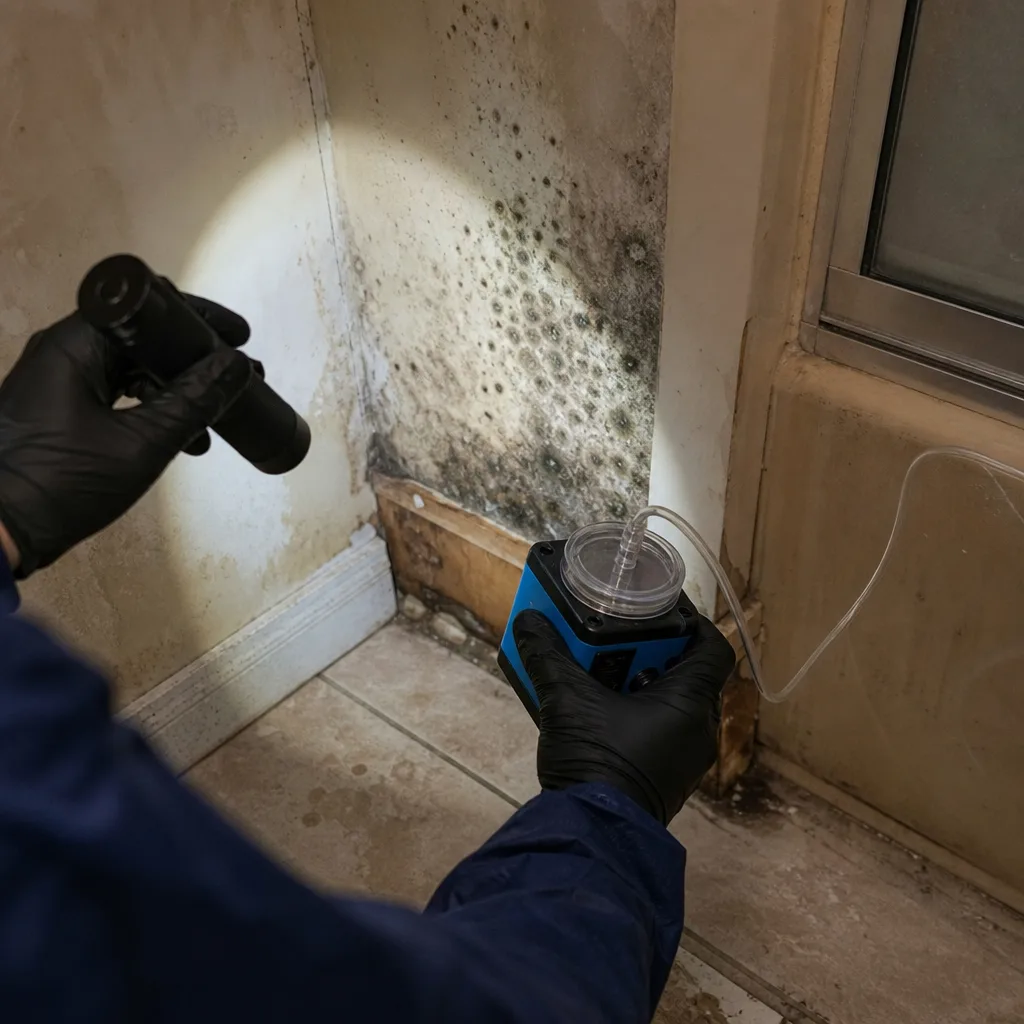
Miami’s environmental conditions are not neutral background. They actively change how restoration must be performed and what it costs.
High baseline humidity: Outdoor relative humidity in Miami averages 70% in winter and 75-80% in summer, with dew points that make natural drying impossible. A home with open windows in July gains moisture faster than closed systems remove it. This means mechanical dehumidification runs longer and works harder than in drier climates, directly increasing equipment days and cost.
Hurricane season and king tides: From June through November, Miami faces compounded water risk - rainfall flooding, storm surge, and sewer system overwhelm. In Miami Beach and coastal Brickell, we’ve seen Category 1 supply line losses convert to Category 3 in 36 hours when storm flooding entered the same structure. The category escalation changes everything: equipment, demolition scope, antimicrobial requirements, and reconstruction timeline.
Concrete block construction: Predominant in Miami homes built 1950-1990, concrete block with plaster or stucco exterior traps moisture differently than wood frame. Drying requires higher vapor pressure differentials and often longer duration. An air mover aimed at drywall in a wood frame home might achieve 4 air changes per hour; the same placement in a concrete block home achieves 2, requiring additional equipment or extended time.
Historic and coastal materials: Cuban tile, terrazzo, coral rock, and original hardwood floors in neighborhoods like Coral Gables, Coconut Grove, and Miami Beach require specialized drying approaches. Injectidry systems for hardwood rescue, controlled humidity environments for terrazzo curing, and material-matching for coral rock reconstruction all add cost that generic estimates rarely capture. A contractor who treats a 1930s Mediterranean Revival the same as a 2005 stucco tract home is a contractor who will either underbid and cut corners, or overbid and include unnecessary work.
Permit and code requirements: Miami-Dade County requires permits for reconstruction involving structural, electrical, or plumbing work, with inspections at rough-in and final. See our detailed guide to Damage Restoration Permits, Codes & Inspections in FL: What You Need to Know. Permitting adds 5-10 business days to reconstruction timelines and costs $150-$500 depending on project scope. Unpermitted work discovered at sale or insurance review can trigger mandatory removal and redo - a cost that makes proper permitting cheap by comparison.
How to Read a Restoration Estimate Line by Line
A proper estimate is a scope of work, not a sales document. Here’s how to evaluate one.
- Verify the category and class assignment - Category (1, 2, 3) and class (amount of evaporation, from 1 for minimal to 4 for specialty drying) should be stated with the basis: “Category 2 based on washing machine discharge, Class 2 based on wet drywall and carpet in 50% of room.” If these are absent, the estimate is incomplete.
- Check equipment counts against square footage - IICRC guidelines specify equipment ratios. A 400-square-foot living room with 8-foot ceilings needs approximately 1 LGR dehumidifier and 6-8 air movers for Class 2. Significant deviation without explanation suggests under- or over-equipment.
- Demand daily rates, not lump sums - “Drying: $4,200” tells you nothing. “LGR dehumidifier, Phoenix 200 HT, $125/day x 6 days = $750” tells you everything. The daily rate allows comparison and verification.
- Look for demolition specifications - “Remove wet drywall” is vague. “Remove drywall 24 inches above finished floor, full perimeter of Living Room, approximately 42 linear feet, dispose per Miami-Dade waste regulations” is specific and verifiable.
- Verify reconstruction is separated by trade - As noted above, this matters for adjuster review and your own comparison shopping.
- Confirm the documentation deliverables - What will you receive? Daily drying logs? Photo record? Final moisture readings? Written warranty? If these aren’t listed, they may not exist.
At DryMark Restoration Miami, every estimate follows this structure because it’s the structure that gets claims paid. Haven Standard, Clause 1 requires a written price before work begins; the detail within that price is what makes it a document you can act on.
Reconstruction: When the Drying Ends and the Build-Back Begins
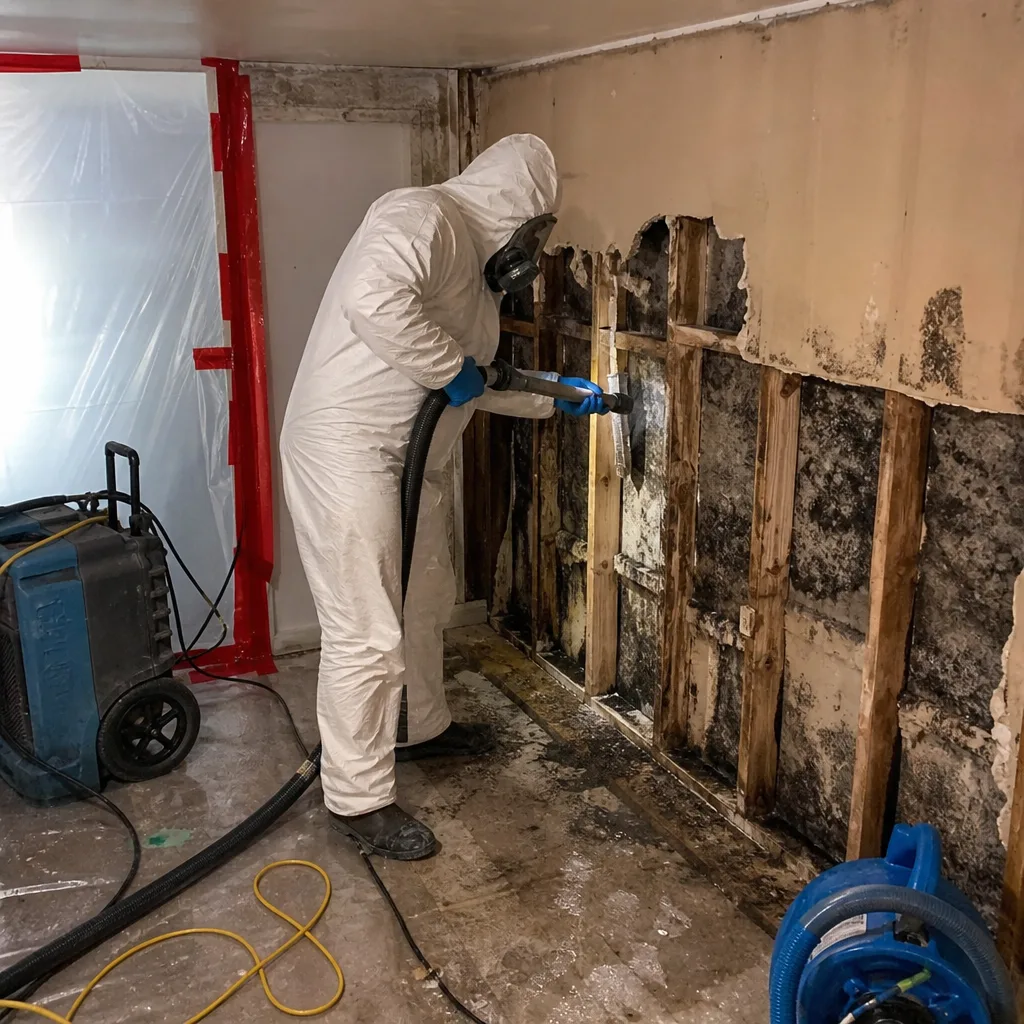
Reconstruction is where many Miami homeowners experience scope creep, because it’s where the restoration contractor’s work overlaps with general contracting, and the boundaries blur.
The key distinction: mitigation is emergency work performed to stabilize and dry. Reconstruction is planned work performed to restore. Mitigation can and should move fast; reconstruction should be scoped, scheduled, and priced in writing like any remodel. At DryMark Restoration Miami, we separate these phases explicitly. The mitigation invoice closes with drying clearance. The reconstruction proposal begins with a new written scope, new material selections, and a new price - Haven Standard, Clause 1 applies to both, but they’re separate documents with separate approvals.
This separation matters for three reasons. First, it prevents the “while we’re here” upsell that inflates reconstruction costs. Second, it allows you to obtain competitive bids for reconstruction without pressure from an active drying operation. Third, it creates clean documentation for your insurer, who may apply different coverage limits or depreciation schedules to mitigation versus reconstruction.
Reconstruction costs in Miami carry the geographic premiums noted earlier: concrete block work, coastal material matching, and permit requirements. A standard 12×14 living room rebuild - drywall, paint, baseboard, carpet - runs $4,500-$7,500 in basic finishes. The same room with moisture-resistant drywall, upgraded trim, and engineered hardwood flooring runs $8,500-$14,000. Matching original Cuban tile or terrazzo in a historic Coconut Grove home can push the same square footage past $20,000.
We provide a written reconstruction scope with material allowances and labor line items before any build-back begins. Changes require written change orders. This is not flexibility theater; it’s the documentation discipline that prevents disputes and keeps projects on budget.
Common Mistakes to Avoid
- Accepting a phone estimate without on-site inspection - No contractor can accurately category-classify a loss without moisture readings and material verification. A phone estimate is a guess, not a price, and guesses change dramatically once work begins.
- Delaying the call because visible water seems minimal - In Miami’s humidity, water travels through concrete block cavities and under tile without visible surface indication. By the time you see staining, the damage has spread. Early professional assessment with thermal imaging and moisture mapping limits scope and cost.
- Choosing the lowest bid without verifying documentation practices - A low bid with no daily drying logs, no photo record, and no equipment serials will likely cost more after insurer deductions and potential rework. The cheapest initial price is often the most expensive final price.
- Allowing reconstruction to begin before drying clearance - Building over damp materials guarantees mold and guarantees future reconstruction. Proper drying clearance requires verified moisture content at specified depths, not surface dryness.
- Failing to verify permit requirements - Miami-Dade permits electrical, plumbing, and structural work. Unpermitted reconstruction can void insurance coverage, trigger code enforcement, and require demolition of completed work.
- Not requesting the final documentation packet - Your insurer, your mortgage holder, and your future buyer may all require restoration documentation. Request it at project close, verify it includes daily logs, photos, equipment inventory, and final readings, and store it with your property records.
When to Call a Professional
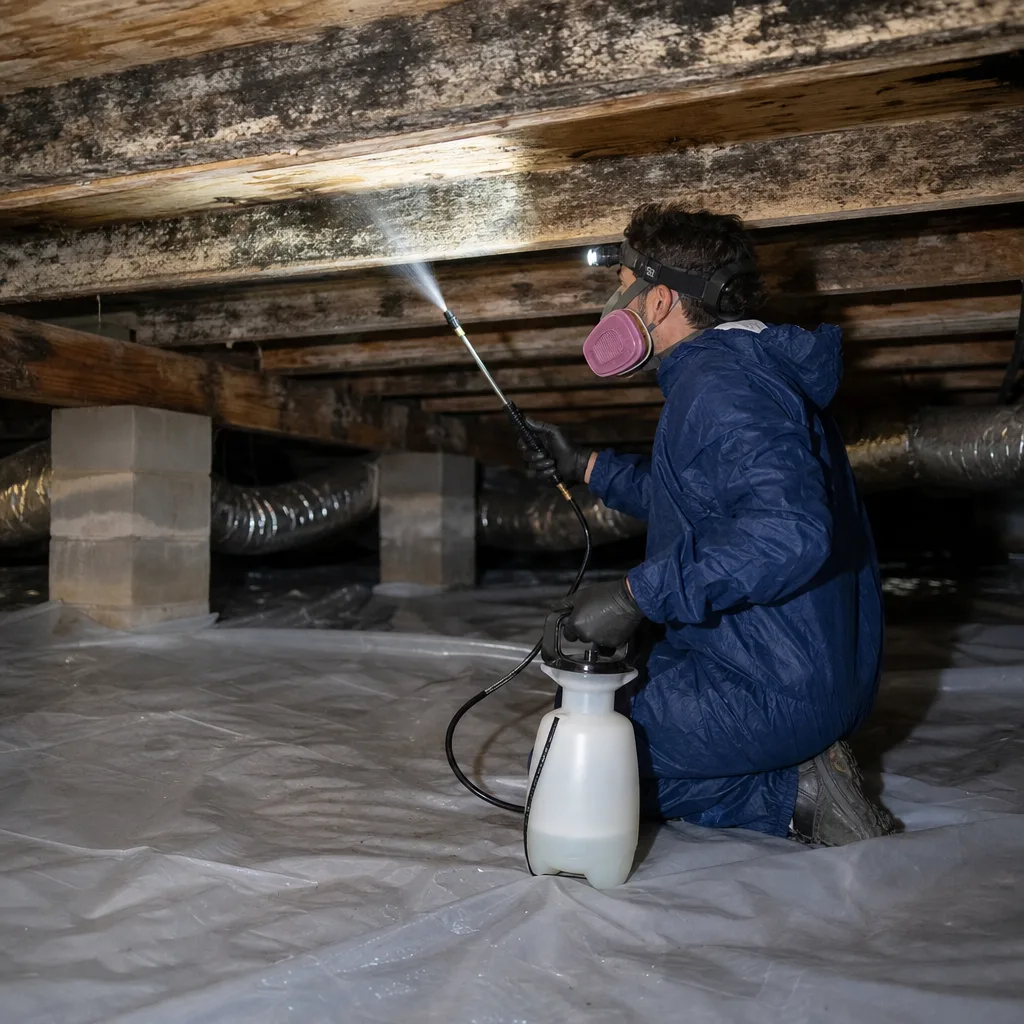
Call a restoration professional when water has affected materials beyond a small surface area you can dry with household fans, when the water source is Category 2 or 3, when mold is visible or suspected, when the loss involves electrical or structural elements, or when you need documentation for an insurance claim. Not sure whether to tackle it yourself? Read our DIY vs Professional Damage Restoration: The Miami Homeowner’s Decision Guide. In Miami’s climate, the threshold for professional intervention is lower than in drier regions because microbial growth begins within 24-48 hours and spreads rapidly.
DryMark Restoration Miami offers free estimates in Miami - call (786) 250-0820. Every estimate includes a written price before work begins, a documented photo record on every visit, and the 365-Day Done Right Promise backed by The Haven Standard. We also provide a Free Second Opinion on any competitor’s written estimate at no charge. Browse more guides & resources to protect your home.
Frequently Asked Questions
Water damage restoration in Miami typically costs between $3,200 for a small Category 1 loss and $28,000 or more for a Category 3 loss with mold and reconstruction, with most homeowners paying $6,500-$14,000 for standard whole-room mitigation. The exact cost depends on moisture category, affected material classification, and whether mold was present at drying clearance. Call (786) 250-0820 for a written estimate specific to your loss - estimates are free.
Most Miami homeowners policies cover sudden and accidental water damage from sources like burst pipes or appliance failures, but exclude gradual leaks, flood damage (which requires separate flood insurance), and sewage backup without specific endorsement. Coverage also depends on documentation quality - claims with daily drying logs, photo records, and equipment serial numbers settle at higher percentages. We coordinate directly with adjusters and provide the documentation packet that supports full coverage. Call (786) 250-0820 to discuss your specific policy situation.
For emergency water damage, DryMark Restoration Miami answers calls live 24 hours a day, 7 days a week with no voicemail trees, and dispatches crews for on-site response. Reconstruction work is scoped, scheduled, and priced in writing before beginning, not dispatched as emergency service. The distinction matters: speed belongs to mitigation, where water is still moving; planning belongs to reconstruction, where precision prevents future problems.
Category 1 water affecting less than 10 square feet of non-porous materials can sometimes be handled with proper drying equipment, but Category 2 and 3 losses require professional remediation due to contamination risks and insurance documentation requirements. In Miami’s climate, DIY drying frequently fails because household equipment cannot achieve the vapor pressure differential needed to dry concrete block cavities or subfloor spaces, leading to mold that requires costlier remediation later. A professional assessment with moisture mapping costs nothing and provides the data to make an informed decision.
At DryMark Restoration Miami, we coordinate directly with your adjuster, providing the documentation packet - daily drying logs, photo records, equipment inventory with serial numbers, and trade-separated reconstruction scopes - that adjusters need to process claims efficiently. This direct coordination is standard, not an additional service, because proper documentation is the core of what we do. You remain the policyholder and approve all work, but the administrative burden of documentation and follow-up is ours.
A fair estimate specifies moisture category and class, lists equipment by make, model, and daily rate, separates demolition and reconstruction by trade, states documentation deliverables, and provides a written price before work begins. Compare line items against the benchmarks in this guide, and obtain a Free Second Opinion on any competitor’s written estimate - we review competitor quotes at no charge as part of The Haven Standard.
The Bottom Line

Miami restoration costs are driven by three variables that every homeowner can learn to evaluate: moisture category, material classification, and documentation density. Two homes with identical visible damage can differ by $18,000 because one loss was Category 1 with clean water and rapid documentation, while the other became Category 3 with mold growth and an invoice an adjuster couldn’t verify. The contractor you choose should explain these variables before work begins, put every line item in writing, and deliver the daily logs and photo records that turn restoration invoices into payable claims. Price transparency isn’t a marketing feature - it’s the documentation discipline that protects your investment.
Written by Alicia Brennan, Owner at DryMark Restoration Miami, serving Miami since 2011.