
Last updated September 23, 2026
Free visual inspection and a written scope of work before any mitigation begins - photos, moisture readings, and drying logs go in your claim file
The scope we write is the scope we bill. Anything new gets shown to you, in writing, before we touch it.
Damage Restoration Permits, Codes & Inspections in FL: What You Need to Know
A Miami homeowner accepted a contractor’s assurance that “drywall replacement doesn’t need a permit.” At closing, the county flagged an open unpermitted work order. The sale stalled 47 days while a retroactive inspection was scheduled, the buyer’s lender refused to fund, and the homeowner paid $3,200 in permit fees, inspections, and expediting costs that the original contractor had avoided. In Florida, restoration permits are not a contractor convenience. They are a property record that follows the deed, and the liability sits with the homeowner when they are skipped. This guide explains when Miami-Dade County requires permits for restoration work, how Florida’s flood-zone rules change the calculation, and what documentation protects your insurance claim and your property value. For more guides & resources, visit our blog.
Quick Answer
Most water damage restoration in Miami requires a building permit when drywall removal exceeds one full sheet, electrical or plumbing systems are exposed, or reconstruction crosses the threshold from mitigation into repair. Florida’s 25% substantial improvement rule adds another layer: in flood zones, restoration costs that exceed 25% of the property’s market value can trigger elevation certificate requirements and National Flood Insurance Program compliance reviews. The homeowner holds liability for unpermitted work, not the contractor.
Table of Contents
- Mitigation vs. Reconstruction: Two Permit Paths
- Miami-Dade County Permit Thresholds for Restoration Work
- Florida’s 25% Rule and Flood Zone Complications
- What Permits Do for Your Insurance Claim
- How to Verify and Track Permits in Miami-Dade
- Electrical and Plumbing: Hidden Permit Triggers
- Common Mistakes to Avoid
- When to Call a Professional
- Frequently Asked Questions
Mitigation vs. Reconstruction: Two Permit Paths
Restoration work splits into two categories under Miami-Dade building code, and the permit requirement depends on which category your job falls into. Contractors who blur this distinction create the inspection gaps that surface years later.
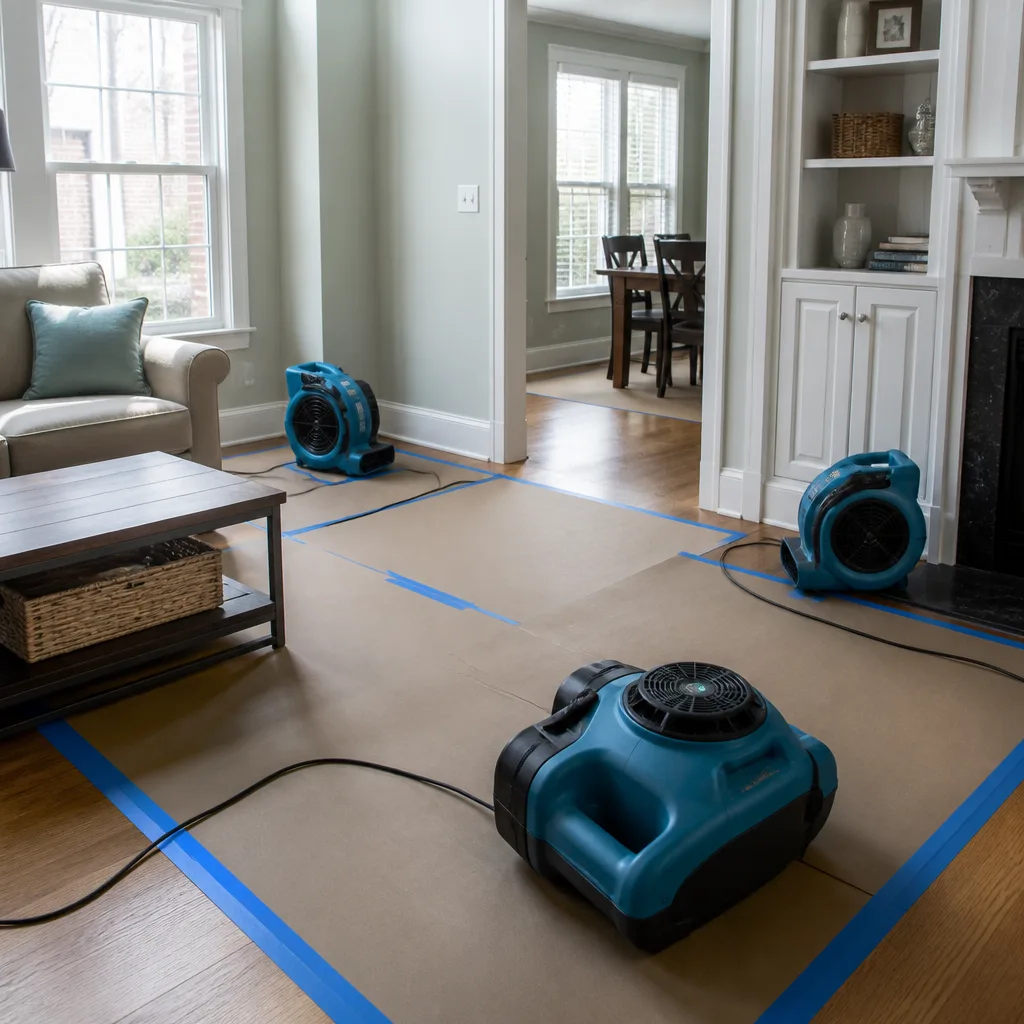
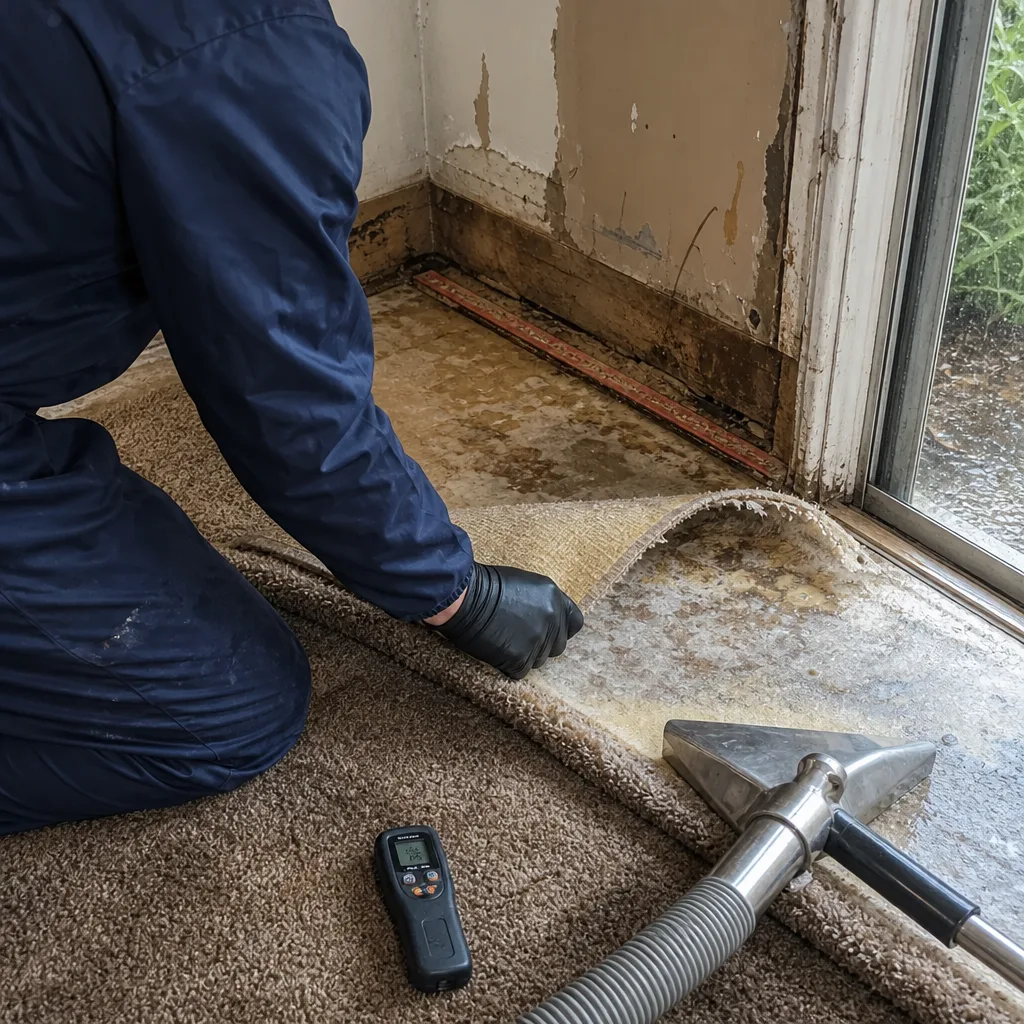
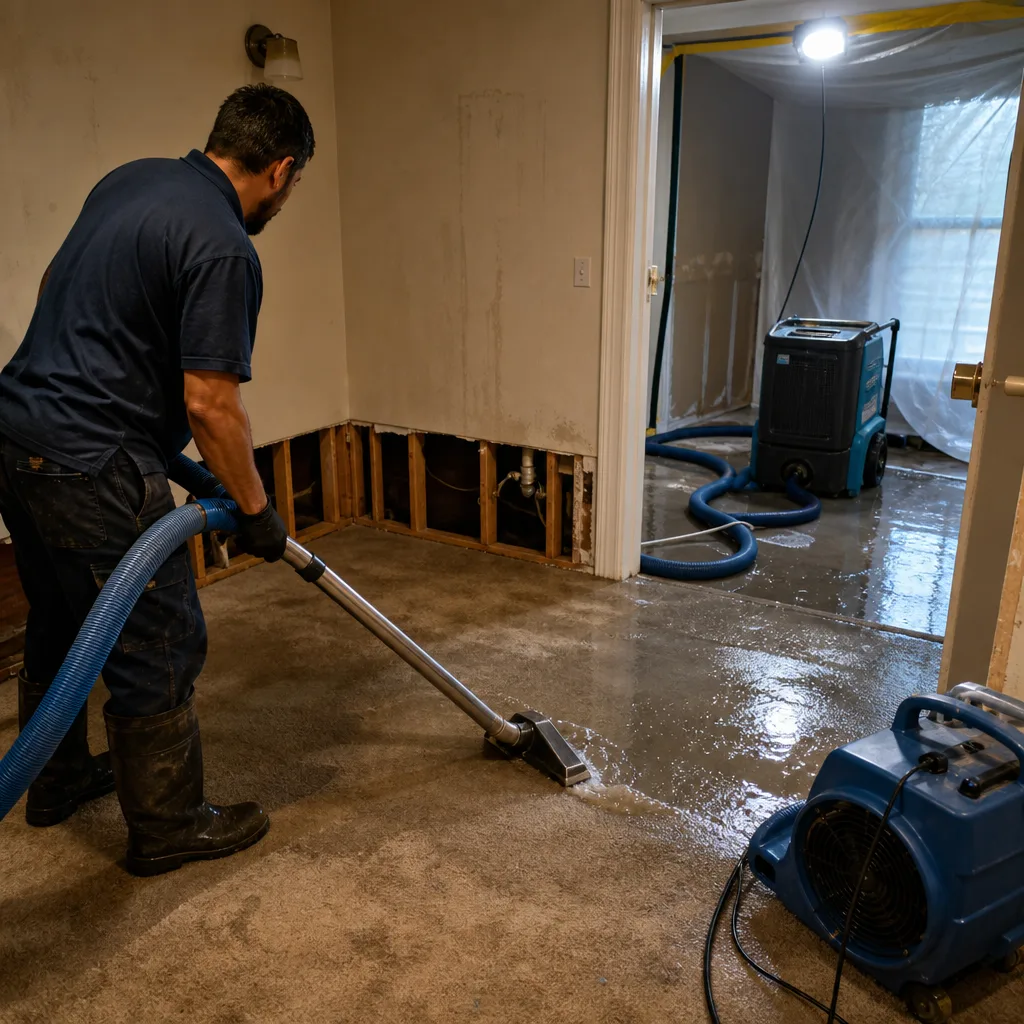
Mitigation is the emergency phase: water extraction, controlled demolition of wet materials, drying with professional-grade equipment, and application of antimicrobial agents. In Miami-Dade, mitigation generally does not require a building permit if no structural elements are altered and the work is temporary in nature. We deploy Dri-Eaz and Phoenix dehumidifiers, B-Air air movers, and Injectidry cavity drying systems to establish psychrometric equilibrium, that is, the balance of temperature and humidity that stops secondary damage. This phase is documented with daily moisture logs, photo records, and written scope sheets, but it typically stops short of permit territory.
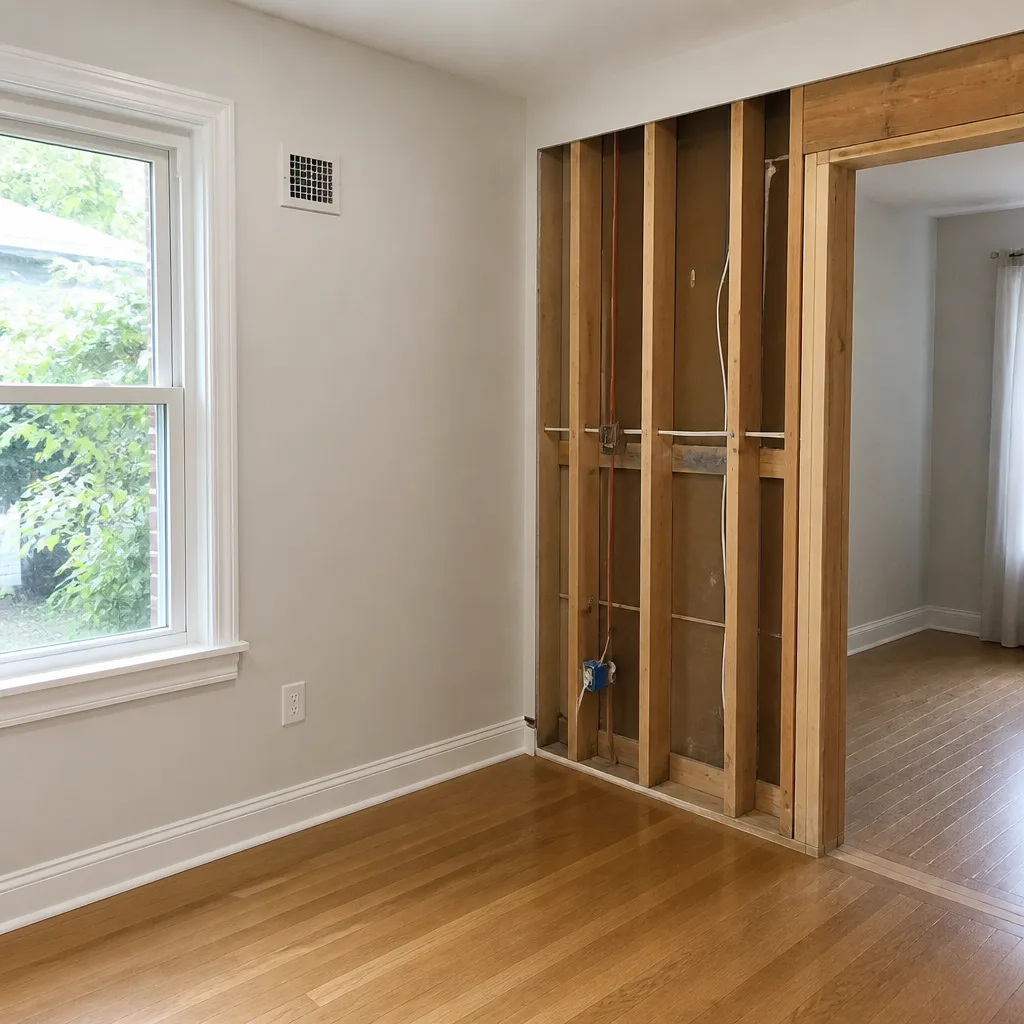
Reconstruction is the repair phase: installing new drywall, replacing subflooring, rebuilding cabinets, running new electrical circuits, or repiping sections of wall. Once reconstruction begins, Miami-Dade County almost always requires a building permit. The trigger is not the scale of the damage. It is the nature of the repair. Replace one 4×8 sheet of drywall in a Coconut Grove condo, and you may not need a permit. Remove drywall to access wet insulation, discover corroded wiring, run a new Romex circuit, and replace with two sheets, and you have crossed into permitted work.
The documentation gap we see most often: a contractor performs mitigation, then begins reconstruction without pulling the required permit, treating both phases as “emergency work.” The homeowner believes the job is complete. The county records show nothing. At sale, refinance, or a subsequent insurance claim, the open work order appears.
At DryMark Restoration Miami home, we separate these phases in writing. The mitigation scope is one document. The reconstruction scope, with permit status noted, is another. Haven Standard, Clause 1 applies to both: a written price before work begins, with permit costs itemized where required.
Miami-Dade County Permit Thresholds for Restoration Work
Miami-Dade County’s building department maintains specific thresholds that determine when restoration triggers permit requirements. These are not suggestions. They are the criteria inspectors apply when they discover unpermitted work, and they are the standards that title companies check before closing.
Drywall and wall finishes: Replacement of more than one full sheet of drywall (32 square feet) in a single room requires a permit. Patching smaller areas with joint compound and tape does not. In practice, water damage in Miami rarely stays below this threshold. A pipe burst in a Coral Gables ranch home, or a supply line failure in a Brickell high-rise, typically saturates multiple walls. The contractor who removes four sheets, installs new, and finishes without a permit has created a code violation.
Subflooring and structural elements: Any replacement of subflooring, floor joists, or load-bearing wall framing requires a permit. This includes the plywood or OSB beneath tile, hardwood, or carpet that must be removed due to category 2 or category 3 water intrusion. Miami’s humidity accelerates subfloor deterioration once moisture penetrates, so this is a common trigger.
Roofing and exterior: Roof deck repair or replacement, fascia and soffit reconstruction after storm damage, and window or door replacement in exterior walls all require permits. Miami-Dade’s High Velocity Hurricane Zone requirements add wind-load specifications that standard roofing permits do not address.
Demolition: Even selective demolition, the removal of building elements to access damage, can require a separate demolition permit if structural components are involved or if the work exceeds certain square footage.
| Work Type | Permit Required? | Typical Miami Scenario |
|---|---|---|
| Water extraction and drying | No | Emergency mitigation with Dri-Eaz/Phoenix equipment |
| Drywall removal and replacement (1+ sheets) | Yes | Pipe burst in kitchen wall |
| Subfloor replacement | Yes | Category 3 loss in ground-floor unit |
| Electrical circuit replacement | Yes | Wet outlet boxes, corroded wiring |
| Plumbing repipe in wall | Yes | Supply line failure behind shower |
| Roof deck repair | Yes | Hurricane wind-driven rain intrusion |
| Cabinet removal and replacement | Sometimes | If plumbing or electrical is relocated |
The permit application in Miami-Dade requires a licensed contractor, detailed scope of work, and often engineered plans for structural or electrical modifications. The fee structure scales with project value, but the base permit for minor residential reconstruction typically runs $150-$400, with inspection fees added per visit. Expedited review, often necessary when a sale is pending, costs significantly more.
Florida’s 25% Rule and Flood Zone Complications
Florida’s substantial improvement rule, often called the 25% rule, adds a permit dimension that standard restoration does not trigger anywhere else in the country. This rule applies statewide but carries particular weight in Miami, where much of the developed land sits in FEMA flood zones.
The rule states: if the cost of repairs, reconstruction, or improvements to a structure exceeds 50% of its market value within a rolling period, the entire structure must be brought into full compliance with current floodplain management requirements. In some interpretations and under certain local amendments, including Miami-Dade’s stricter application, the threshold drops to 25% for properties in Special Flood Hazard Areas, those in Zone AE and VE.
What this means in practice: a category 3 water loss in a Little River home built in 1962, valued at $400,000, with restoration and reconstruction costs of $105,000, has crossed the 25% threshold. The property must now comply with current elevation requirements. If the structure was built below the base flood elevation, the homeowner may be required to elevate, floodproof, or demolish and rebuild to current standards. The National Flood Insurance Program requires an elevation certificate. The permit process expands from a simple repair permit to a full floodplain compliance review.
We have documented cases in Miami where homeowners accepted restoration bids without understanding this trigger. The contractor completed the work. The homeowner filed an insurance claim. Two years later, a FEMA map revision or a sale attempt revealed that the property was non-compliant. The insurance claim for the original loss was paid, but the property was now uninsurable for future flood losses, and the county refused to issue a certificate of occupancy for any subsequent work.
The elevation certificate requirement is not theoretical. In Miami’s Zone AE areas, which include portions of Allapattah, Little Havana, and the Miami River corridor, FEMA’s current base flood elevation ranges from 8 to 11 feet NAVD88. A 1960s slab-on-grade home at 6 feet elevation that sustains $100,000 in damage faces a compliance decision that can cost $150,000 or more to resolve.
Documentation is the only protection. At DryMark Restoration Miami, we flag flood zone status in our initial assessment. If the property is in Zone AE or VE, we calculate a running cost total against market value and advise the homeowner when the 25% threshold approaches. This is not a permit service we provide directly. It is a documentation checkpoint that prevents a restoration project from becoming a compliance nightmare. The photo record, the written scope, and the line-item cost documentation become evidence in any subsequent FEMA or county review.
What Permits Do for Your Insurance Claim
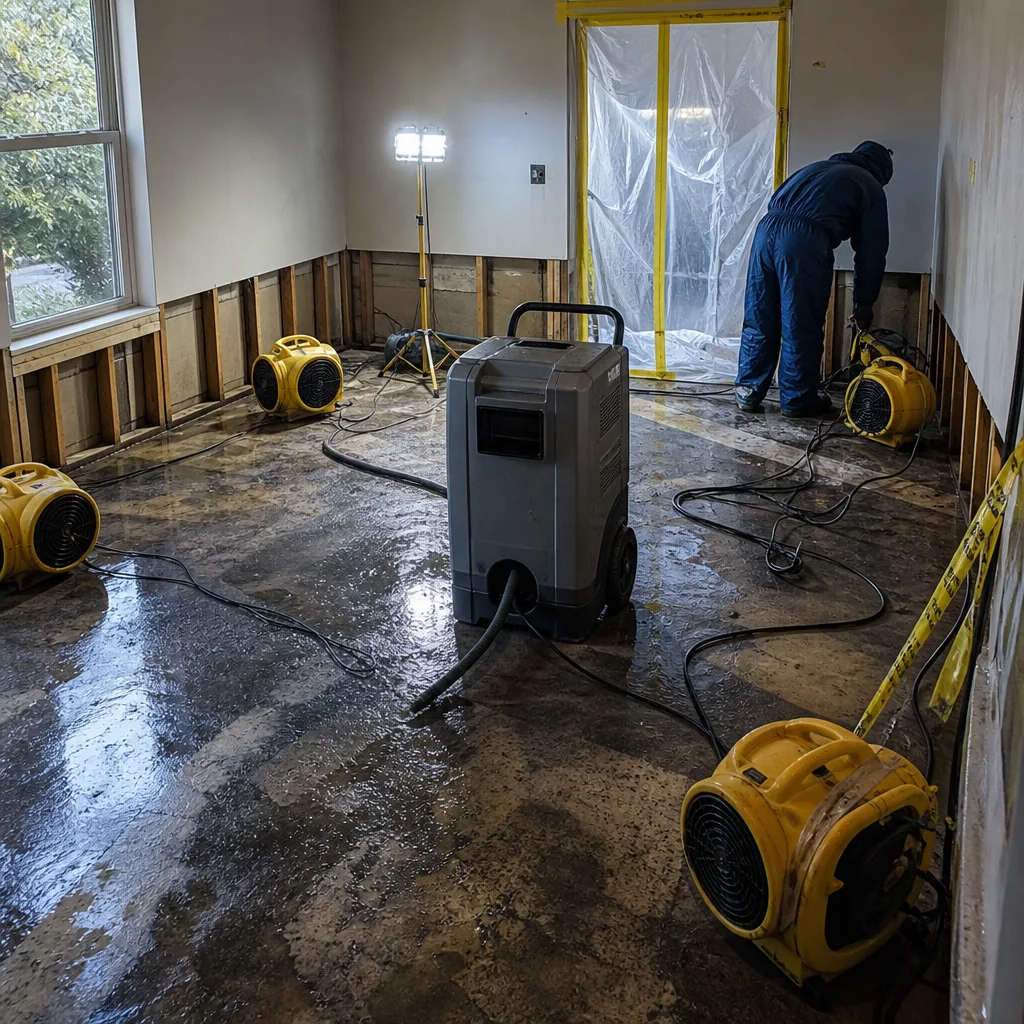
Permits function as third-party verification that work was performed to code, and insurance adjusters treat them accordingly. A closed permit with final inspection sign-off is a documented fact. An open or missing permit is a red flag that can delay payment, reduce settlement, or void coverage for related future damage.
When we document a Water Damage Restoration in Miami project, the permit status is recorded in the job file from day one. If mitigation transitions to reconstruction, we note the permit number, the issuing jurisdiction, and the inspection schedule. The daily drying logs, photo records, and written scope sheets are cross-referenced to permit milestones. This produces a claim file that adjusters process without dispute.
The alternative is common and costly. A homeowner in Wynwood had a second-floor water loss in 2019. The contractor replaced drywall, tile, and cabinetry without permits. In 2023, a second water loss occurred in the same unit. The adjuster discovered the unpermitted 2019 work during the claim review. The insurer denied coverage for the new damage to the same walls, arguing that the prior unpermitted reconstruction may have contributed to the loss and that the policy required code-compliant repairs. The homeowner paid $18,000 out of pocket.
A closed permit also protects against subrogation. If the original water loss was caused by a third party, a negligent upstairs neighbor or a defective appliance, the responsible party’s insurer may dispute the scope of restoration. A permitted, inspected, and signed-off repair is harder to challenge than an undocumented contractor invoice.
For Fire & Smoke Damage Restoration in Miami, the permit documentation is even more critical. Fire reconstruction typically involves structural, electrical, and HVAC work, each with separate permit requirements. The insurance settlement for a fire loss often hinges on proof that reconstruction met code. A final inspection sign-off on the electrical permit, for example, is the documentation that triggers release of the electrical reconstruction portion of the settlement.
The Haven Standard requires this documentation on every job. Clause 1: written price before work begins, including permit costs where applicable. The photo record on every visit captures not just the damage and the drying progress, but the permit placard posted at the property, the inspection sign-off stickers, and the final certificate of completion.
How to Verify and Track Permits in Miami-Dade
Homeowners can and should verify permit status independently. Miami-Dade County’s ePermits portal provides public access to permit records, and the process is straightforward once you know what to look for.
- Locate the permit record: Visit the Miami-Dade ePermits portal and search by property address or folio number. The folio number appears on the property tax bill and is the most reliable search term. Results show all permits, open and closed, associated with the property.
- Identify the permit type: Look for “Building,” “Electrical,” “Plumbing,” or “Mechanical” permits. A general “Repair” or “Remodel” permit may cover multiple trades. Note the permit number, issue date, and the contractor listed.
- Check inspection status: Each permit lists scheduled and completed inspections. A status of “Approved” or “Passed” with a date indicates completion. “Pending,” “Failed,” or “No Show” indicates an open or problematic permit.
- Verify the contractor: The permit lists the licensed contractor of record. If this does not match the company performing your work, ask why. Some contractors use another company’s license, a practice that is legal under certain arrangements but should be disclosed in writing.
- Document your findings: Screenshot or print the permit status page. Save it with your insurance claim file. If the permit is open, contact the contractor in writing and request a completion schedule. If the contractor is unresponsive, contact Miami-Dade’s Building Department directly.
If your contractor pulled permits but never closed them, the property carries an open work order that can block sales, refinances, and subsequent permits. The correction requires the original contractor or a new licensed contractor to schedule the final inspection, which may involve reopening walls or demonstrating that work was completed to code. In Miami’s competitive real estate market, an open permit discovered during a title search can kill a deal.
We document permit status at four points in every reconstruction project: application, rough inspection, final inspection, and certificate of completion. The homeowner receives copies at each stage. This is not an extra service. It is standard documentation under The Haven Standard, producing the evidence that turns a restoration invoice into a payable insurance claim.
Electrical and Plumbing: Hidden Permit Triggers
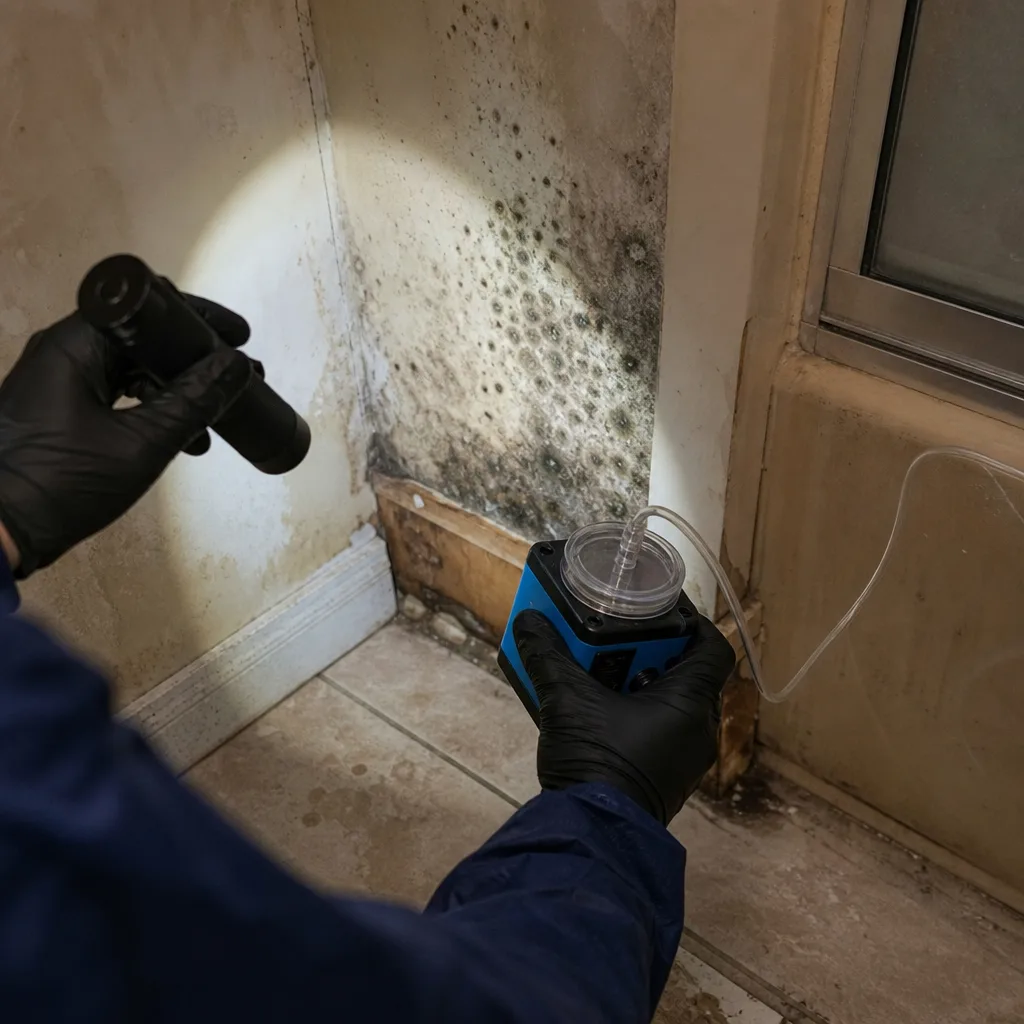
Water damage frequently exposes electrical and plumbing systems, and the permit triggers in these trades are stricter than for drywall or flooring. A contractor who replaces wet drywall around an electrical panel without addressing the panel itself may still trigger an electrical permit requirement. A plumber who opens a wall to replace a failed supply line and reroutes the pipe through a different stud bay has performed work that requires inspection.
Electrical permit triggers in Miami-Dade:
- Replacement of any electrical panel, breaker, or service entrance cable
- New circuit installation, even if the circuit serves only a restored area
- Relocation of outlets, switches, or fixtures from their original positions
- Replacement of wiring that was submerged or shows corrosion from moisture exposure
- Installation of GFCI protection where not previously required, a common update in Miami’s older housing stock
Electrical work in Miami-Dade must be performed by a licensed electrical contractor or a licensed general contractor with appropriate electrical qualifications. The permit requires a rough inspection before drywall is closed and a final inspection after finish work is complete. Skipping the rough inspection is a common contractor shortcut that leaves the homeowner with no proof that wiring was inspected behind the walls.
Plumbing permit triggers:
- Replacement of water supply lines, drain lines, or vent stacks within walls
- Relocation of any plumbing fixture, including moving a toilet or sink during a bathroom restoration
- Replacement of water heaters, which in Miami-Dade also requires a mechanical permit for gas connections
- Installation of backflow prevention devices, increasingly required in flood-prone areas
Plumbing permits in Miami require pressure testing of new supply lines and camera inspection of drains in some jurisdictions. The final inspection confirms that fixtures are properly vented and that no cross-connections exist. A failed plumbing inspection can require significant rework, which is why some contractors avoid the permit entirely.
For Mold Remediation in Miami, electrical and plumbing permits are common secondary requirements. Mold growth behind a shower wall often reveals leaking supply lines and deteriorated wiring. The mold remediation scope may not require a permit, but the reconstruction that follows frequently does. We have documented cases in Miami Beach and Edgewater where mold remediation contractors completed their work, left the property, and the homeowner discovered months later that the subsequent reconstruction required permits that were never pulled.
The documentation protocol: every DryMark Restoration Miami assessment includes a trade-by-trade evaluation. If electrical or plumbing exposure is likely, we note the permit requirement in the written scope and itemize the cost. The homeowner approves in writing before work begins. Haven Standard, Clause 1.
Common Mistakes to Avoid
- Accepting a contractor’s verbal assurance that “no permit is needed.” In Miami-Dade, the permit requirement is determined by the scope of work, not the contractor’s preference. Verify independently through the ePermits portal.
- Assuming mitigation and reconstruction use the same permit rules. Emergency water extraction does not require a permit. Replacing the drywall and subflooring that were removed almost always does. Contractors who conflate these phases create inspection gaps.
- Ignoring flood zone status in Zone AE or VE properties. The 25% substantial improvement rule can convert a standard repair permit into a full FEMA compliance review. Calculate cumulative repair costs against market value before work begins.
- Failing to request the final inspection sign-off. A permit that is issued but never closed is functionally the same as no permit. Request the certificate of completion and verify it in the ePermits portal.
- Paying in full before permit closure. Contractors who have been paid have reduced incentive to schedule final inspections. Structure payment to retain a holdback until the permit is closed and the certificate of completion is delivered.
- Not documenting permit status for insurance. Adjusters increasingly request permit documentation for reconstruction claims. An open permit can delay or reduce settlement. Include permit numbers and inspection dates in your claim file.
- Assuming a condo association handles all permits. In Miami’s high-rise market, building permits for common elements are typically the association’s responsibility. Permits for unit interior work, including drywall, electrical, and plumbing, are the unit owner’s responsibility unless explicitly covered in the restoration agreement.
When to Call a Professional
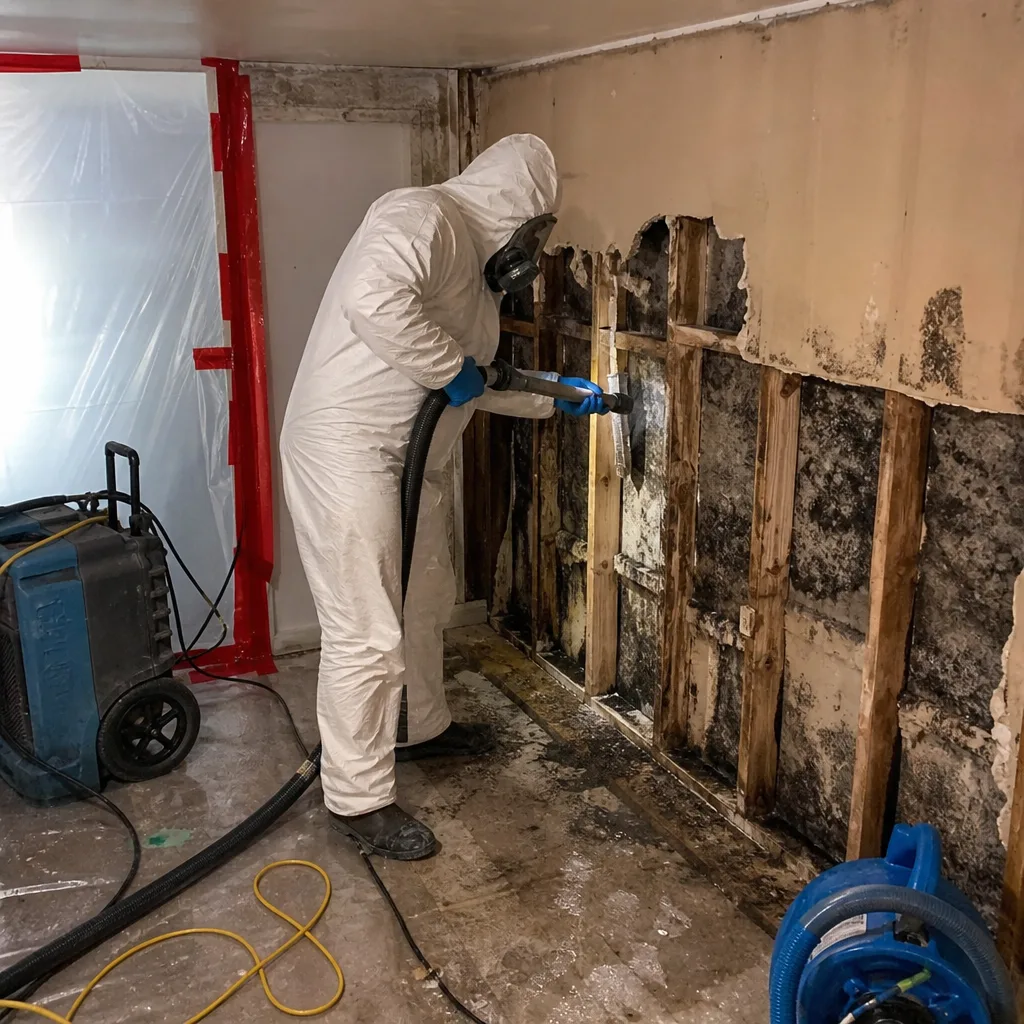
Call a licensed restoration contractor when water damage exposes structural elements, electrical systems, or plumbing; when the affected area exceeds one room; when the property is in a FEMA flood zone; or when you are preparing an insurance claim that includes reconstruction. The permit complexity increases with each of these factors, and the documentation requirements become correspondingly more precise. See our How to Hire a Damage Restoration Contractor in Miami: A Step-by-Step Guide for vetting questions to ask.
DryMark Restoration Miami offers free estimates in Miami. We assess permit requirements as part of every written scope, itemize permit costs where applicable, and document permit status through to final inspection. Call (786) 250-0820. Estimates include a flood zone check and a preliminary 25% rule calculation for properties in Zone AE or VE. Free Second Opinion on any competitor’s written estimate, including their permit assumptions.
Frequently Asked Questions
No. Emergency water extraction, controlled demolition of wet materials, and structural drying with professional-grade equipment do not require a building permit in Miami-Dade County. The permit requirement begins when reconstruction starts: drywall replacement, subfloor installation, electrical repair, or plumbing work. Call (786) 250-0820 if you are unsure whether your project has crossed from mitigation into reconstruction.
Enter your address in FEMA’s Flood Map Service Center. If the property is in Zone AE, VE, or any Special Flood Hazard Area, the 25% substantial improvement rule applies. In Miami, this includes portions of Allapattah, Little Havana, Little River, the Miami River corridor, and coastal areas in Miami Beach and Key Biscayne. We check flood zone status as part of every DryMark Restoration Miami assessment.
The sale can be blocked or delayed. Title companies flag open permits as encumbrances. Buyers’ lenders typically refuse to fund until permits are closed. The correction requires scheduling final inspections, which may involve reopening walls to demonstrate code compliance. In Miami’s market, this delay averages 30-60 days and costs $2,000-$5,000 in fees and expediting.
Sometimes, but with significant risk. The initial claim may be paid if the insurer does not discover the omission. Future claims for related damage may be denied. If the unpermitted work contributed to subsequent damage, the insurer may invoke policy exclusions for code violations. A closed permit with final inspection is the documentation that prevents this dispute.
Homeowners can pull permits as owner-builders in Miami-Dade, but this makes you the contractor of record and liable for code compliance. Most restoration work requires licensed trade contractors for electrical and plumbing, and the permit is typically pulled by the licensed contractor performing the work. Verify that the permit lists a licensed contractor, not just the homeowner.
Standard building permits for minor residential reconstruction review in 5-10 business days. Electrical and plumbing permits review in 3-5 days. Inspection scheduling adds 1-2 weeks depending on inspector availability. Expedited review is available for an additional fee, typically reducing review to 2-3 days. The full cycle from application to final sign-off typically runs 3-6 weeks for straightforward restoration projects.
Keep the permit application, all inspection records, the certificate of completion, the written scope of work, the final invoice, the photo record, and the daily drying logs if mitigation was performed. At DryMark Restoration Miami, we deliver these as standard, not as extras. They are the evidence that supports your insurance claim and protects your property value.
The Bottom Line
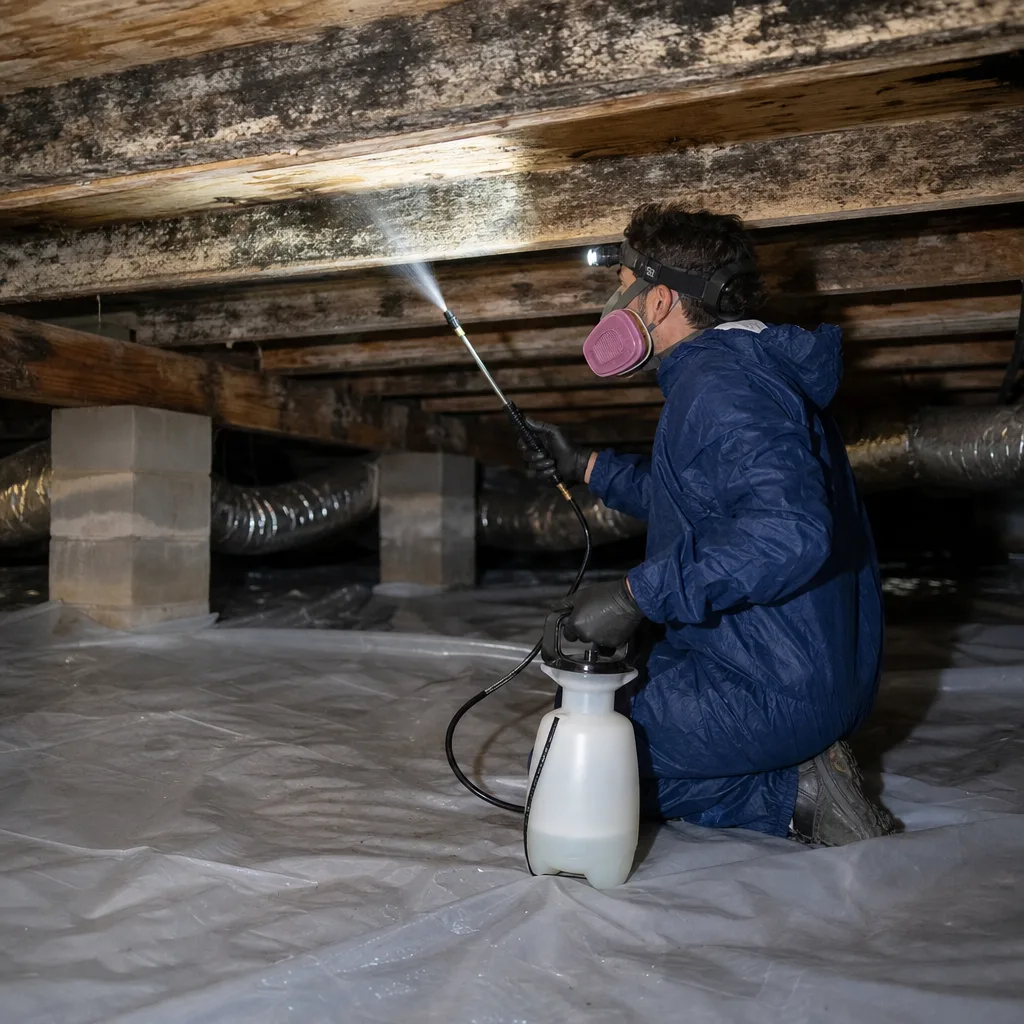
Florida restoration permits are not bureaucratic obstacles. They are property records that follow the deed, insurance documentation that supports your claim, and compliance checkpoints that protect against future liability. In Miami-Dade, the thresholds are specific: one sheet of drywall, any electrical or plumbing exposure, any structural element, and you are in permit territory. In flood zones, the 25% rule adds a compliance dimension that can convert a repair into a major reconstruction requirement. The homeowner holds the liability, not the contractor. Verify permit status through the ePermits portal, document every stage, and structure payment to ensure closure before final payment. The documentation you keep is the documentation that pays.
Written by Alicia Brennan, Owner at DryMark Restoration Miami, serving Miami since 2011.