
Last updated September 23, 2026
Free visual inspection and a written scope of work before any mitigation begins - photos, moisture readings, and drying logs go in your claim file
The scope we write is the scope we bill. Anything new gets shown to you, in writing, before we touch it.
How to Hire a Damage Restoration Contractor in Miami: A Step-by-Step Guide
Florida’s Department of Business & Professional Regulation logged over 1,400 complaints against unlicensed contractors in a single post-hurricane year. The majority of Miami victims who hired them did so within the first 48 hours, before they thought to verify a license number. In a city where water damage can escalate from a leaking AC condensate line to full subfloor rot in 72 hours of summer humidity, that first decision compounds fast. This guide walks you through hiring a restoration contractor in Miami as a document audit: what papers to demand, what numbers to verify, and what red flags mean you should close the door. For a broader overview, see The Complete Guide to Damage Restoration in Miami.
Quick Answer
To hire a damage restoration contractor in Miami, verify their DBPR license number online before signing anything, demand a written scope with line-item pricing and equipment specifications before work starts, and refuse any pressure to sign an Assignment of Benefits at the door. The right contractor documents every moisture reading, every photo, and every drying goal in writing - because in Miami’s humidity, what gets tracked gets dried, and what gets dried gets paid by insurance. Our Water Damage Restoration Maintenance Checklist for Miami Homeowners covers what to monitor between professional visits.
Table of Contents
- How to Verify a Florida Restoration License (DBPR Lookup)
- Five Written Items Every Scope Must Include Before Work Starts
- Assignment of Benefits in Miami: What to Know Before Signing
- How to Compare Competing Bids: Equipment Density vs. Total Price
- What a Reputable Contractor’s First-Visit Documentation Should Include
- How Miami’s Climate Changes the Restoration Timeline
- Common Mistakes to Avoid
- When to Call a Professional
- Frequently Asked Questions
How to Verify a Florida Restoration License (DBPR Lookup)
In Miami, anyone who performs water damage restoration, mold remediation, or reconstruction on your home must carry a valid Florida license. The license type determines what they can legally do, and many homeowners discover too late that their contractor was only licensed for one piece of a multi-step job.
Step-by-Step DBPR Verification
- Go to myfloridalicense.com and select “Verify a License.”
- Enter the contractor’s name or license number. A legitimate contractor provides this number without hesitation.
- Check the License Type field. For full-service restoration, you typically need:
- Certified General Contractor (CGC): Required for structural repairs, reconstruction, and any work exceeding $1,000 in value.
- Mold Remediator (MRSR): Required specifically for mold assessment and remediation work. A GC cannot legally perform mold remediation without this additional certification.
- Verify License Status shows “Current/Active” with no pending disciplinary actions.
- Confirm Workers’ Compensation coverage is current if the contractor employs anyone.
Here’s where Miami’s market gets specific. After Hurricane Irma in 2017, DBPR issued emergency licenses that expired within 90 days. Some contractors still operating today began under those temporary credentials and never upgraded. An active license number starting with “EC” (emergency certification) that lacks a current standard renewal is a dead end for your claim documentation. We’ve reviewed competitor files where this single oversight voided $40,000 in otherwise valid drying invoices.
Ask specifically: “Are you licensed to perform both the emergency mitigation and the reconstruction, or will you subcontract the rebuild?” If they subcontract, you need the subcontractor’s license number too. Your insurance adjuster will ask for it. Better you have it first.
What Each License Covers in Practice
| License Type | Can Legally Perform | Cannot Perform |
|---|---|---|
| Certified General Contractor (CGC) | Structural drying, demolition, reconstruction, roofing, flooring replacement | Mold assessment or remediation without MRSR endorsement |
| Mold Remediator (MRSR) | Containment, air filtration, antimicrobial application, post-remediation verification sampling | Structural reconstruction or electrical/plumbing work |
| Water Restoration Technician (WRT – IICRC) | Extraction, drying, dehumidification (industry certification, not state license) | Any structural repair; must work under licensed contractor |
At DryMark Restoration Miami home, our technicians carry both state licensure and IICRC, RIA, and IFA certifications. The license number is provided before we enter your home, and we maintain current workers’ compensation on every employee. No exceptions.
Five Written Items Every Scope Must Include Before Work Starts
Haven Standard, Clause 1: a written price before work begins. Not an estimate. Not a range. A line-item scope with every charge defined. In our experience reviewing competitor estimates for our Free Second Opinion service, the estimates that create claim disputes share one trait: vague language that lets the contractor add charges once the crew is inside your house.
Here are the five written items that separate a document an adjuster will pay from one they’ll fight.
1. Line-Item Pricing with Material Classifications
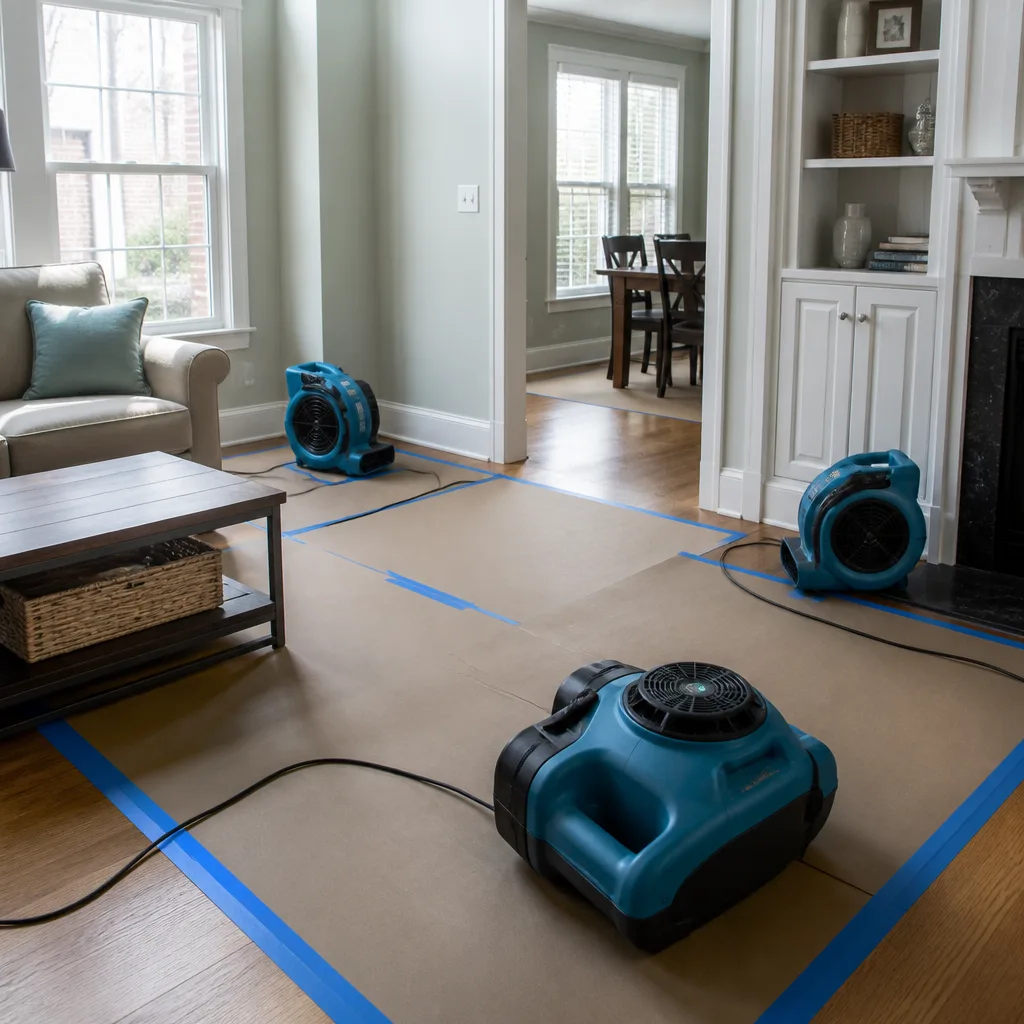
Every charge must name the material or service, the unit of measurement, and the price per unit. “Dry living room” is not a line item. “Deploy 6 Dri-Eaz Vortex axial air movers in living room (324 sq ft), Category 2 water loss, $X per day per unit” is. Material classifications matter: Category 1 (clean water), Category 2 (gray water), and Category 3 (black water) carry different drying protocols and different insurance reimbursement rates. The scope must state which category applies and why.
2. Equipment List with Placement Locations
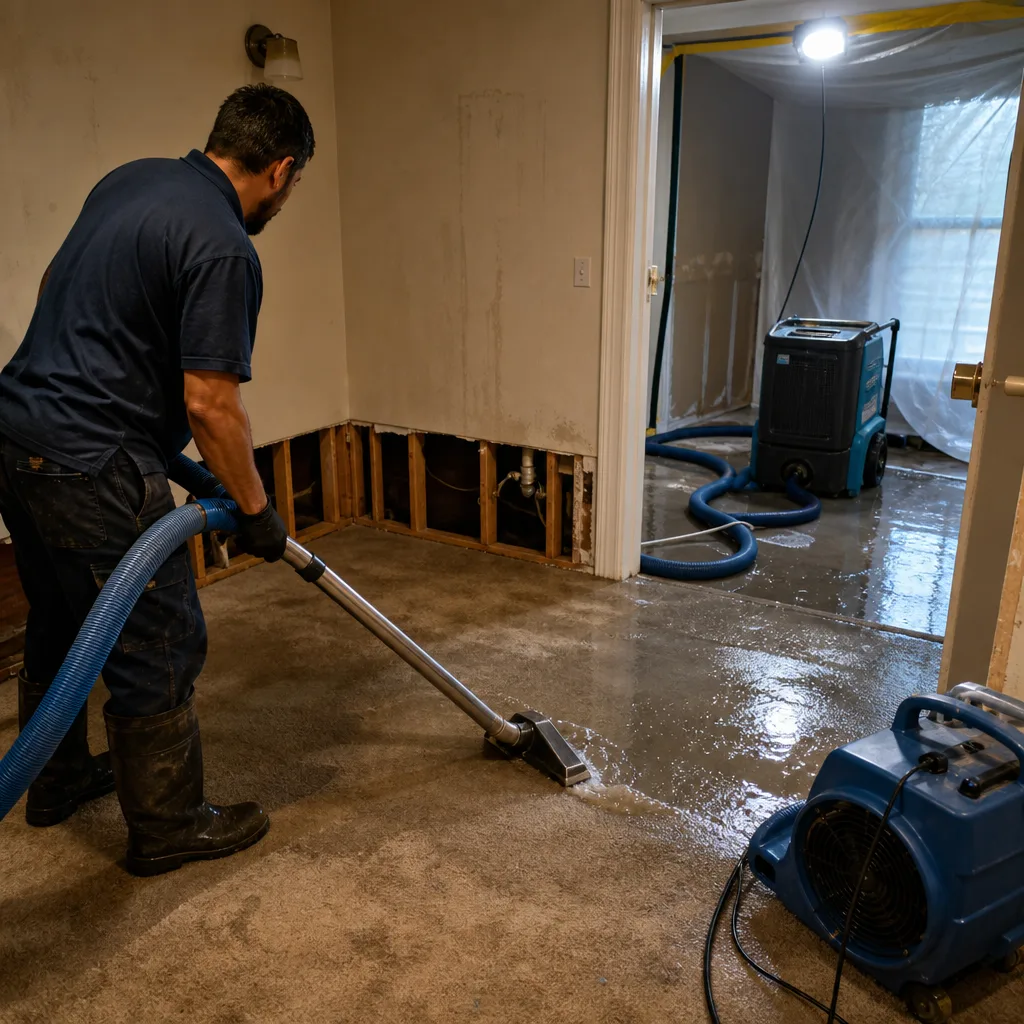
The scope should map equipment to rooms. “2 dehumidifiers, 8 air movers” tells an adjuster nothing. “Phoenix 200 MAX LGR dehumidifier in kitchen (12′ x 14′), positioned at south wall; 4 B-Air VP-33 air movers at base of north and east walls, 1 per 8 linear feet” creates a verifiable plan. If the equipment doesn’t match the placement in the photo documentation, the adjuster has questions. Good documentation answers them before they’re asked.
3. Target Moisture Readings for Clearance
Dry is not a feeling. Dry is a number. The scope must state the target moisture content for each affected material, measured with a calibrated pin or pinless meter, referenced to an unaffected control reading from the same structure. For example: “Subfloor OSB in master bedroom: current 28%, target ≤16%, control reading 12.3% from hallway closet.” This is psychrometric data - the measurement of moisture in air and materials - and it’s the difference between a paid invoice and a disputed one.
4. Timeline with Milestones
Day 1: extraction and initial moisture readings. Day 2-3: equipment monitoring and adjustment. Day 4: preliminary moisture check. Day 5: final readings and equipment removal if targets met. The timeline must include what happens if targets aren’t met: extended drying, equipment changes, or material removal. No surprises. No scope creep.
5. Lien Waiver Terms
In Florida, contractors can file a mechanic’s lien against your property for unpaid work, even if insurance delays payment. The scope must state when lien rights are waived: upon final payment, upon insurance settlement, or on a milestone schedule. Never sign a scope that lacks this language. We’ve seen Miami homeowners forced to pay restoration bills twice - once to the contractor, once to settle the lien - because the scope was silent on waiver timing.
At DryMark Restoration Miami, every scope is delivered in writing before equipment touches your floor. Every line item is explained. Every question is answered before the signature. That’s Haven Standard, Clause 1, and it’s been our practice since 2011.
Assignment of Benefits in Miami: What to Know Before Signing
An Assignment of Benefits (AOB) transfers your insurance claim rights to the contractor, who then bills your insurer directly. In Florida, AOB abuse became so widespread that the legislature reformed the law in 2019, but contractors still present AOBs at the door while water is spreading across your floor.
Here’s what Miami homeowners need to understand: an AOB is not inherently fraudulent, but it is a legal document that should involve your public adjuster or attorney, not just the contractor holding a clipboard. Once signed, the contractor controls the claim. They can sue your insurer without your involvement. They can settle for less than your damages. And if they overbill, you may face a coverage dispute that affects your policy renewal.
Red Flags in AOB Language
- Broad grant of “all insurance rights” rather than specific restoration work.
- Attorney fee provisions that let the contractor hire a lawyer at your policy’s expense.
- No cap on charges or no requirement for written approval before work exceeds the scope.
- Pressure to sign immediately - “We can’t start extraction until this is signed.”
The 2019 Florida AOB reform requires contractors to provide a written estimate, notify you of your right to rescind within 14 days, and limits attorney fee multipliers. But enforcement depends on the contractor’s compliance, and desperate homeowners in Miami’s post-storm chaos rarely read the fine print.
Our position at DryMark Restoration Miami: we do not require AOBs. We document every moisture reading, every photo, every drying log, and we bill your insurer with that documentation attached. If your adjuster has questions, we answer them with data. The claim stays in your name. The documentation supports it. That’s the Haven Standard approach, and it’s why our invoices clear faster than industry average.
If a contractor insists on an AOB before starting emergency mitigation, get a second opinion. Our Free Second Opinion on any competitor’s written estimate includes AOB review at no charge.
How to Compare Competing Bids: Equipment Density vs. Total Price
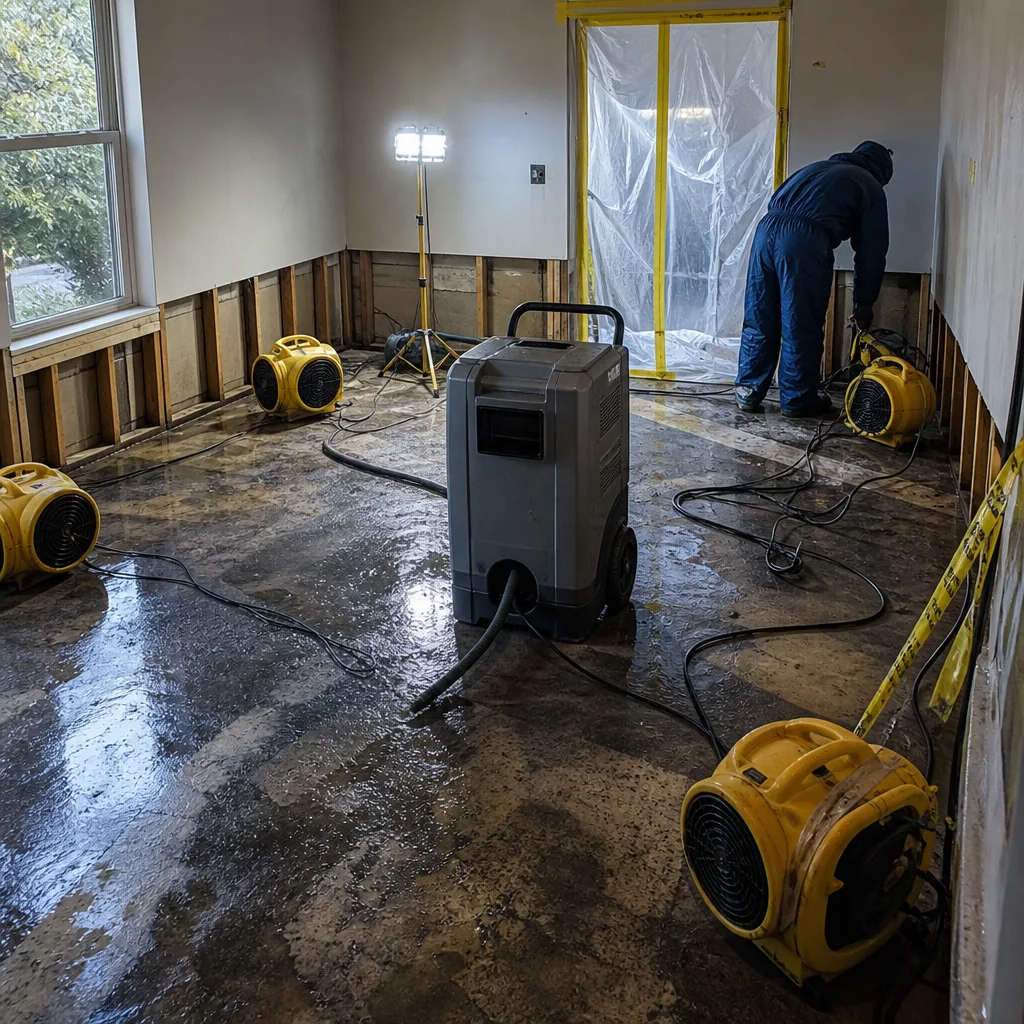
Homeowners in Miami often receive restoration bids ranging from $2,800 to $7,500 for what sounds like identical work. The difference usually isn’t fraud. It’s equipment density: how much drying capacity is applied per square foot, and whether that capacity matches the psychrometric load of your specific loss.
Air Mover Density
IICRC S500 standard calls for 1 air mover per 10-16 linear feet of wall in affected rooms, with additional units for closets, cabinets, and structural cavities. A 400 square foot living room with 80 linear feet of exterior wall needs 5-8 air movers, not 3. Low bids often under-equip, extending drying time and risking secondary damage. Ask each bidder: “How many air movers per 100 square feet, and what’s the model?”
Axial air movers like the Dri-Eaz Vortex or XPOWER X-3400A move more air volume than centrifugal units but consume more amperage. A bid that specifies model numbers reveals a contractor who plans the electrical load, not just the equipment count.
Dehumidifier Capacity
Dehumidifiers are rated in pints per day at AHAM conditions (80°F, 60% RH). A Phoenix 200 MAX removes 125 pints per day. A B-Air Grizzly removes 85. For a 1,500 square foot water loss in Miami’s summer conditions, one contractor might spec two Phoenix units; another, one Grizzly. The lower bid dries slower, risks mold, and may require more monitoring visits that aren’t in the original scope.
The Comparison Method
- Normalize each bid to equipment per 100 square feet of affected area.
- Verify dehumidifier grain-per-day capacity at your home’s current temperature and relative humidity.
- Ask for the drying goal: what moisture content, in what materials, by what date.
- Calculate total cost per day of estimated drying time, not just total project cost.
A $4,500 bid with 8 air movers and 2 Phoenix dehumidifiers, drying in 4 days, costs less per day than a $3,200 bid with 4 air movers and 1 undersized unit, drying in 8 days. The longer dry risks mold, extended displacement, and claim complications. In Miami’s climate, speed of proper drying matters more than sticker price.
We provide equipment specifications in every written scope. The model, the count, the placement, and the daily operating cost. No guesswork. No hidden extension.
What a Reputable Contractor’s First-Visit Documentation Should Include
The first visit sets the documentation standard for everything that follows. A contractor who skips steps on day one will skip them on day five, when your insurance adjuster requests the file. Here’s what should arrive in your inbox or hands before the crew leaves.
Arrival Moisture Readings by Room
Every affected room, every affected material, measured with a calibrated meter. Readings must include:
- Material type and location (e.g., “ceramic tile over plywood subfloor, kitchen, northwest corner”)
- Current moisture content percentage
- Control reading from unaffected area of same material
- Meter type and calibration date
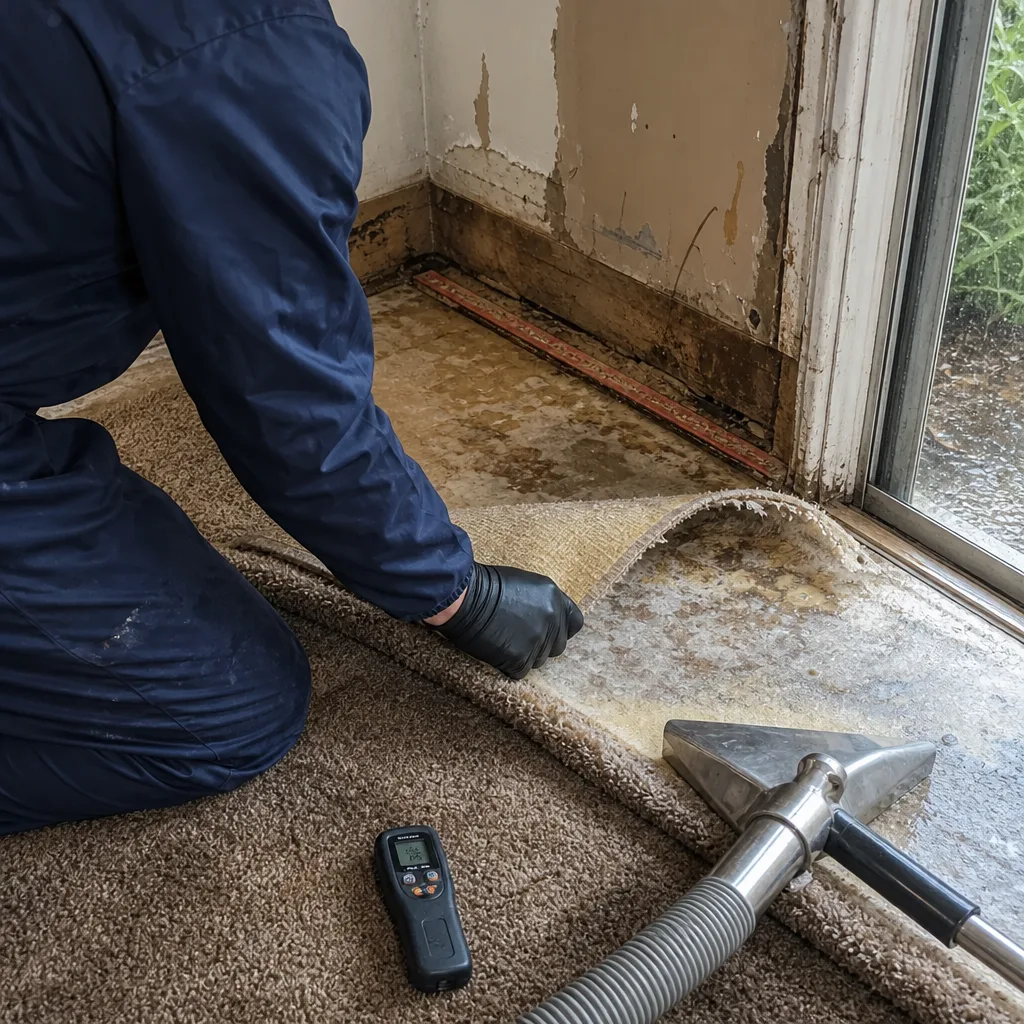
In Miami, we regularly see tile floors reading “dry” on the surface while the mortar bed below holds 35% moisture. A pinless meter alone misses this. The documentation must show both surface and deep readings where material layers differ.
Photo Log with Geo-Tagged Timestamps
Every photo must show date, time, and GPS coordinates. Not because we don’t trust our technicians, but because adjusters and attorneys have software that flags photo metadata inconsistencies. A photo log without timestamps is inadmissible in some proceedings. At DryMark Restoration Miami, our field software embeds this data automatically and uploads to your customer portal before we leave the property.
Written Drying Goal
Not “we’ll dry it out.” Specific targets: “Drywall in bedroom 2 to ≤12% moisture content, matching control reading of 10.5% from bedroom 3 closet. Target date: 72 hours from equipment deployment, contingent on no additional water intrusion.” This is your benchmark for evaluating whether the job is complete. Without it, “done” is a feeling, not a fact.
What We Include as Standard
Every DryMark Restoration Miami job file contains:
- Initial moisture map with room-by-room readings
- Photo documentation with geo-tagged timestamps, minimum 20 images for standard residential loss
- Written scope with line-item pricing, equipment list, and drying goals
- Daily drying log updated each visit, with new moisture readings and equipment adjustments
- Final clearance report with post-drying readings and equipment removal confirmation
This documentation package is not an upsell. It’s included on every job, because it’s the only way an invoice becomes a payable claim. We’ve been doing this since 2011. Twelve thousand homes later, the formula holds.
How Miami’s Climate Changes the Restoration Timeline

Miami’s climate isn’t a footnote. It’s a variable in every drying calculation. Average relative humidity hovers near 75% year-round, with summer spikes above 85%. Outdoor air in August isn’t a drying agent; it’s a moisture source. This changes equipment selection, timeline expectations, and the risk of secondary damage.
Condensate Line Failures in Summer
In July and August, we see 40% of our Water Damage Restoration in Miami calls traced to clogged AC condensate lines. The line backs up, overflows the pan, and saturates drywall before the homeowner notices the musty smell. Because the AC was running continuously, the area felt cool and “dry” even as moisture accumulated in the wall cavity. By the time mold is visible, the gypsum board is often beyond salvage.
Hurricane Season Complications
June through November, every restoration contractor in Miami operates with storm contingencies. Equipment availability tightens. Generator-dependent sites face fuel logistics. And the 72-hour window for mold colonization shrinks in structures without power for dehumidification. After Hurricane Ian’s peripheral impacts in 2022, we documented homes in Coral Gables and Coconut Grove where Category 1 water losses became Category 3 because delayed response allowed bacterial growth in standing water above 85°F.
Building Code Specifics
Miami-Dade County’s amended Florida Building Code requires flood-resistant materials below the Base Flood Elevation in designated zones. If your loss involves materials in these zones, replacement materials must meet the same standard. A contractor unfamiliar with Miami-Dade’s floodplain amendments may install non-compliant materials, creating code violations that surface at resale. We verify flood zone status and code requirements before specifying reconstruction materials.
Seasonal Equipment Adjustments
In winter months, when Miami’s humidity drops to 65-70%, we adjust dehumidifier settings to avoid over-drying, which can crack hardwood and warp trim. In summer, we increase air mover count and use low-grain refrigerant (LGR) dehumidifiers rather than conventional units to achieve the same vapor pressure differential - the force that actually pulls moisture from materials into the air stream. These aren’t marketing distinctions. They’re daily operational decisions that affect your timeline and your claim.
Common Mistakes to Avoid
- Verifying the license after signing. The DBPR lookup takes three minutes. Do it before the contractor enters your home. In Miami’s post-storm environment, unlicensed operators move fast and disappear faster.
- Accepting a verbal “ballpark” instead of a written scope. Haven Standard, Clause 1 exists because verbal estimates become disputed invoices. Every charge, every material, every timeline milestone belongs in writing before work starts.
- Signing an AOB under pressure without independent review. The contractor at your door is not your advocate in the claim. Your public adjuster or attorney is. Get their input on any AOB before you sign away your policy rights.
- Choosing by price alone without equipment specifications. A low bid with insufficient air mover density or undersized dehumidification costs more in extended drying, temporary housing, and potential mold remediation. Compare equipment density, not just dollars.
- Ignoring the documentation package. If the first visit produces no moisture readings, no photos, and no written drying goal, expect the same absence at claim time. Documentation is a habit, not an afterthought.
- Delaying the call for a second opinion. Our Free Second Opinion on any competitor’s written estimate has caught scope gaps, missing lien waiver language, and equipment underspecification that would have cost homeowners thousands. The review is free. The information is yours to use.
- Assuming all “certifications” are equal. IICRC WRT (Water Damage Restoration Technician) is a baseline. IICRC ASD (Applied Structural Drying) indicates advanced training. Ask which certifications the actual technician on your job holds, not just the company owner.
When to Call a Professional
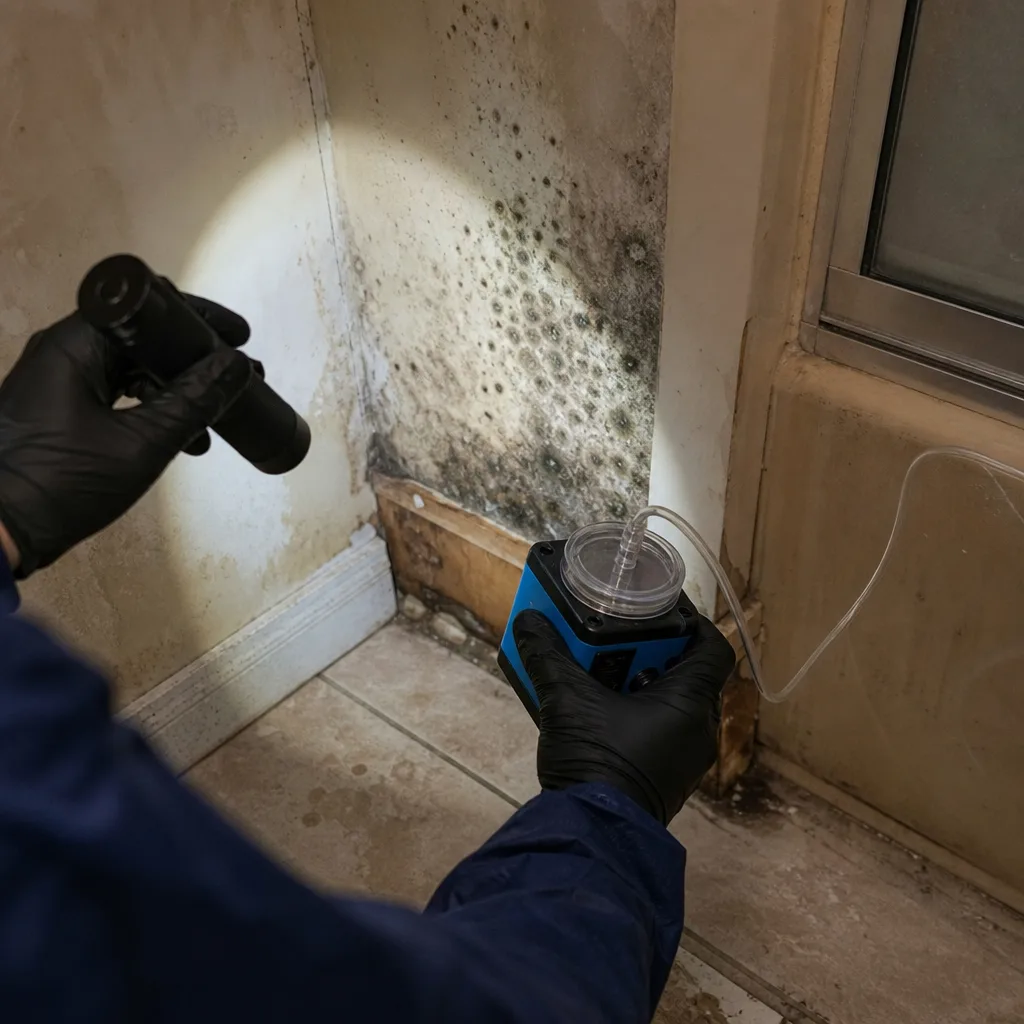
Some situations tolerate DIY assessment. Others don’t. Call a licensed restoration contractor immediately if: water has saturated drywall or insulation; you smell mustiness without visible mold; sewage or gray water is involved; the loss occurred more than 24 hours ago in summer conditions; or electrical outlets or panels were exposed to moisture. These aren’t cleaning problems. They’re documentation problems that become health and claim problems.
For Mold Remediation in Miami specifically, Florida law requires a licensed Mold Remediator for any contamination exceeding 10 square feet. DIY removal of larger areas is illegal and voids most homeowners insurance provisions for subsequent related damage.
DryMark Restoration Miami offers free estimates in Miami - call (786) 250-0820. A live person answers every call, 24 hours a day, 7 days a week, with no voicemail on emergency lines. We’ll review your situation, verify what documentation exists, and provide a written scope before any work begins.
Frequently Asked Questions
Go to myfloridalicense.com, select “Verify a License,” and enter the contractor’s name or license number. Confirm the license type matches the work: Certified General Contractor for structural work, Mold Remediator for mold-specific remediation. Check that status is “Current/Active” with no disciplinary history. Call (786) 250-0820 if you need help interpreting what you find - we’ll walk you through it.
A proper estimate includes line-item pricing with material classifications, equipment list with model numbers and placement locations, target moisture readings for each affected material, a timeline with milestones, and lien waiver terms. Anything less creates openings for dispute. At DryMark Restoration Miami, Haven Standard, Clause 1 requires all five elements in every scope we deliver.
Most standard homeowners policies cover sudden and accidental water damage from burst pipes or appliance failures. Flood damage from rising water requires separate flood insurance. The key to coverage is documentation: photo records, moisture readings, and a written scope that proves the loss was sudden and the response was appropriate. We coordinate directly with adjusters and provide the documentation package that supports your claim. Explore more guides & resources on protecting your property and your policy. Call (786) 250-0820 to discuss your specific policy situation.
For emergency water and storm damage, DryMark Restoration Miami maintains 24/7 live dispatch with no voicemail. Response time depends on current storm activity and your location within Miami-Dade, but we prioritize active water losses where moisture is still spreading. For reconstruction and non-emergency remediation, we schedule in writing with a confirmed date and arrival window. Speed belongs to mitigation. Reconstruction belongs to planning.
Florida requires a licensed Mold Remediator for any mold contamination exceeding 10 square feet. Below that threshold, homeowners may clean the area themselves with appropriate PPE and antimicrobial agents. However, if the mold resulted from a covered water loss, DIY removal may complicate your insurance claim. We provide documentation of professional remediation that satisfies both legal requirements and insurer expectations.
A restoration contractor specializes in emergency mitigation, drying, and documentation for insurance claims. A general contractor builds and renovates. Some firms do both, but the skill sets differ: restoration requires psychrometric science, moisture mapping, and claim documentation; general construction requires code compliance and finish craftsmanship. For water, fire, or mold losses, hire a contractor with specific restoration experience and the documentation practices to match. DryMark Restoration Miami handles both mitigation and reconstruction under one licensed operation, with consistent documentation throughout.
The Bottom Line
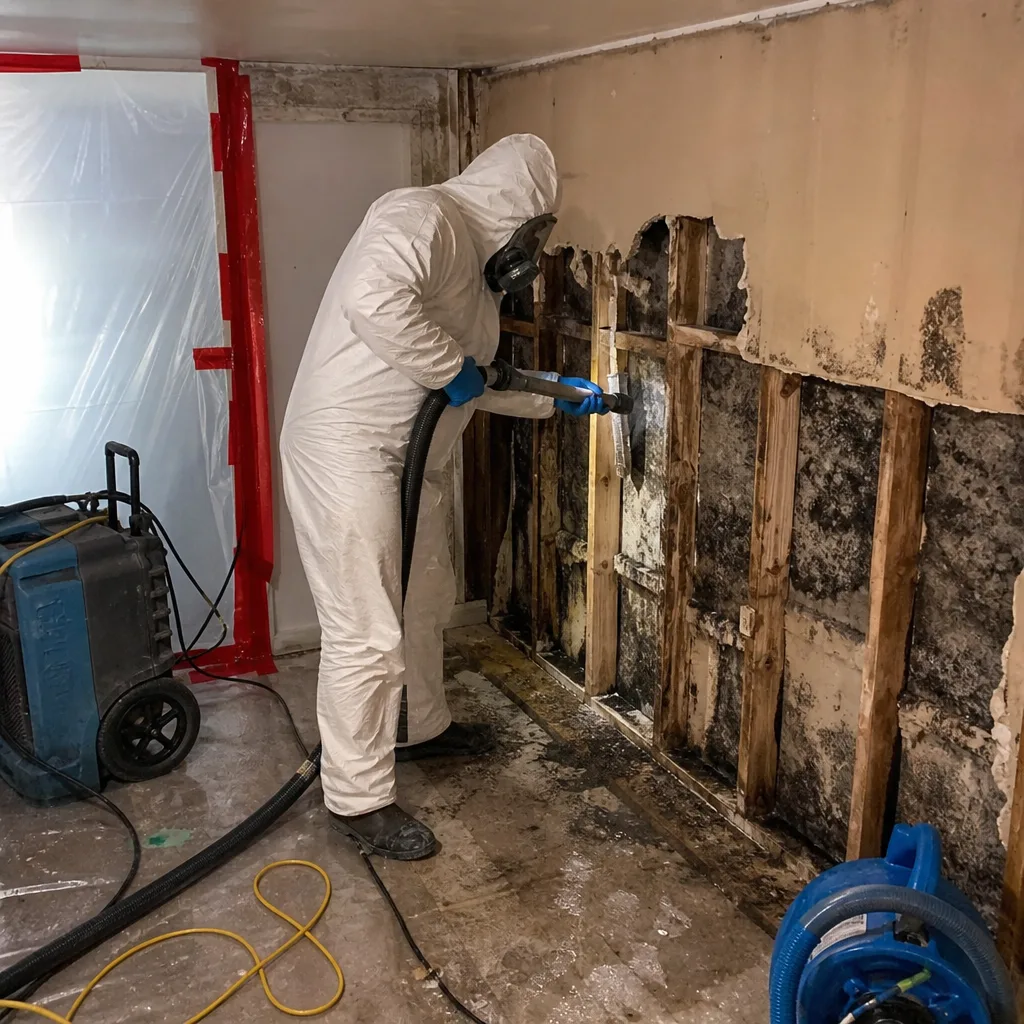
Hiring a restoration contractor in Miami is a procurement decision made under stress, but it doesn’t have to be a guess. Verify the license before the visit. Demand five written elements in every scope. Treat the Assignment of Benefits as a legal decision, not a door-step formality. Compare equipment density, not just price. And measure every contractor by what they document on day one - because that’s what your adjuster will measure at claim time.
The contractors who survive Miami’s climate, its storms, and its regulatory environment are the ones who treat documentation as the product, not the paperwork. We’ve built DryMark Restoration Miami on that principle since 2011. Twelve thousand homes later, the evidence still holds.
Written by Alicia Brennan, Owner at DryMark Restoration Miami, serving Miami since 2011.