
Last updated September 23, 2026
Free visual inspection and a written scope of work before any mitigation begins - photos, moisture readings, and drying logs go in your claim file
The scope we write is the scope we bill. Anything new gets shown to you, in writing, before we touch it.
DIY vs Professional Damage Restoration: The Miami Homeowner’s Decision Guide
Florida law permits homeowners to perform their own restoration work, but Florida insurance policy language requires documented proof of drying completion to accept a claim. A homeowner with a box-store fan and no moisture meter cannot produce that proof. In Miami, where the average ambient relative humidity hovers at 76% year-round, the gap between what feels dry and what is structurally dry is measured in percentage points that mold colonies exploit within 48 hours. This guide will show you the three numbers that determine whether a loss is genuinely DIY-appropriate, the documentation required to preserve your insurance rights even in those cases, and the specific physics that make consumer-grade equipment ineffective in South Florida conditions. For how to hire a damage restoration contractor in Miami, see our step-by-step guide.
Quick Answer
DIY damage restoration in Miami is only appropriate for Category 1 water losses under 10 square feet affecting non-porous materials, and only if you document moisture readings, drying logs, and photo evidence to insurance standards. For everything else - Category 2 or 3 water, mold over 10 square feet, fire or smoke damage, sewage, or any loss affecting structural materials - professional restoration is required by Florida law or by insurance policy language that voids coverage for undocumented mitigation. Our water damage restoration maintenance checklist for Miami homeowners can help you stay ahead of these issues. The cost of professional mitigation is typically recovered through your claim; the cost of a failed DIY attempt is paid entirely out of pocket when coverage is denied.
Table of Contents
- When DIY Restoration Actually Works in Miami
- Why Miami’s Humidity Breaks Consumer Drying Equipment
- The Florida Legal Line: What Homeowners Can and Cannot Self-Perform
- What Insurance Actually Requires: The Documentation Gap That Denies Claims
- Real Cost Comparison: Professional Mitigation vs. DIY Claim Reduction
- Mold Remediation: Where DIY Becomes Illegal in Florida
- Fire, Smoke, and Sewage: Never DIY Categories
- Professional Equipment Standards and Why They Matter
When DIY Restoration Actually Works in Miami
There is a narrow corridor where DIY water damage restoration is genuinely appropriate, and it is defined by three measurable criteria: water category, affected square footage, and material porosity. Stray outside any one of these, and you are no longer performing restoration. You are performing an experiment on your property’s structural integrity and your insurance coverage.
Category 1 water - clean water from a broken supply line, overflowing sink, or rainwater intrusion before ground contact - is the only water type suitable for homeowner handling. Category 2 (gray water, with detergents or light contamination) and Category 3 (black water, including sewage or groundwater) require professional remediation by IICRC standards and are legally restricted in Florida.
The 10-square-foot threshold is not arbitrary. It represents the maximum area where a homeowner can realistically achieve air movement and dehumidification sufficient to drop moisture content below 16% in structural materials within the 24-48 hour window before mold germination. In practice, this means a small bathroom floor with vinyl or tile over a concrete slab, or a limited area of drywall in a non-load-bearing partition.
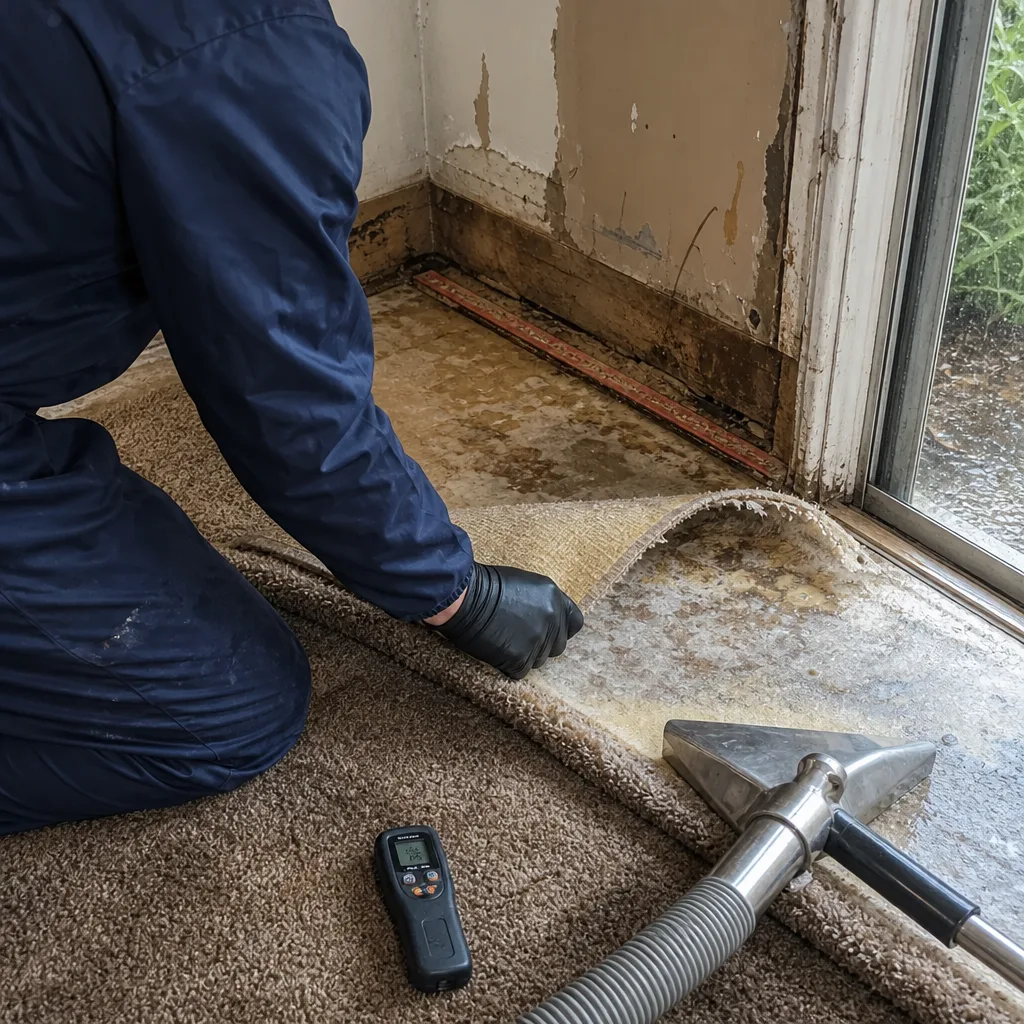
Non-porous materials only: ceramic tile, sealed vinyl, glass, metal, and sealed concrete. Carpet, carpet pad, drywall, insulation, and unsealed wood are porous and require professional-grade extraction, air movement, and dehumidification. Once water wicks into these materials, surface drying is irrelevant; the moisture is trapped behind or within, and vapor pressure differential - the force that drives evaporation - is too low in Miami’s ambient conditions for consumer equipment to overcome.
Even within this narrow corridor, the homeowner must produce documentation to insurance standards. We will detail that requirement in the section on insurance documentation. Most homeowners who attempt DIY restoration in Miami skip this step, believing that “dry to the touch” is sufficient proof. It is not. Adjusters deny claims every day on the basis of undocumented or incomplete drying, and the homeowner bears the full cost of subsequent mold remediation or structural repair.
At Water Damage Restoration in Miami, we regularly respond to calls in Coral Gables, Coconut Grove, and Pinecrest where a homeowner’s Category 1 loss expanded into a Category 2 or 3 situation because drying was incomplete. The original 4-square-foot leak became a 400-square-foot mold remediation when the drywall behind the vanity was never checked with a moisture meter. The $200 the homeowner saved on equipment rental became a $14,000 out-of-pocket mold bill when the insurance adjuster documented pre-existing moisture in the cavity during a subsequent inspection.
Why Miami’s Humidity Breaks Consumer Drying Equipment
Miami’s average annual relative humidity is 76%, with summer months routinely exceeding 80% and dew points above 70°F. These are not comfort complaints. They are physical conditions that determine whether evaporation occurs at all. For seasonal damage restoration care in Miami, humidity management is a year-round priority.
Vapor pressure differential is the engine of structural drying. Water evaporates from wet materials into the surrounding air when the air’s capacity to hold moisture - its vapor pressure deficit - is greater than the vapor pressure of the water in the material. The greater the differential, the faster the drying. In Miami’s ambient conditions, that differential is often near zero. The air is already saturated. A wet carpet in 80% relative humidity will not dry; it will incubate.
Consumer-grade dehumidifiers, the 30- to 50-pint units sold at hardware stores, are rated by the Association of Home Appliance Manufacturers (AHAM) at 80°F and 60% relative humidity. Miami conditions exceed that rating for most of the year. At 80°F and 80% relative humidity, the same unit removes approximately 40% less moisture. A 50-pint unit becomes a 30-pint unit. A 30-pint unit becomes ineffective for structural drying.
For a 200-square-foot affected area in Miami conditions, professional standards require dehumidification capacity of at least 90 pints per day, calculated by the IICRC S500 psychrometric formula: (cubic feet of affected space × specific humidity differential) ÷ factor based on dehumidifier class. Consumer equipment cannot achieve this. The result is tertiary drying - the slow, incomplete drying that leaves materials above 16% moisture content, the threshold for mold growth on cellulose-based materials.
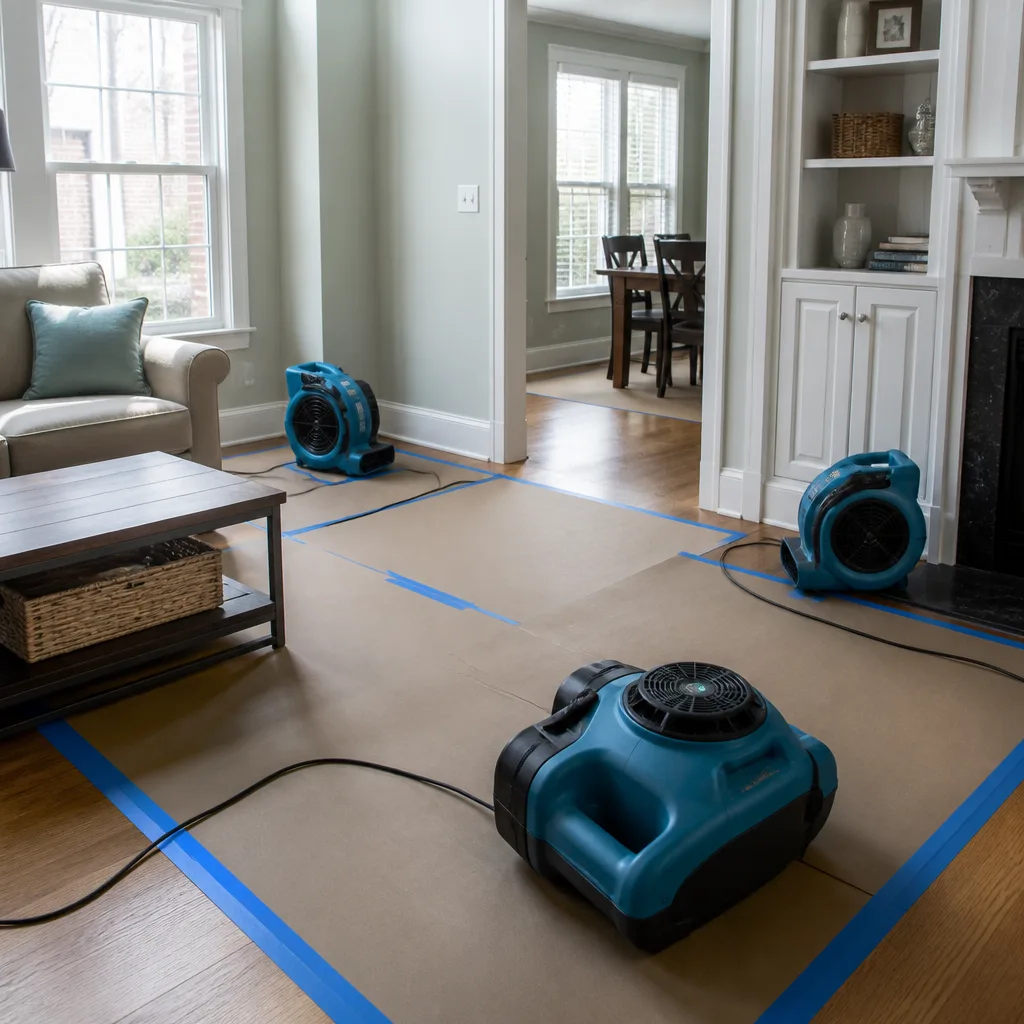
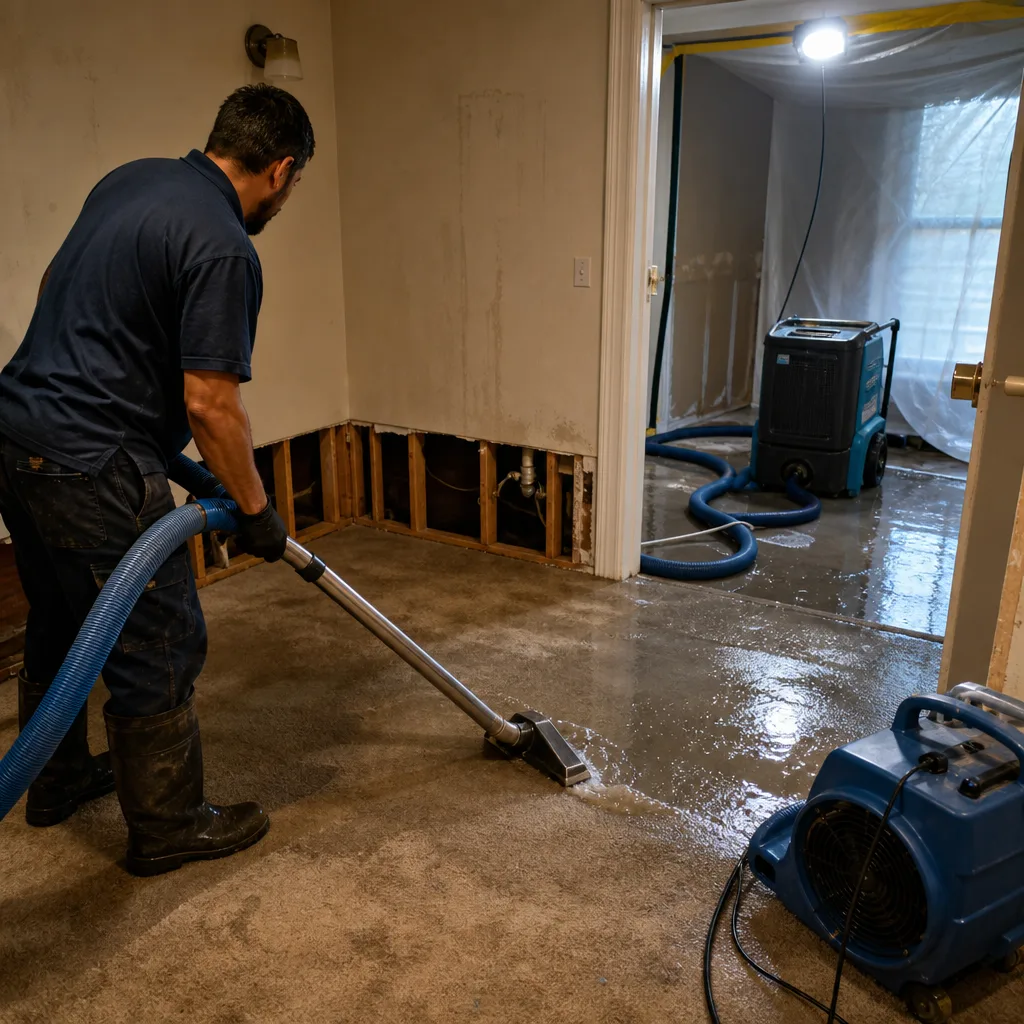
Professional-grade drying systems from Dri-Eaz, Phoenix, and B-Air are rated at conditions that match Miami’s reality: 90°F and 90% relative humidity. They remove 100-130 pints per day and are deployed with air movers calculated at one per 50-70 square feet of affected area, positioned to create laminar airflow across wet surfaces. This is not equipment superiority for its own sake. It is the difference between documented drying completion and undocumented moisture retention that voids coverage.
We have measured moisture content in DIY-dried homes in Miami Beach and Brickell where homeowners ran box fans for three days. The drywall read 22% moisture content at 48 hours, 18% at 72 hours - still above the 16% threshold. Mold was visible at day five. The homeowner’s documentation consisted of a photo of the fan. The adjuster’s documentation included moisture readings, thermal imaging, and air sampling. The claim was denied for failure to mitigate.
The Florida Legal Line: What Homeowners Can and Cannot Self-Perform
Florida Statute 468.8311 through 468.8319 governs mold remediation and establishes a clear legal boundary that many homeowners do not know exists. Under Florida law, mold remediation of an area greater than 10 contiguous square feet must be performed by a licensed mold remediator. This applies to all buildings, including owner-occupied single-family residences. There is no homeowner exemption for mold.
The statute defines mold remediation as “the removal, cleaning, sanitizing, demolition, or other treatment, including preventive activities, of mold or mold-contaminated matter.” The 10-square-foot measurement is of the visible mold growth, not the affected room or the water-damaged area. A 12-square-foot patch of mold on a bathroom ceiling requires a licensed remediator regardless of who owns the property or who caused the water damage.
Water damage restoration below the mold threshold is not licensed in Florida, which creates a regulatory gap that homeowners misinterpret as permission. You may legally extract water from your own carpet. You may not legally remediate mold over 10 square feet. The critical point is that water damage and mold remediation are sequential phases of the same event, and the boundary between them is crossed without notice if drying is incomplete.
Fire and smoke damage restoration, sewage cleanup, and biohazard remediation are not addressed by homeowner exemption statutes and are governed by OSHA regulations, EPA guidelines, and local health department requirements. In Miami-Dade County, sewage backups require notification to the Florida Department of Health and professional remediation by IICRC WRT-certified technicians. Homeowners who self-perform sewage cleanup risk personal liability for contamination of neighboring properties and voided insurance coverage.
The Haven Standard, Clause 1 - written price before work begins - exists because we have seen the aftermath of homeowners who began work without understanding these boundaries. A written scope defines what work is performed, by what standard, and to what documentation. It prevents the scope creep that occurs when a water extraction reveals mold, or when smoke damage reveals asbestos-containing materials in a pre-1981 home, common in Miami’s older neighborhoods like Little Havana and Allapattah.
What Insurance Actually Requires: The Documentation Gap That Denies Claims
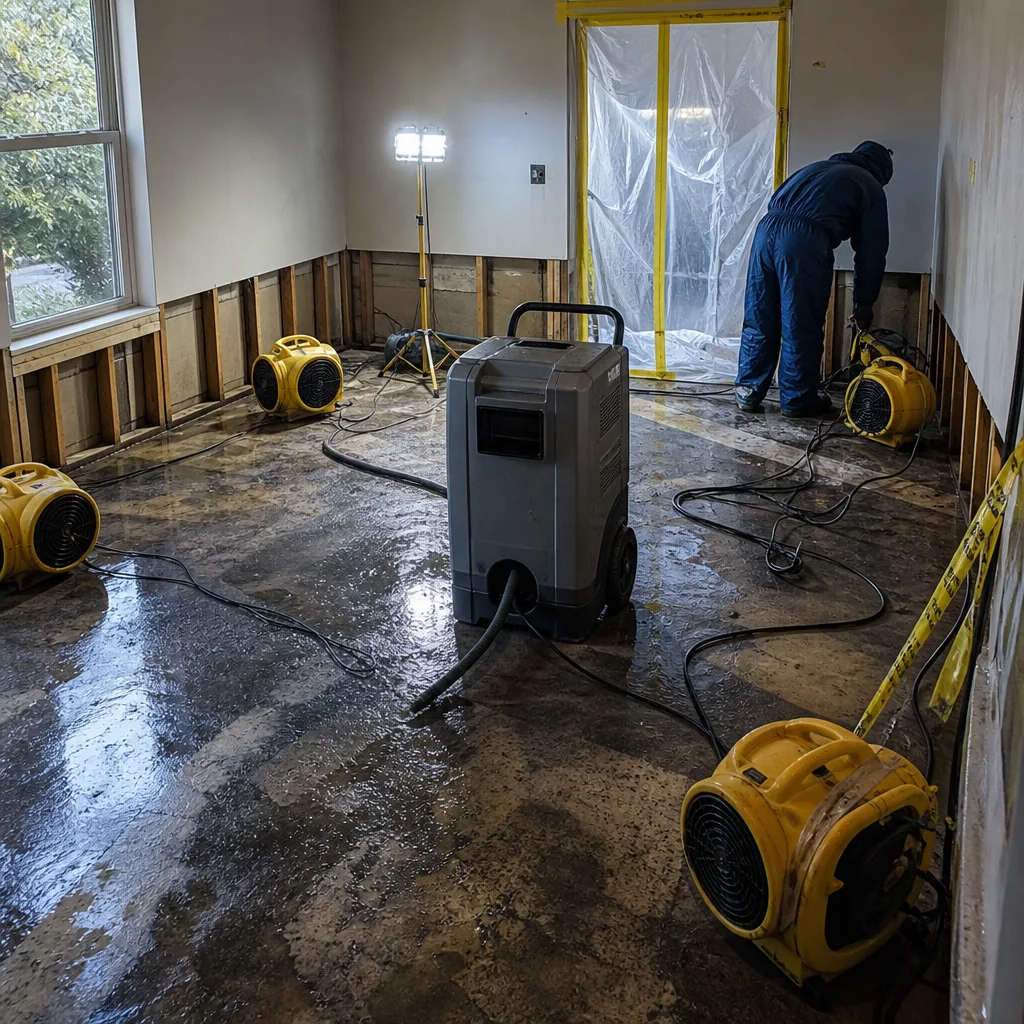
Florida insurance policies contain standard language that requires the insured to “mitigate further damage” and to “provide proof of loss” including “records of repair and replacement.” This language is not advisory. It is a condition of coverage, and failure to satisfy it triggers voidance or reduction of the claim.
The specific documentation an adjuster requires for water damage mitigation includes:
- Initial moisture readings - documented in percentage moisture content (MC) for wood and wood-based materials, and in relative readings for non-porous materials, taken with a calibrated pin or pinless moisture meter.
- Daily drying logs - psychrometric data including temperature, relative humidity, and specific humidity at the dehumidifier intake and within the affected space, recorded at consistent intervals (typically every 24 hours during active drying).
- Equipment placement diagrams - showing the location and type of each air mover, dehumidifier, and specialty drying unit, with CFM (cubic feet per minute) ratings.
- Photo documentation - dated, geotagged images of the loss at arrival, during mitigation, and at completion, showing the progression of drying and the condition of materials.
- Final moisture readings - demonstrating that affected materials have returned to within 4 percentage points of dry standard (typically 10-12% MC for structural wood in Miami conditions).
- Written scope of work - itemizing each service performed, with unit costs and quantities, formatted to Xactimate or equivalent estimating standard.
A homeowner with a wet-dry vacuum and a box fan produces none of this. The adjuster’s inspection, typically conducted days or weeks after the loss, finds moisture-stained materials, elevated moisture readings in hidden cavities, and no documentation of the mitigation that was allegedly performed. The claim is reduced by the cost of proper mitigation that was not performed, or denied entirely under “failure to mitigate” or “concealment or fraud” provisions if the homeowner represented that drying was complete.
The late reporting penalty compounds this problem. Florida policies require “prompt” notice of loss, typically defined as within 72 hours. A homeowner who attempts DIY drying for several days before calling a professional has delayed reporting, reduced the insurer’s ability to inspect the original loss conditions, and created a coverage dispute that the insurer will resolve in its favor. The average claim reduction for delayed or undocumented mitigation in Miami, based on Xactimate data and adjuster reports we have reviewed, is 35-60% of the total loss value.
At DryMark Restoration Miami home, our documented photo record on every visit is included as a standard deliverable, never an upsell. We produce the drying logs, moisture readings, and written scopes that turn restoration invoices into payable claims. This is not a service feature. It is the core function of professional restoration, and its absence is the primary reason DIY attempts fail at the claims stage.
Real Cost Comparison: Professional Mitigation vs. DIY Claim Reduction
The framing of this comparison is usually wrong. It is presented as equipment rental cost versus professional service cost, as if the two produce equivalent outcomes. They do not. The proper comparison is professional mitigation cost (typically recovered through insurance) versus the out-of-pocket cost of a denied or reduced claim after DIY failure.
For a typical Category 1 water loss in Miami - a supply line leak affecting 200 square feet of carpet and pad, with wicking into baseboards and limited drywall - professional mitigation costs approximately $2,800-$4,200 based on Xactimate line-item pricing for the Miami market. This includes extraction, equipment rental for 3-5 days, moisture monitoring, and documentation. The homeowner’s deductible applies, typically $1,000-$2,500, and the remainder is paid by the insurer.
The DIY alternative: equipment rental of $150-$300 for a consumer dehumidifier and air movers, plus $50-$100 for a moisture meter. The homeowner saves $2,500-$3,900 in immediate outlay. But if drying is incomplete and mold develops, or if the adjuster denies the claim for inadequate documentation, the subsequent costs include:
- Mold remediation: $8,000-$20,000 for a 200-square-foot area with hidden growth
- Drywall and insulation replacement: $2,000-$5,000
- Floor covering replacement: $3,000-$7,000
- Structural repair if wood framing is compromised: $5,000-$15,000
- Out-of-pocket temporary housing if the home is uninhabitable during remediation
- Potential policy cancellation or premium increase due to claim history
The net position: a “savings” of $2,500-$3,900 becomes a cost of $18,000-$47,000, entirely out of pocket, with no insurance recovery. This is not a worst-case scenario. It is a routine outcome in our experience responding to failed DIY attempts in Miami-Dade County.
The Free Second Opinion on Any Written Estimate that we offer exists because homeowners deserve to understand what proper mitigation costs before making this decision. Bring a competitor’s quote, or your own equipment rental calculation, and we will review it at no charge. The comparison should be informed by actual line-item pricing, not by the apparent savings of consumer equipment.
Mold Remediation: Where DIY Becomes Illegal in Florida
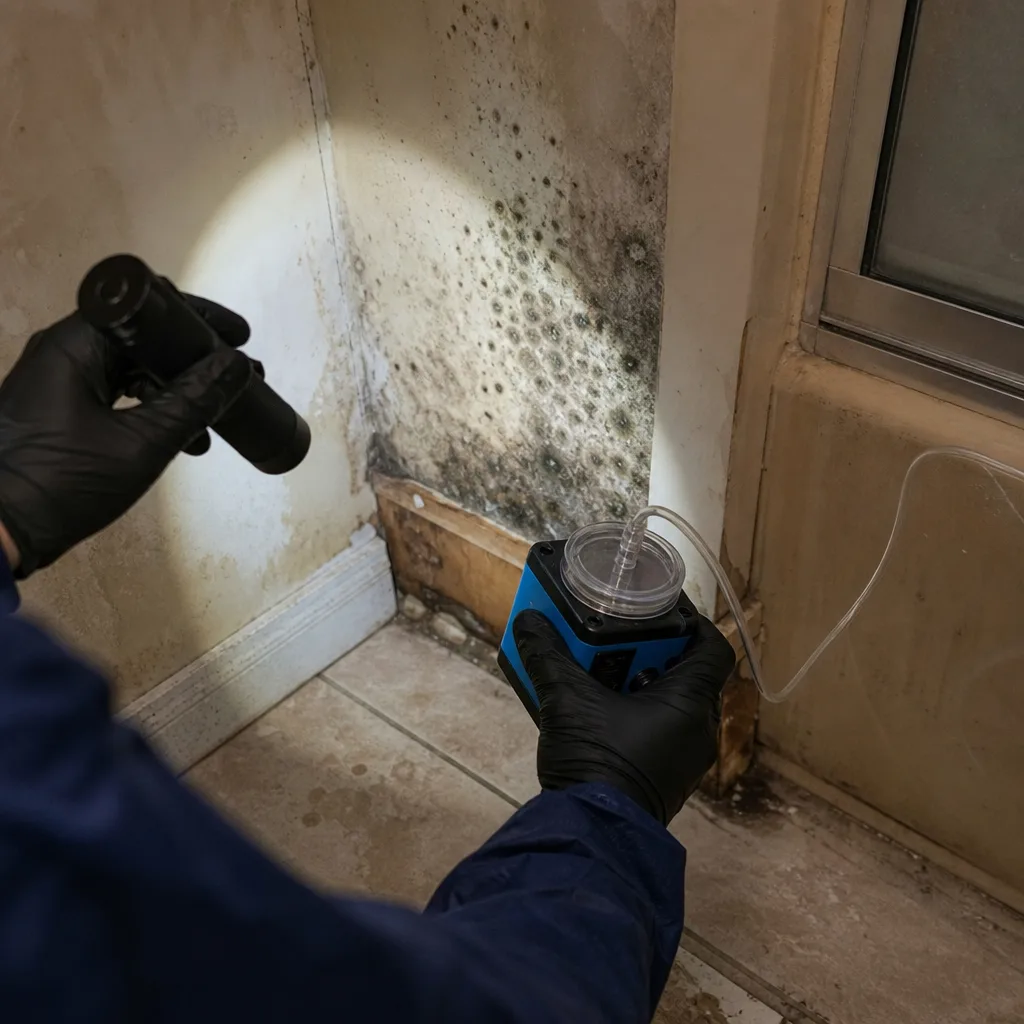
The 10-square-foot threshold in Florida Statute 468 is not a suggestion, and it is not measured by homeowner intuition. It is measured by contiguous area of visible mold growth, and it triggers requirements that cannot be satisfied by consumer methods.
Licensed mold remediators in Florida must:
- Hold a Mold Remediator license from the Florida Department of Business and Professional Regulation
- Follow a written mold remediation protocol prepared by a licensed Mold Assessor (separate license, required for projects over 10 square feet)
- Establish containment barriers with negative air pressure to prevent cross-contamination
- Use HEPA filtration and proper personal protective equipment
- Pass post-remediation verification by the assessing party or a third-party inspector
Homeowners who self-remediate mold over 10 square feet face: civil penalties under Florida Statute 468.8335 (up to $5,000 for unlicensed practice); personal liability for health effects on occupants or subsequent buyers; voided insurance coverage for the mold remediation and any related damage; and failed real estate transactions when mold is disclosed or discovered during inspection.
Miami’s climate makes mold the near-certain outcome of incomplete water damage drying. The 48-hour germination window for common indoor molds (Aspergillus, Penicillium, Stachybotrys) is accelerated by temperatures above 75°F, which Miami experiences year-round. A homeowner who extracts visible water but leaves wall cavities at 18% moisture content has not prevented mold. They have prepared a growth medium.
At Mold Remediation in Miami, we follow IICRC S520 standards for mold remediation, with containment, negative air, and post-remediation verification documented to the standard that insurers and Florida law require. The Haven Standard, Clause 1 - written price before work begins - applies to mold remediation as to all our services. The scope is defined before containment is established, and no additional work is performed without a written amendment.
Fire, Smoke, and Sewage: Never DIY Categories
Some categories of damage restoration are never appropriate for DIY performance, regardless of scale, cost, or homeowner capability. These include fire and smoke damage, sewage contamination, and biohazard situations. The reasons are legal, medical, and technical.
Fire and smoke damage involves combustion byproducts that are toxic and corrosive. Smoke residues are categorized by the type of material burned: natural substances (wood, paper) produce dry, powdery residues; synthetic materials (plastics, foams) produce wet, sticky residues that are acidic and will etch metal and glass within hours. The thermal layer effect in structure fires drives smoke into cavities that are not visible or accessible without professional inspection. Restoration requires specialized cleaning agents, ultrasonic cleaning for contents, and ozone or hydroxyl treatment for odor removal. Documentation for insurance requires pre-cleaning and post-cleaning condition reports with photo evidence.
At Fire & Smoke Damage Restoration in Miami, we document every affected item to the standard required for contents claims, where insurers apply depreciation schedules and require proof of pre-loss condition. A homeowner who discards smoke-damaged items without documentation recovers nothing for those contents.
Sewage backup is Category 3 water by definition, containing pathogenic organisms, endotoxins, and chemical contaminants. OSHA’s Bloodborne Pathogens Standard (29 CFR 1910.1030) and EPA guidelines require specific PPE, disposal procedures, and decontamination protocols. Miami-Dade County requires reporting to the Florida Department of Health for sewage contamination of habitable spaces. Homeowners who self-clean sewage contamination risk serious illness and personal liability for environmental contamination.
Biohazard and crime scene cleanup is governed by OSHA, EPA, and Florida Department of Health regulations that require licensed, trained technicians. This is not a discretionary category. It is a regulated industry with specific disposal requirements for biohazardous waste.
Professional Equipment Standards and Why They Matter
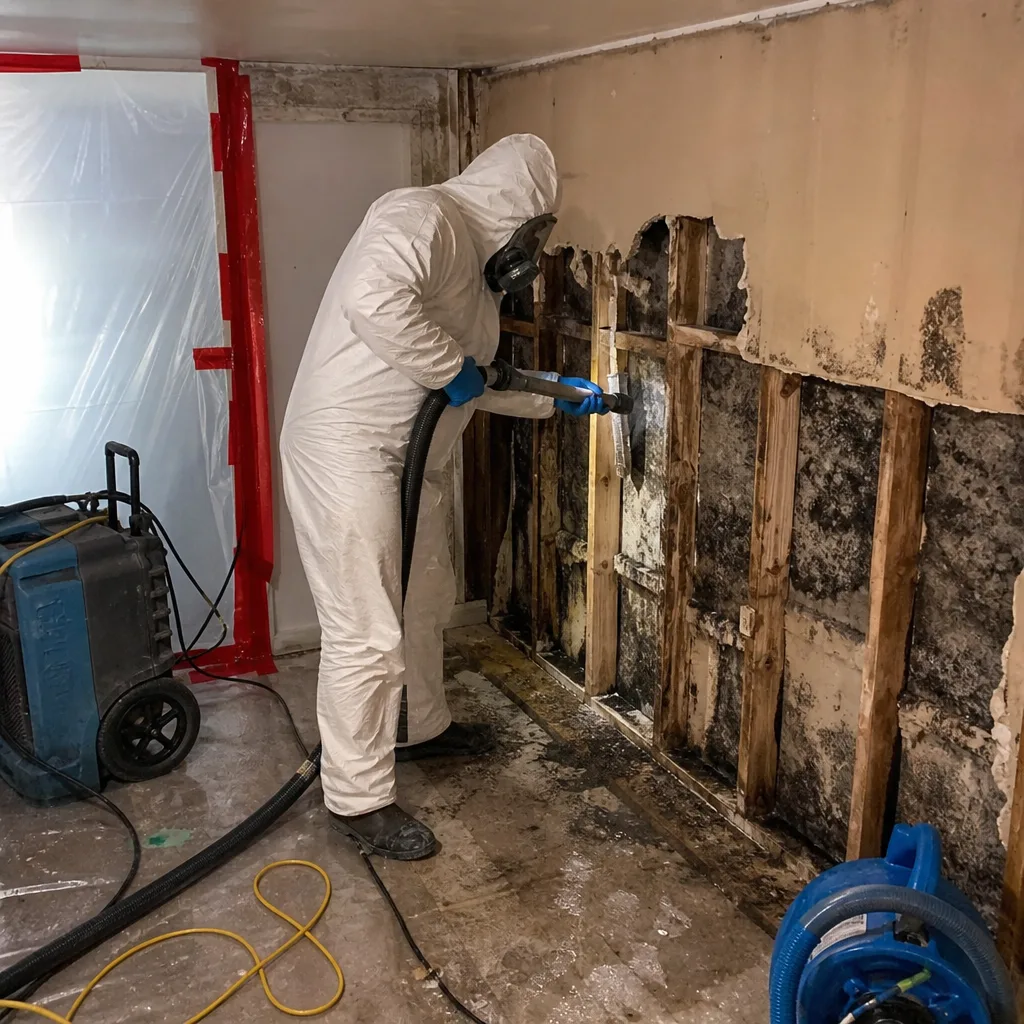
The equipment deployed on a professional restoration job is not merely more powerful than consumer alternatives. It is designed to produce the documented outcomes that insurance requires, and it is maintained, calibrated, and operated to standards that consumer equipment cannot meet.
Professional-grade drying systems from Dri-Eaz, Phoenix, XPOWER, B-Air, and Injectidry are specified by IICRC S500 and documented to IICRC, RIA, and IFA standards. Key specifications include:
- Low-grain refrigerant (LGR) dehumidifiers: Remove moisture to 40 grains per pound (gpp) or below, achieving specific humidity levels that consumer refrigerant dehumidifiers cannot reach. Critical in Miami’s high-humidity conditions where standard dehumidifiers reach equilibrium above the drying target.
- Desiccant dehumidifiers: Use silica gel or lithium chloride to achieve ultra-low grain levels (below 10 gpp), required for hardwood drying and for structural drying in conditions where LGR units are insufficient.
- Injectidry systems: Positive and negative air pressure drying for wall cavities, ceiling plenums, and hardwood floors, forcing dry air into spaces that surface drying cannot reach. Essential for Miami’s concrete block construction, where water wicks into hollow cells and remains trapped.
- Air movers: Axial and centrifugal designs producing 1,600-3,000 CFM, positioned for laminar airflow across wet surfaces at specific angles and velocities calculated by the IICRC S500 formula.
- Moisture detection equipment: Thermal imaging cameras, non-penetrating moisture meters, penetrating moisture meters with insulated probes, and thermo-hygrometers calibrated to NIST-traceable standards.
The documentation produced by this equipment - daily drying logs with psychrometric data, moisture content readings at specified intervals, equipment placement diagrams - is the evidence that insurers require. Consumer equipment produces no documentation. The homeowner’s word that “we ran fans for three days” is not evidence. It is a statement that the adjuster will test against physical findings, and it will fail.
Our 12,000+ homes restored since 2011, every one with a written price before work started and a documented record when the crew left, represent the standard that DIY restoration cannot achieve. The 365-Day Done Right Promise, backed by The Haven Standard, applies to every job because the documentation exists to enforce it. A warranty without documentation is a verbal assurance. A warranty with daily drying logs, photo records, and written scopes is a guarantee with an address.
Common Mistakes to Avoid
- Measuring success by surface dryness. In Miami’s humidity, carpet can feel dry to the touch while the pad beneath remains saturated and the subfloor reads 20% moisture content. Always measure at depth, not at surface.
- Using a box fan as an air mover. Box fans circulate air in a room. Air movers create directed, high-velocity airflow across wet surfaces at the specific angle required for boundary layer disruption. They are not interchangeable.
- Ignoring the concrete block cavity. Miami’s predominant construction method leaves hollow cells in concrete block walls that act as reservoirs for water. Surface drying of drywall does not address water in the block. Injectidry or equivalent cavity drying is required.
- Discarding damaged materials before documentation. Insurance claims require evidence of loss. A carpet removed and discarded on day one cannot be measured, photographed, or inventoried for replacement cost. Document first, remove second.
- Delaying professional involvement for cost reasons. The 72-hour reporting window in most Florida policies is measured from the time the insured knew or should have known of the loss. Days spent on DIY drying are days of delayed notice, and adjusters calculate the resulting damage as uninsured.
- Assuming mold is “just mildew” that bleach will fix. Bleach does not penetrate porous materials and can provide moisture that accelerates growth. More critically, DIY mold treatment over 10 square feet violates Florida law regardless of the substance used.
- Accepting a contractor’s verbal scope without written confirmation. Haven Standard, Clause 1 exists because verbal scopes change once work begins. A written price before work starts prevents the scope creep that turns a $3,000 mitigation into a $8,000 invoice.
When to Call a Professional
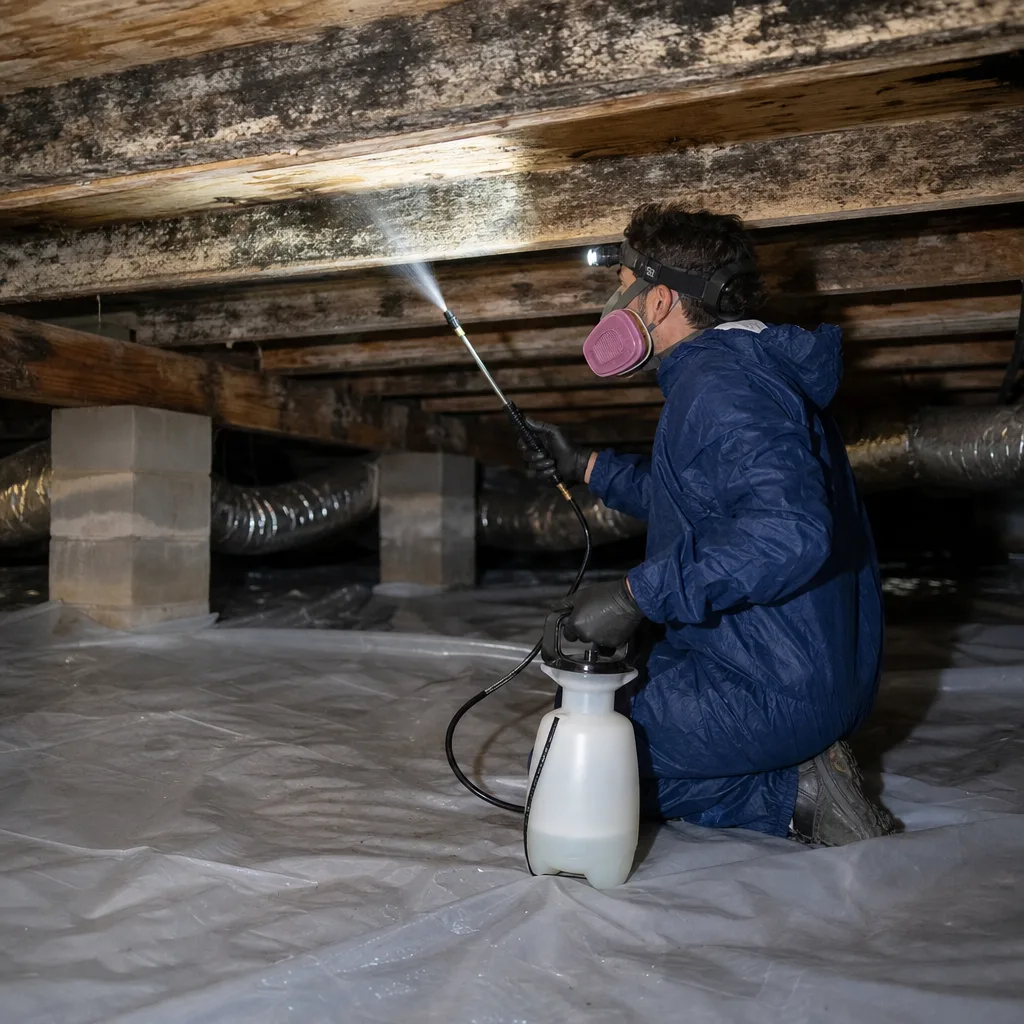
Call a professional restoration company when: the water category is 2 or 3; the affected area exceeds 10 square feet; any structural material is involved; mold is visible or suspected; the loss involves fire, smoke, sewage, or biohazard; or your insurance policy requires documented mitigation. Explore more guides & resources on our blog. These are not preference questions. They are threshold conditions that determine coverage, legality, and safety.
Even for Category 1 losses under 10 square feet, consider professional involvement if you lack the equipment to document moisture readings, maintain drying logs, and produce photo evidence to insurance standards. The cost of professional mitigation is typically recovered; the cost of a denied claim is not.
DryMark Restoration Miami offers free estimates in Miami - call (786) 250-0820. Our live person answers every call, 24 hours a day, 7 days a week, with no voicemail on emergency lines. Every job is quoted in writing before work begins, documented with a photo record on every visit, and covered by the 365-Day Done Right Promise under The Haven Standard. We also provide a Free Second Opinion on any competitor’s written estimate at no charge.
Frequently Asked Questions
Professional water damage mitigation in Miami typically ranges from $2,800 to $4,200 for a standard Category 1 loss affecting 200 square feet, based on Xactimate line-item pricing for the local market. Category 2 and 3 losses, or losses affecting structural materials, range from $4,500 to $15,000 or more depending on square footage, material classification, and required demolition. DryMark Restoration Miami provides a written price before any work starts on every job, with no scope-creep additions once the crew is inside - Haven Standard, Clause 1. Call (786) 250-0820 for a free estimate.
Florida homeowners insurance covers professional restoration when it is documented to policy standards, which requires moisture readings, drying logs, photo documentation, and a written scope. Insurance does not cover undocumented mitigation, whether performed by a homeowner or an unqualified contractor. Most policies contain “failure to mitigate” language that reduces or voids coverage if proper drying is not documented. The cost of professional mitigation is typically recovered through your claim minus deductible; the cost of a failed DIY attempt is entirely out of pocket. Call (786) 250-0820 to discuss documentation requirements for your specific policy.
Live phone coverage is available 24 hours a day, 7 days a week at DryMark Restoration Miami with no voicemail on emergency lines. Response time for water damage emergencies in Miami typically ranges from 45 minutes to 2 hours depending on traffic, weather, and your location within Miami-Dade County. Speed matters for mitigation - water continues to migrate, and the 48-hour mold germination window does not pause. For reconstruction and non-emergency work, scheduling is arranged after written scope and pricing are agreed. Call (786) 250-0820 for current response times.
You can self-perform Category 1 water extraction under 10 square feet on non-porous materials if you document moisture readings, drying logs, and photo evidence to insurance standards. For all other conditions - Category 2 or 3 water, porous materials, areas over 10 square feet, or any visible mold - professional remediation is required by Florida law or insurance policy language. The critical question is not whether you can remove visible water, but whether you can prove structural drying completion to an adjuster’s standard. Most homeowners cannot. Call (786) 250-0820 for a free assessment of your specific loss.
At DryMark Restoration Miami, we coordinate directly with your adjuster, providing the documented photo record, daily drying logs, moisture readings, and written scopes that adjusters require to process claims. Our documentation is formatted to Xactimate standards and includes the psychrometric data that demonstrates drying completion. This direct coordination prevents the claim delays and reductions that occur when documentation is incomplete or absent. We do not charge extra for adjuster coordination; it is included as a standard deliverable on every job. Call (786) 250-0820 to discuss your claim.
Delayed professional involvement creates three problems: the loss may have expanded beyond its original scope, requiring more extensive remediation; your insurance reporting may be outside the 72-hour “prompt notice” window, triggering coverage disputes; and the adjuster may classify the loss as “failure to mitigate” if your DIY drying was incomplete or undocumented. The best practice is to call for professional assessment immediately, even if you believe the loss is minor. DryMark Restoration Miami offers free estimates and a Free Second Opinion on any competitor’s written estimate. Call (786) 250-0820 before beginning any work.
The Bottom Line

The DIY versus professional restoration question in Miami is answered by three numbers: water category, affected square footage, and material porosity. Category 1, under 10 square feet, non-porous materials - and only with full documentation. Everything else requires professional restoration by Florida law, insurance policy language, or physical reality. Miami’s 76% average humidity makes consumer drying equipment ineffective for structural drying, and the documentation gap between DIY attempts and professional standards is the primary reason claims are denied. The cost of professional mitigation is recovered through insurance; the cost of a failed DIY attempt, including mold remediation, structural repair, and voided coverage, is paid entirely by the homeowner. Document first, or call someone who will.
Written by Alicia Brennan, Owner at DryMark Restoration Miami, serving Miami since 2011.