
Last updated September 23, 2026
Free visual inspection and a written scope of work before any mitigation begins - photos, moisture readings, and drying logs go in your claim file
The scope we write is the scope we bill. Anything new gets shown to you, in writing, before we touch it.
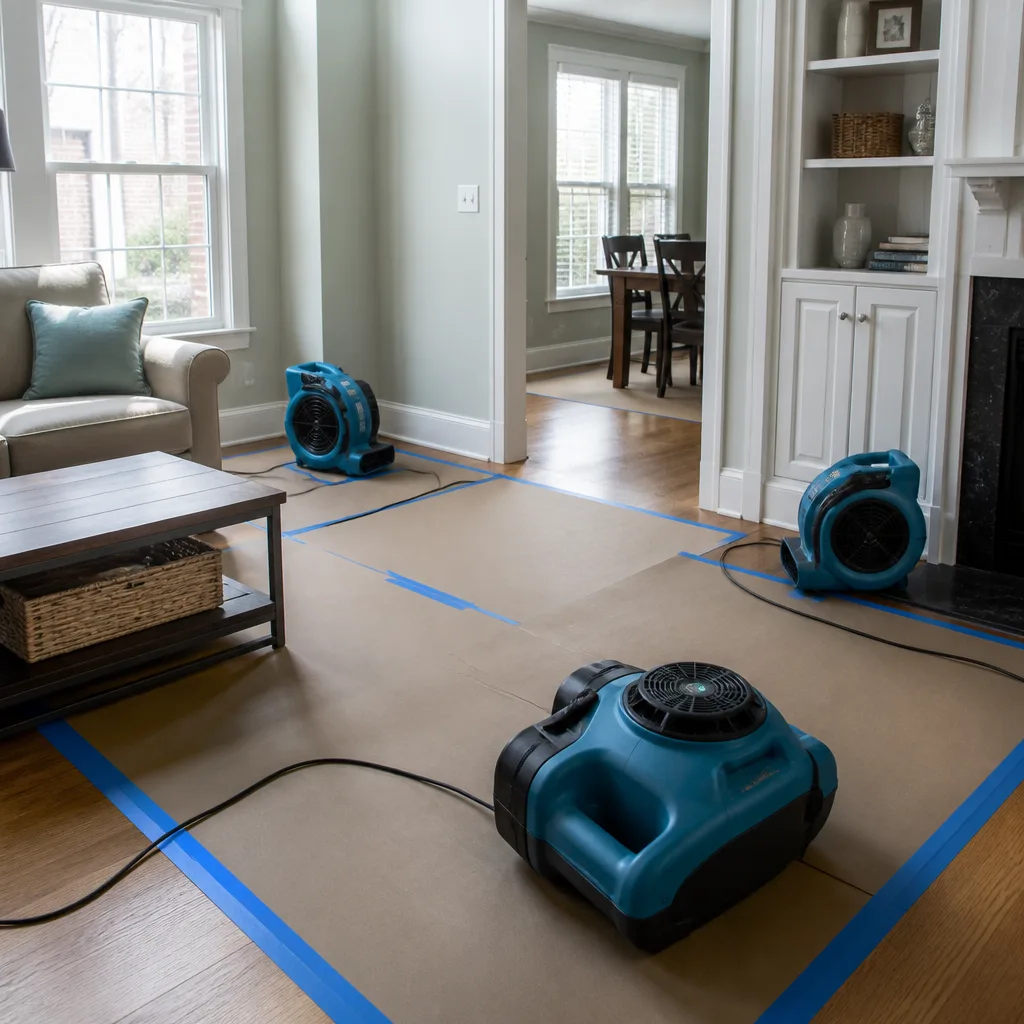
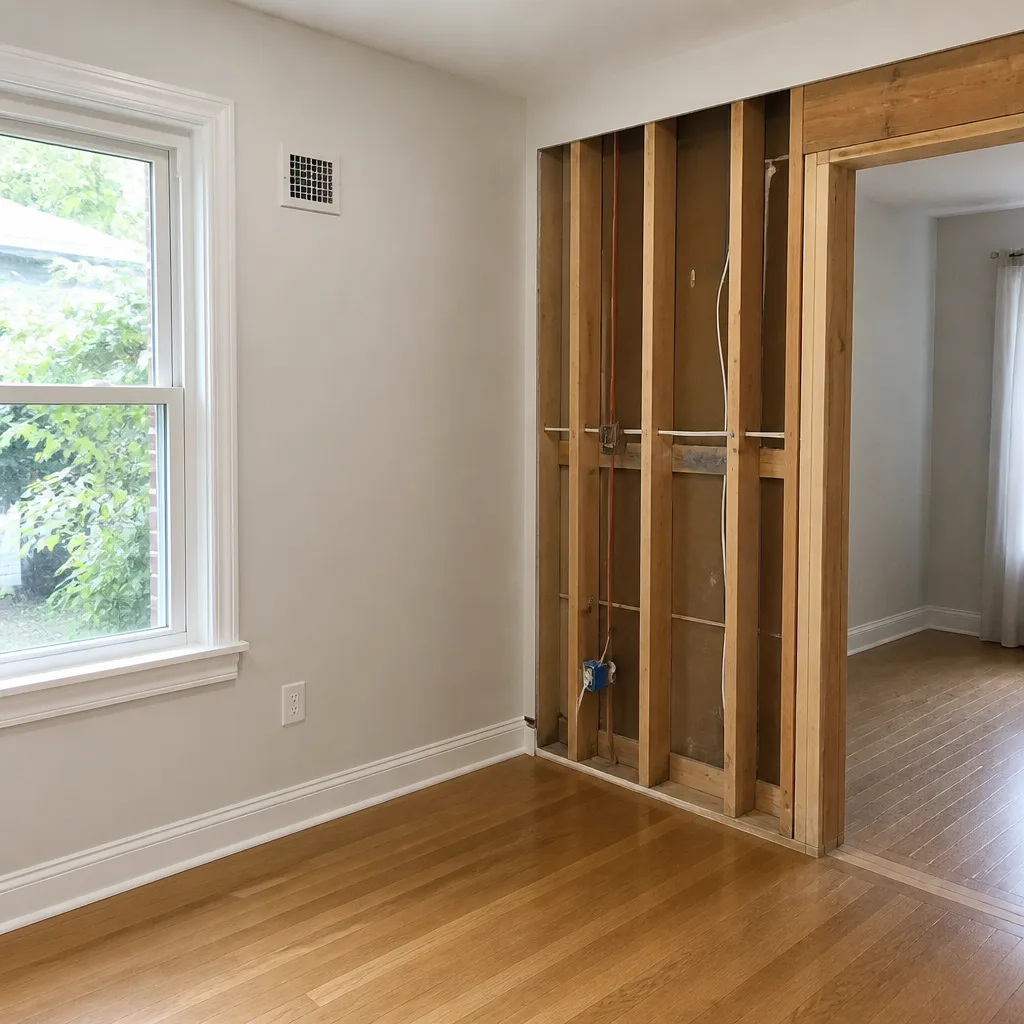
Damage Restoration Warning Signs: A Miami Homeowner’s Reference Guide
A wall cavity reading 18% moisture content on a pin-type meter has been wet long enough to support mold colonization. At 16% it looks and smells perfectly dry. In Miami, where the outdoor dew point stays above 70°F for eight months of the year, “I don’t see anything” is the costliest phrase in home restoration. This guide teaches you to read the measurable indicators that appear weeks before visible stains, the Miami-specific signs that national guides miss, and the documentation steps that protect your claim when you need to prove what was hidden. For more guides & resources on protecting your Miami home, see our blog.
Quick Answer
The earliest damage restoration warning signs in a Miami home are structural and measurable, not visible. Elevated moisture readings above 16% in wall cavities, efflorescence on concrete block walls, hollow-sounding tile near exterior walls, and a sweet-damp odor distinct from mustiness all indicate active water damage before stains appear. Surface signs like peeling paint and discoloration typically develop 2-4 weeks later, by which time mold colonization is already established and remediation costs have doubled.
Table of Contents
- Surface Warning Signs vs. Structural Warning Signs
- Miami-Specific Indicators National Guides Miss
- The 10-Degree Flashlight Technique for Hidden Damage
- Odor Profiles: What Mold Smells Like at 72 Hours vs. 2 Weeks
- Florida Disclosure Requirements and How to Verify Them
- How to Read Moisture Meters and Thermal Imaging
- Common Mistakes to Avoid
- When to Call a Professional
- Frequently Asked Questions
Surface Warning Signs vs. Structural Warning Signs
Most homeowners in Miami learn to look for the wrong things first. Surface warning signs are what you can see without tools: water stains on drywall, bubbling paint, warped baseboards, or softened cabinet bottoms under sinks. These develop after moisture has been present long enough to degrade the finish materials. In our experience across more than 12,000 homes since 2011, surface signs appear 14 to 30 days after the initial moisture intrusion in Miami’s climate, sometimes longer if the home has strong air conditioning.
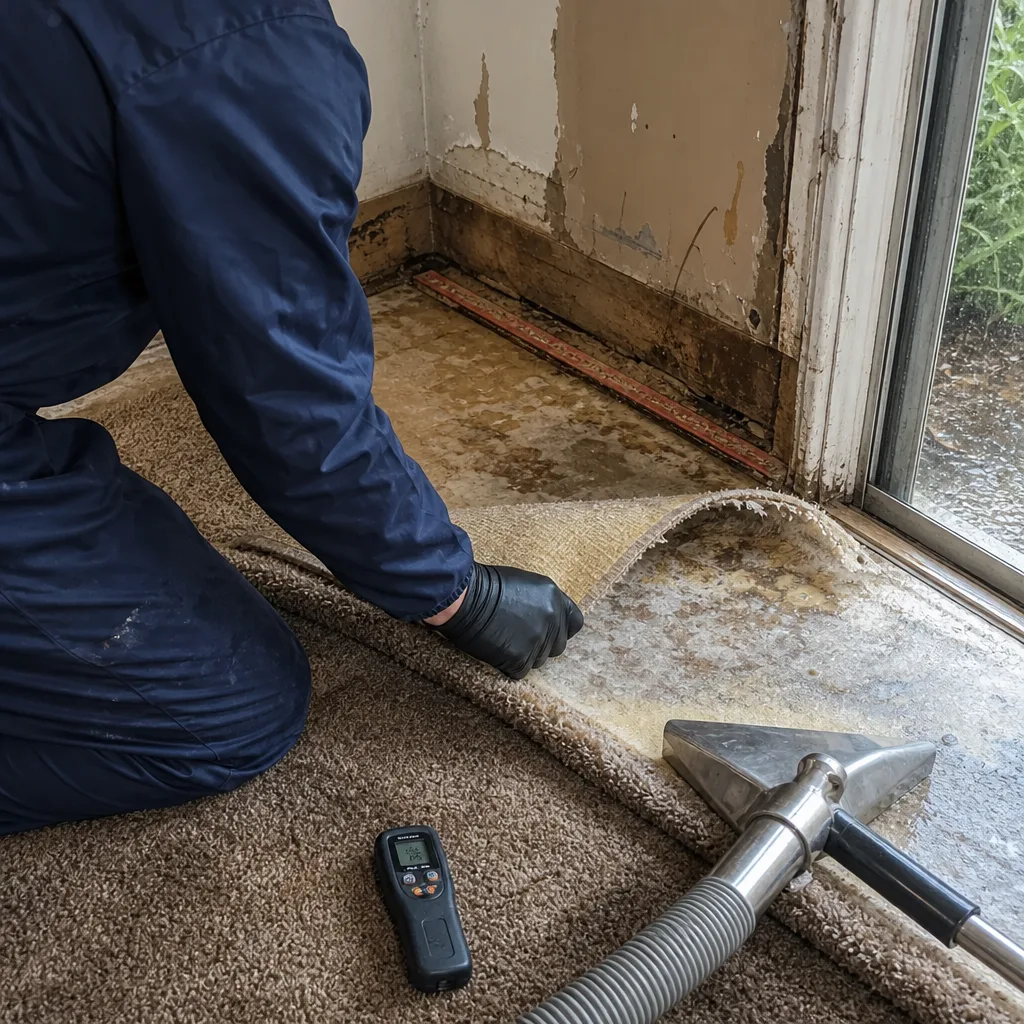
Structural warning signs require measurement but appear first. A pin-type moisture meter reading above 16% in wood framing or drywall indicates conditions sufficient for mold growth, even when the surface looks normal. At 20%, wood decay fungi can establish. These readings are what we document on every initial assessment at DryMark Restoration Miami home, because they tell us where the damage is headed, not just where it has arrived.
The gap between structural and surface signs matters for cost. Remediation at the 16% reading stage typically involves targeted drying, air filtration, and moisture barrier repair. Wait for the stain, and you’re looking at drywall removal, insulation replacement, and full mold remediation. In Miami’s market, that difference often runs $1,800-$3,200 versus $6,500-$12,000 for the same original leak.
Here is how the two categories compare:
- Surface signs (late): Visible staining, peeling paint, warped flooring, softened drywall to the touch, musty odor detectable by occupants
- Structural signs (early): Moisture readings 16-20% in wall cavities, elevated humidity in isolated rooms (5-10% above adjacent spaces), temperature differentials on thermal imaging, increased vapor pressure differential between interior and exterior wall surfaces
Vapor pressure differential is the force that drives moisture through building materials. In Miami, where outdoor vapor pressure frequently exceeds indoor levels, even a small breach in the building envelope creates sustained inward moisture movement. We measure this with psychrometric data - temperature, relative humidity, and dew point readings - to determine whether the moisture source is active or historical. A historical moisture event that has dried completely reads below 12% and shows no vapor pressure gradient. An active leak reads elevated and shows continuous moisture migration toward the cooler interior surface.
The documentation matters for your claim. Insurance adjusters in Florida are trained to distinguish between long-term moisture damage (often excluded) and sudden, accidental water damage (typically covered). Our daily drying logs, written under IICRC standards, establish the timeline with moisture readings, photos, and psychrometric calculations. Without this documentation, a wall that reads 18% moisture with no visible stain may be classified as “maintenance” rather than “sudden and accidental” - and denied.
Miami-Specific Indicators National Guides Miss
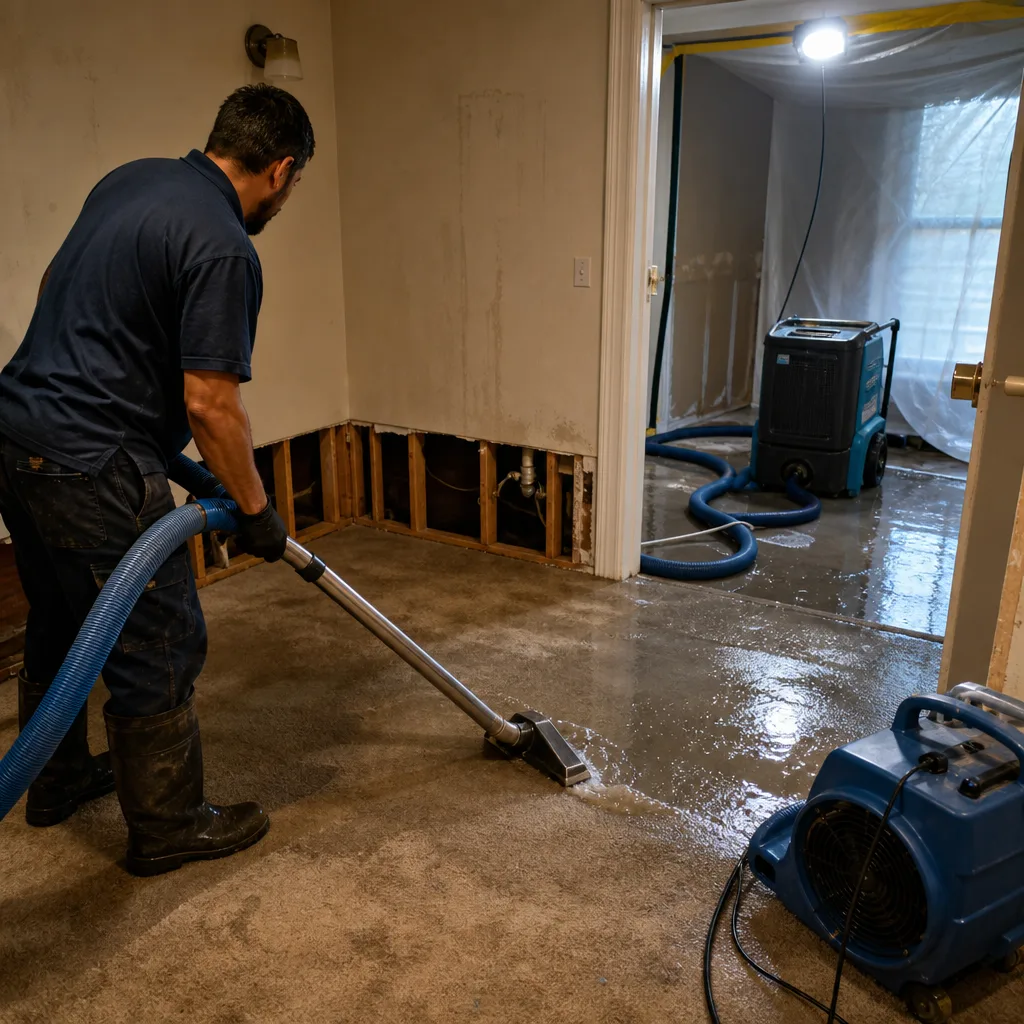
National restoration guides are written for frame construction in temperate climates. Miami homes are predominantly concrete block structure (CBS), built on slab, and cooled for most of the year. These conditions produce warning signs that do not appear in generic references. For a deeper look at when to handle issues yourself versus calling a pro, read our DIY vs Professional Damage Restoration: The Miami Homeowner’s Decision Guide.
Efflorescence on CBS walls. This white, powdery deposit is crystallized salt left behind when moisture moves through concrete block and evaporates at the interior surface. In Miami, efflorescence on interior walls almost always indicates either exterior grading failure, a compromised waterproofing membrane, or hydrostatic pressure from seasonal high water tables. It is not cosmetic. The moisture driving it has a pathway through the block, and that pathway brings dissolved minerals, then mold spores, then organic material for mold to colonize. We see this regularly in Coconut Grove, Coral Gables, and other areas with mature landscaping where irrigation systems saturate the soil against foundation walls.
Hollow-sounding tile near exterior walls. In slab-on-grade construction, tile is bonded directly to the concrete. When moisture wicks through the slab edge - common in Miami after heavy rains or when exterior drainage fails - the thin-set adhesive degrades before the tile shows visible damage. A hollow sound when you tap the tile with your knuckle indicates delamination. The tile may still look perfect, but the bond is failing and moisture is moving beneath it. Left unaddressed, this progresses to tenting, cracking, and full detachment. In our assessments, we find this most often on north and east-facing walls, where morning sun does not dry the slab edge as quickly.
AC duct sweating as a moisture source. In Miami, air conditioning ducts frequently run through unconditioned attic spaces where temperatures exceed 130°F in summer. When cool air moves through poorly insulated ducts, the exterior surface temperature drops below the dew point of the attic air, causing condensation. This moisture drips onto ceiling drywall, saturates insulation, and creates damage that appears as a roof leak. Homeowners who call for roof inspections are often looking at an HVAC problem. The warning sign is rust on duct hangers, water-stained insulation around duct boots, or a consistent moisture pattern directly below duct runs rather than at roof penetrations. We document this with thermal imaging to show the temperature differential, then coordinate with HVAC contractors to seal and insulate before restoring the ceiling.
Garage floor darkening at the slab perimeter. Miami garages are often built with the slab at or below exterior grade. When the seasonal water table rises, moisture migrates through the slab edge and appears as a darkened band where the floor meets the wall. This is not a spill. It is capillary moisture movement, and it indicates the same conditions that eventually damage interior finishes. The perimeter darkening is visible evidence of the moisture front that is also moving under interior walls.
Window weep hole blockage. Hurricane-rated windows in Miami have weep holes designed to drain water from the track to the exterior. When these clog with salt residue, pollen, or insect debris, water overflows the track and runs into the wall below. The warning sign is not the window leak itself - it is standing water in the track that persists more than a few hours after rain, or mineral staining on the exterior sill below the weep holes. Check these quarterly; clearing them with a pipe cleaner takes seconds and prevents wall cavity saturation.
The 10-Degree Flashlight Technique for Hidden Damage
Flat lighting hides texture changes. A flashlight held at a 10-degree angle to a wall surface casts shadows that reveal irregularities invisible under ceiling lights or window illumination. This is the same technique we use in post-storm documentation photography, and it is the single most effective tool a homeowner can use for early detection.
- Darken the room. Close blinds and turn off overhead lights. You need a single, directional light source.
- Hold the flashlight at 10 degrees. Place the light source near the wall surface, pointing across it rather than at it. The beam should skim the surface almost parallel.
- Move slowly. Scan in 2-foot sections, looking for shadow variations that indicate bumps, depressions, or texture changes.
- Mark suspicious areas. Use painter’s tape to flag locations for moisture meter verification.
- Document with your phone. Photograph the angled-light view and the same area in flat light for comparison. This becomes evidence if you need to establish a timeline for your insurer.
What you are looking for: slight bulges in drywall that indicate moisture expansion; depressions where fasteners have corroded and released; “alligator” texture changes where paint has begun to separate from the substrate; and fine cracking patterns that follow tape seams, indicating movement from swelling and drying cycles.
In Miami homes, we find this technique especially valuable for detecting early damage behind wallpaper and textured finishes, where moisture meters give ambiguous readings due to surface treatments. The 10-degree light reveals the physical distortion that the meter cannot measure through a vinyl barrier.
For documentation purposes, we photograph every flagged area with the angled light, then again with flat light, then with a moisture meter probe in the material. These three images, time-stamped and geotagged, form the baseline for our drying log. When we return 24 hours later with dehumidification running, the same three-photo sequence proves progress or identifies persistent moisture pockets. This is the documentation standard that turns restoration invoices into payable claims.
Odor Profiles: What Mold Smells Like at 72 Hours vs. 2 Weeks
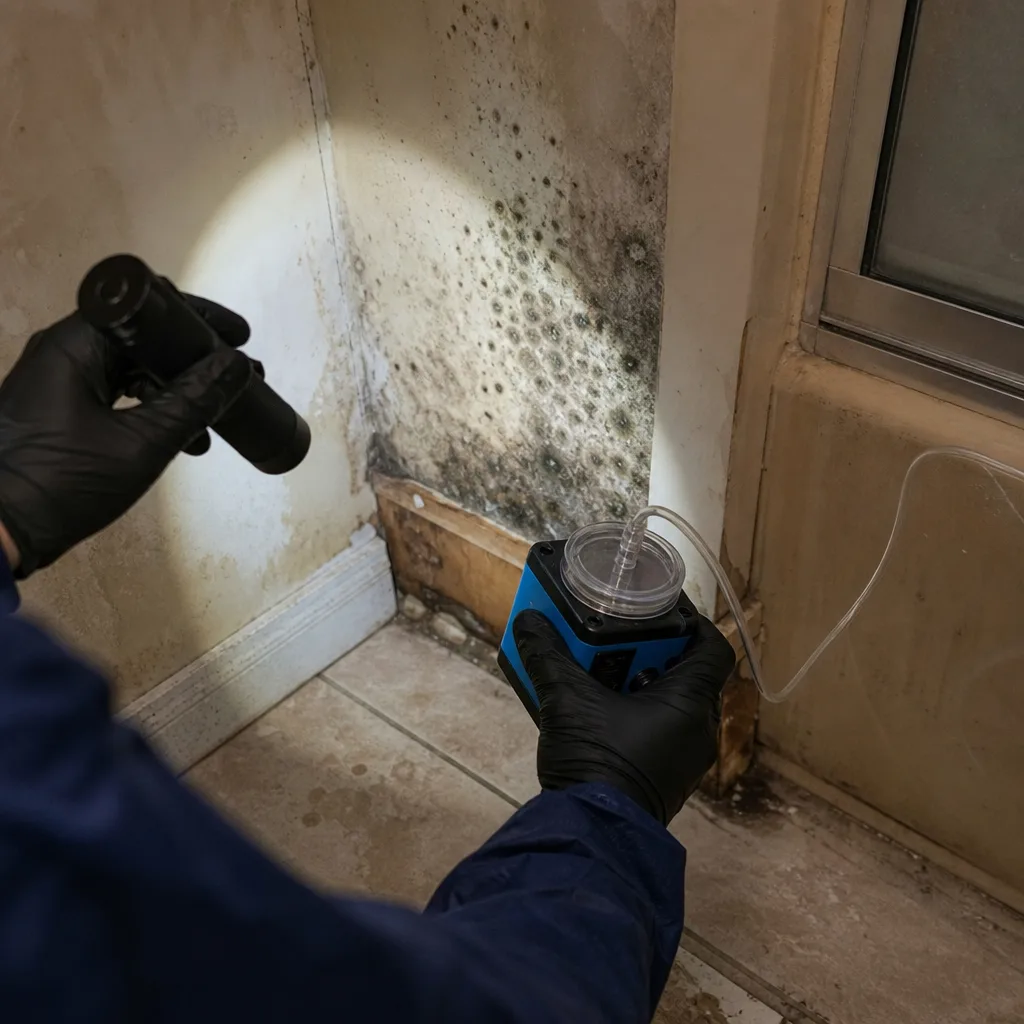
Smell is the most underutilized diagnostic tool in home restoration, and the most misunderstood. Homeowners often report “a musty smell” as their first concern, but mustiness is a late-stage odor. Earlier stages have distinct profiles that indicate how far colonization has progressed and what remediation scope is required.
72 hours to 7 days: sweet-damp or earthy-fresh. Active mold growth in this window produces volatile organic compounds (VOCs) that read as slightly sweet, like wet soil or damp cardboard. It is not unpleasant to most people. In Miami, where outdoor humidity keeps baseline odor thresholds high, this stage is frequently missed. The smell may be localized to a closet, cabinet, or room corner, and it intensifies when the air conditioning cycles off. This is the optimal intervention window. Remediation at this stage typically involves HEPA air filtration, targeted drying, and surface treatment. Costs in Miami generally range $1,200-$2,800 for contained areas.
7 to 14 days: sharp and chemical. As colonies mature, they produce different metabolic byproducts. The odor becomes sharper, more acrid, sometimes described as ammonia-like or resembling wet socks left in a gym bag. This indicates active sporulation - the mold is reproducing and releasing spores. Air quality testing at this stage typically shows elevated spore counts, and cross-contamination to HVAC systems becomes a real risk. Remediation scope expands to include negative air containment, duct sealing or cleaning, and more extensive material removal. Costs typically range $3,500-$7,500.
14+ days: musty and stale. The classic “musty basement” smell indicates established colonization, often with multiple species present. The odor is persistent, permeates porous materials, and does not dissipate with ventilation. At this stage, drywall, insulation, and often carpet or padding require removal. The HVAC system likely requires cleaning. Remediation costs frequently exceed $8,000 and may involve Mold Remediation in Miami with full containment and third-party post-remediation verification.
The odor progression matters for insurance coverage. A claim documented at the sweet-damp stage, with moisture readings and photos establishing recent onset, is typically covered as sudden and accidental damage. The same claim filed at the musty stage, with no documentation of when the moisture began, faces scrutiny for long-term maintenance exclusion. This is why we train our technicians to ask about odor changes on every call, and to document the homeowner’s description in the written scope.
For homeowners who want to verify their own observations: place a clean glass jar in the suspected area for 24 hours with the lid off, then seal it and smell the headspace after 10 minutes outside. The concentrated sample makes subtle odors more detectable. This is not a substitute for professional air sampling, but it can help you decide whether to call for assessment.
Florida Disclosure Requirements and How to Verify Them
Florida law requires sellers to disclose known defects that materially affect property value, including past water damage and mold. The standard disclosure form asks specifically about “water intrusion” and “mold or mildew.” But known defects are only what the seller actually knows, and Miami’s transient population - investors, seasonal residents, estate sales - means many sellers have limited history with the property.
What the law does not require: disclosure of repairs that were properly completed and documented, or of conditions the seller never observed. A flipped property in Little Havana may have had water damage repaired before the current owner purchased, with no obligation to disclose to you. This is where permit records and independent verification become essential.
Step 1: Check permit history. The City of Miami and Miami-Dade County maintain online permit databases. Search the property address for permits related to roofing, plumbing, mold remediation, or structural repair. Any legitimate remediation should have generated a permit if structural materials were removed. Absence of permits for described work is a red flag. Presence of permits gives you the contractor name, scope, and inspection status to verify. For help vetting contractors, see How to Hire a Damage Restoration Contractor in Miami: A Step-by-Step Guide.
Step 2: Request documentation. Ask the seller for any restoration invoices, warranties, or inspection reports. A properly documented job under IICRC standards includes a drying log, moisture readings, and photos. If the seller cannot produce these, the work may not have been performed to standard, or may not have been performed at all.
Step 3: Commission a thermal imaging inspection. This is not a home inspection; it is a targeted assessment using infrared cameras to identify temperature differentials that indicate moisture. In Miami, we recommend this for any property with a disclosure of past water damage, any property without permit records for described work, and any property where the 10-degree flashlight technique reveals texture irregularities. A thermal imaging inspection costs $350-$600 in the Miami market and provides documented evidence that you can use to renegotiate or require remediation before closing.
Step 4: Review the HVAC system. In Miami, air conditioning is not comfort; it is moisture management. Request maintenance records and have the system evaluated for condensate drainage function, duct integrity, and coil condition. A system that has been running with blocked drainage or leaking ducts has been creating moisture damage even if no leaks are visible.
We provide DryMark Restoration Miami home assessments for pre-purchase verification, including thermal imaging, moisture mapping, and written documentation of findings. The cost is credited toward any remediation if issues are found. This is not a substitute for a general home inspection; it is a specialized assessment for the moisture-related risks that general inspectors frequently miss in Miami’s climate.
How to Read Moisture Meters and Thermal Imaging
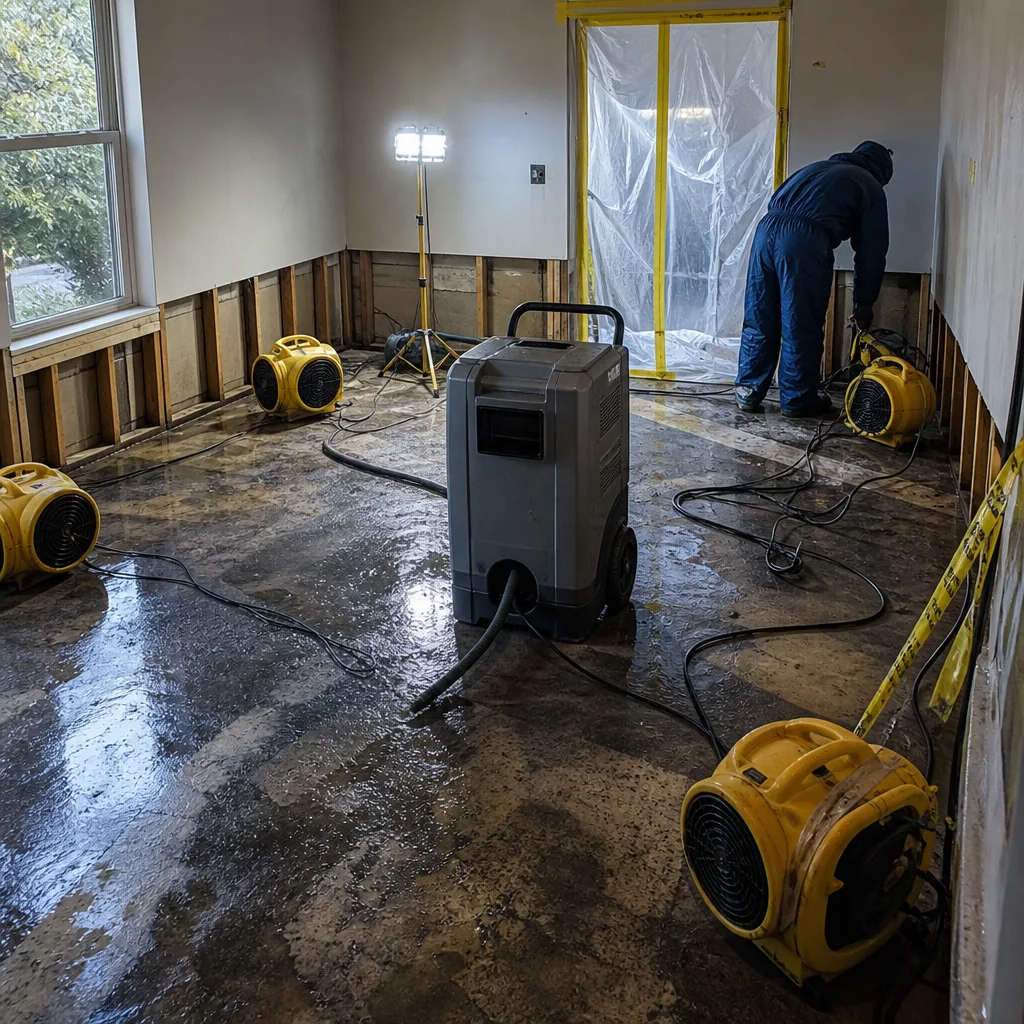
You do not need to be a technician to use a moisture meter effectively. A basic pin-type meter costs $40-$80 and provides objective data that overrides visual assumptions. Here is what the numbers mean in Miami’s context.
Wood and wood framing: 6-12% is normal equilibrium moisture content for air-conditioned interior spaces in Miami. 12-16% indicates elevated conditions, often from seasonal humidity spikes or minor leaks. 16-20% supports mold growth and requires drying intervention. Above 20% indicates active water source and risk of wood decay fungi. These thresholds are lower than in drier climates because Miami’s baseline humidity keeps materials closer to the danger zone.
Drywall and gypsum: Below 0.5% by weight is normal. 0.5-1.0% indicates moisture exposure. Above 1.0% supports mold growth on the paper facing. Pin meters read differently on gypsum than on wood; use the material setting on your device, or compare readings to a known-dry section of the same wall.
Concrete and masonry: These require specialized meters that read by impedance rather than conductivity. A standard pin meter will not give reliable readings on CBS walls or slab. For concrete, look for relative readings - compare suspect areas to known-dry areas - rather than absolute percentages.
Thermal imaging interpretation: Infrared cameras do not see moisture; they see temperature differences. Wet materials conduct heat differently than dry materials, so they appear cooler or warmer depending on conditions. In Miami, thermal imaging is most reliable when there is at least 10°F difference between indoor and outdoor temperatures, which means it works well during air conditioning season but poorly on mild, overcast days. A “cold spot” on thermal imaging is not definitively moisture; it requires verification with a moisture meter or psychrometric data to confirm.
We document every assessment with both technologies: thermal imaging to identify suspect areas rapidly, then pin and non-invasive meters to verify moisture content at specific points. The combination produces the documented photo record that supports your claim. Water Damage Restoration in Miami under The Haven Standard includes this dual-technology assessment as standard practice, not an upgrade.
Common Mistakes to Avoid
- Waiting for visible stains before acting. In Miami’s climate, mold colonization is established before discoloration appears. By the time you see the stain, the moisture reading has been elevated for weeks and remediation costs have multiplied.
- Using bleach on mold. Bleach kills surface growth but does not penetrate porous materials. On drywall or wood, it leaves viable hyphae that regrow within days. It also adds moisture to the material, worsening the underlying problem. Proper remediation requires HEPA vacuuming, antimicrobial treatment with EPA-registered products, and controlled drying.
- Assuming new construction is dry. Miami’s construction pace often means buildings are enclosed before concrete and framing have fully cured. We find elevated moisture in homes less than two years old regularly, especially in units where the builder rushed the envelope closure before the slab dried.
- Ignoring garage and exterior storage areas. These spaces are often unconditioned and uninspected, yet they share walls with living spaces. Moisture in a garage migrates through shared framing into bedrooms and kitchens. The 10-degree flashlight technique is especially valuable in these overlooked areas.
- Trusting DIY mold test kits. Petri dishes capture spores that are already in every Miami home’s air. They do not distinguish between normal background levels and active colonization, and they provide no information about moisture sources or remediation scope. Professional air sampling includes outdoor baseline comparison and species identification.
- Failing to document before cleanup. Insurance claims require evidence of the damage in its original state. Photograph everything before moving, drying, or removing materials. Our standard protocol includes 50-100 photos on the initial visit, time-stamped and organized by room, because we have seen legitimate claims reduced or denied for lack of documentation.
- Accepting verbal estimates. Haven Standard, Clause 1: written price before work begins. Any restoration contractor who will not put scope and price in writing before starting work is not operating to the standard your claim deserves. This is not a preference; it is the documentation that protects you from scope creep and supports your insurer’s obligation to pay reasonable costs.
When to Call a Professional
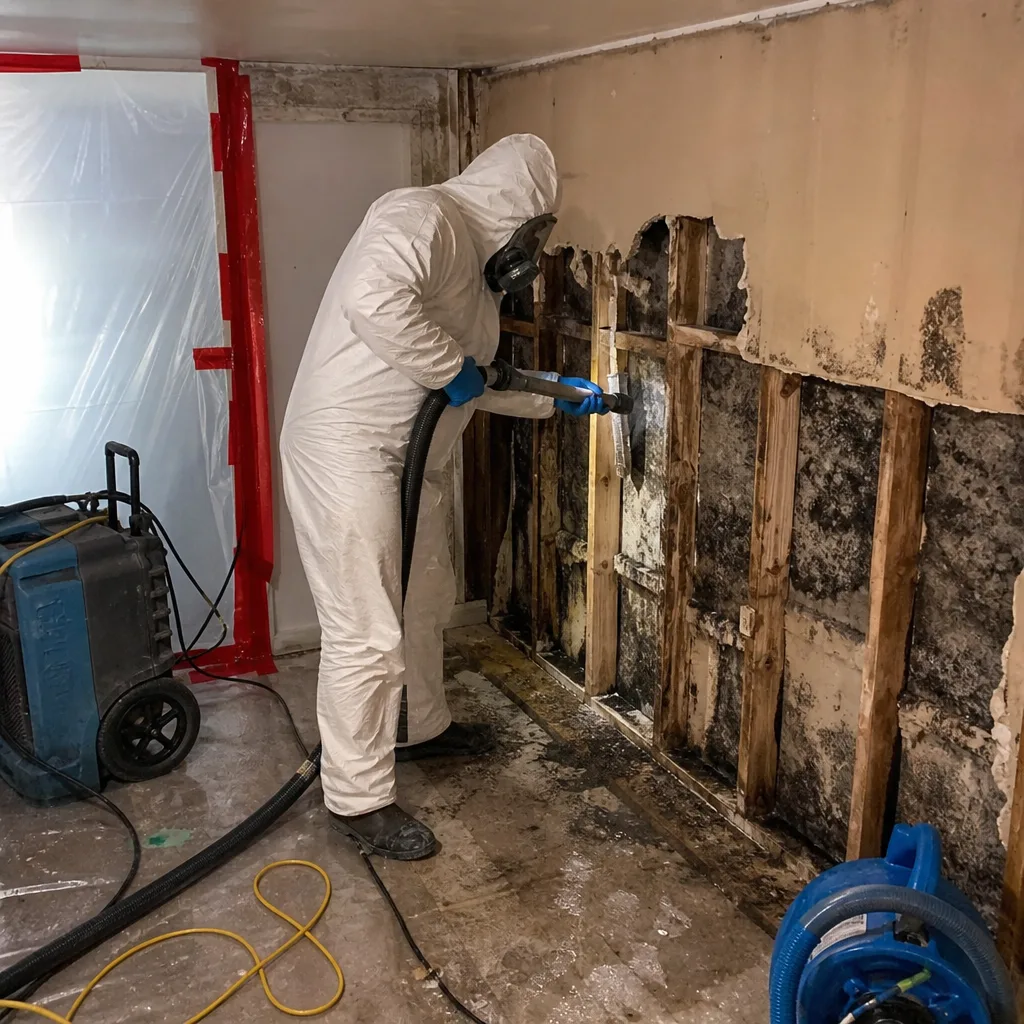
Call for assessment when moisture readings exceed 16% in any structural material, when you detect the sweet-damp or sharp-chemical odor profiles described above, when thermal imaging or the 10-degree flashlight technique reveals unexplained irregularities, or when any water event affects more than a single, small, immediately dried surface. In Miami’s climate, the margin between manageable and expensive is narrow, and it is crossed by delay more than by severity. For year-round maintenance strategies, see our Seasonal Damage Restoration Care for Miami: Year-Round Homeowner’s Guide.
For active water intrusion - a leaking pipe, roof breach, or AC overflow - speed matters. Moisture migrates horizontally through slab and vertically through wall cavities faster in humid conditions because the vapor pressure differential that drives it is sustained rather than self-limiting. Same-day assessment and equipment placement can prevent the progression from drying job to full remediation.
For historical concerns - purchasing a home, suspecting undisclosed past damage, or noticing chronic humidity issues - a scheduled assessment with thermal imaging and moisture mapping provides the documentation you need for negotiation or remediation planning. This is not emergency response; it is investigative work that should be scoped and priced in writing before it begins.
Fire & Smoke Damage Restoration in Miami and other specialized services require immediate professional response due to safety and contamination concerns. Do not attempt assessment or cleanup of fire, sewage, or biohazard damage without proper PPE and training.
DryMark Restoration Miami offers free estimates in Miami. Call (786) 250-0820. Every assessment includes documented moisture readings, thermal imaging where indicated, and a written scope with price before any work begins. Haven Standard, Clause 1, on every job.
Frequently Asked Questions
Most reputable restoration companies in Miami provide free initial assessments for water damage, including moisture readings and basic documentation. A comprehensive pre-purchase thermal imaging inspection typically costs $350-$600. At DryMark Restoration Miami, our standard assessment is free and includes pin and non-invasive moisture meter readings, thermal imaging as warranted, and a written scope with price before any work begins. Call (786) 250-0820 to schedule.
Coverage depends on whether the damage is classified as “sudden and accidental” or “long-term maintenance.” The key is documentation that establishes when the damage began and that it was not reasonably discoverable sooner. Moisture readings, photos, and drying logs that show a recent moisture event with rapid response support the sudden-and-accidental classification. Without documentation, insurers may apply long-term exclusion. This is why we document every assessment with time-stamped photos and moisture readings that establish the timeline. Call (786) 250-0820 for a free assessment and documentation review.
For active water damage, same-day response is standard among established Miami restoration companies, though actual arrival time varies by location, traffic, and current storm demand. DryMark Restoration Miami maintains 24-hour live phone coverage with no voicemail trees, and we dispatch based on geographic proximity to minimize response time. For non-emergency assessments, we typically schedule within 24-48 hours. The critical factor is not the arrival time but what happens on arrival: documented moisture readings, a written scope, and equipment placement if drying is indicated. Call (786) 250-0820 for current availability.
The determination depends on three factors: the size of the affected area, the material involved, and whether the moisture source has been eliminated. Under IICRC standards, areas under 10 square feet on non-porous materials may be addressed with HEPA vacuuming and antimicrobial treatment by a trained individual. Larger areas, porous materials like drywall or insulation, or situations where the moisture source is not fully identified require professional remediation with containment and air filtration. We assess every situation with moisture mapping to determine whether the visible colony is the full extent or an indicator of larger hidden growth. The written scope we provide before work begins specifies exactly what is required and why. Call (786) 250-0820 for assessment.
You are responsible for filing the claim and authorizing communication, but a professional restoration company should coordinate directly with your adjuster on documentation, scope, and billing. At DryMark Restoration Miami, we provide the daily drying logs, photo records, and written scopes that adjusters need to approve payment. We do not negotiate your claim for you - that requires a public adjuster or attorney - but we ensure the documentation we produce meets the standard that makes approval straightforward. Direct insurance billing is available where policy terms permit. Call (786) 250-0820 to discuss documentation protocols for your specific carrier.
Ask specifically about four deliverables: a written price before work begins, daily moisture readings with target goals, time-stamped photos of every visit, and a final drying log showing completion criteria. These are the documents that transform a restoration invoice into a payable claim. Ask also whether the company follows IICRC standards, whether technicians are named and licensed, and whether the company provides a written warranty. The Haven Standard, which governs our work, requires all of these as baseline practice, not upgrades. Any company that treats documentation as an add-on or afterthought is not prepared for the claims environment in Florida. Call (786) 250-0820 for a sample documentation package.
The Bottom Line
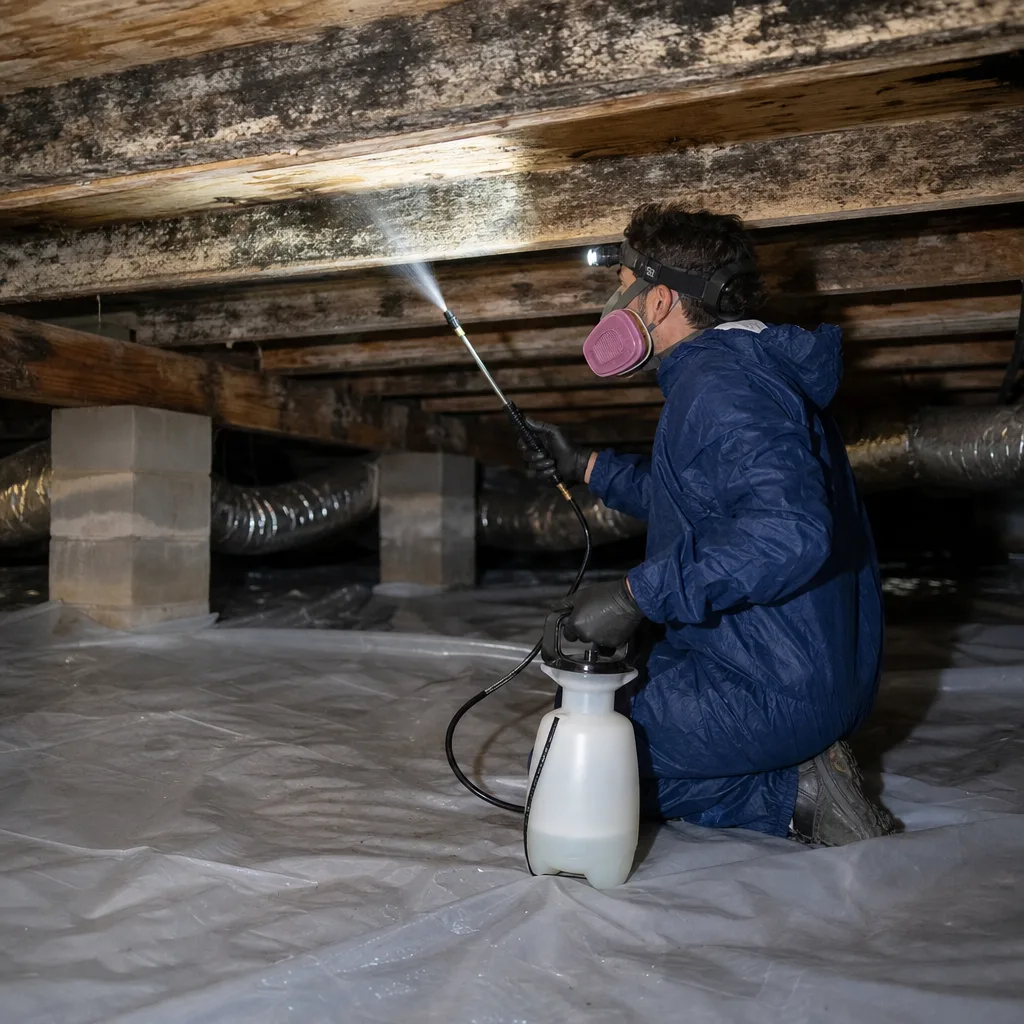
Miami’s climate inverts the normal sequence of damage detection. The signs you can see arrive late; the signs you can measure arrive early. A moisture meter reading, a temperature differential on thermal imaging, a subtle odor shift - these are the indicators that precede stains by weeks and prevent remediation costs from multiplying. The homeowners who fare best are those who treat measurement as routine, documentation as essential, and professional assessment as the default response to any anomaly. The 10-degree flashlight, the pin meter, and the permit search are tools anyone can use. The judgment to call when the numbers are elevated, before the damage is visible, is what separates manageable intervention from major restoration.
Written by Alicia Brennan, Owner at DryMark Restoration Miami, serving Miami since 2011.