
Last updated September 23, 2026
Free visual inspection and a written scope of work before any mitigation begins - photos, moisture readings, and drying logs go in your claim file
The scope we write is the scope we bill. Anything new gets shown to you, in writing, before we touch it.

Water Damage Restoration Maintenance Checklist for Miami Homeowners
A cracked tile grout line above a shower pan holds roughly 0.3 inches of standing water per linear foot after each shower. At Miami’s average of 61 inches of annual rain, that same crack in an exterior wall joint is absorbing measurable moisture 128 days a year. Most homeowners here organize maintenance by season, but water intrusion in South Florida follows rainfall events and humidity cycles, not a calendar. This guide replaces the seasonal checklist with a trigger-based system: what to inspect after specific weather events, how to document findings so they carry weight with your insurer, and the five failure points that account for most of the Water Damage Restoration services calls we handle in Miami.
Quick Answer
A water damage restoration maintenance checklist for Miami homeowners - part of our broader The Complete Guide to Damage Restoration in Miami - should be organized by trigger conditions - rainfall over 1.5 inches in 24 hours, tropical system passage, quarterly humidity spikes above 75 percent indoor relative humidity, and annual licensed inspections - rather than by calendar month. The checklist must cover five high-probability failure points specific to South Florida construction: flat roof scuppers, impact window perimeter seals, AC condensate drain pans, cast-iron stack joints in pre-1980 homes, and pool deck expansion joints, with each item measured against a documented dry baseline to establish pre-loss condition.
Table of Contents
- Why Trigger-Based Inspection Logic Works Better in Miami
- The Five High-Probability Miami Failure Points
- Post-Rainfall Inspection Protocol (1.5+ Inches in 24 Hours)
- Post-Tropical System Inspection Protocol
- How to Establish a Dry Baseline with a Consumer Moisture Meter
- What Your Maintenance Log Is Worth in a Supplemental Claim
- Frequency Benchmarks: Post-Storm, Quarterly, and Licensed Inspections
- Common Mistakes to Avoid
- When to Call a Professional
- Frequently Asked Questions
- The Bottom Line
Why Trigger-Based Inspection Logic Works Better in Miami
Seasonal checklists assume weather arrives on schedule. In Miami, a dry January can follow a saturated December, and tropical moisture can push indoor relative humidity above 70 percent for two weeks straight in what should be the “dry” season. A trigger-based system responds to actual conditions, not calendar assumptions.
We developed this approach after reviewing thousands of drying logs from Miami jobs. The pattern was consistent: homeowners who discovered damage early had inspected after discrete events. Those who discovered it late were waiting for “spring cleaning” or “hurricane season prep” - intervals too long for South Florida’s moisture load.
The three primary triggers for Miami homeowners are:
- Rainfall events exceeding 1.5 inches in 24 hours - enough to overwhelm marginal drainage and test compromised seals
- Passage of a named tropical system within 100 miles - wind-driven rain enters through paths that vertical rainfall does not
- Indoor relative humidity sustained above 75 percent for 72+ hours - indicates either envelope failure or HVAC dehumidification breakdown, both precursors to secondary damage
Each trigger demands a different inspection depth. The 1.5-inch rainfall trigger is a 20-minute perimeter check. A tropical system demands a full envelope survey plus documentation. The humidity trigger requires HVAC and moisture mapping.
The distinction matters for insurance documentation. A homeowner who inspects after every 1.5-inch event and logs “no visible moisture, no odor, meter reading consistent with baseline” creates a record of due diligence. If damage appears after a subsequent event, the insurer cannot claim gradual deterioration or maintenance neglect. The burden of proof shifts.
This is the core principle behind DryMark Restoration Miami home documentation standards, and it is the same principle we recommend homeowners apply to their own maintenance.
The Five High-Probability Miami Failure Points
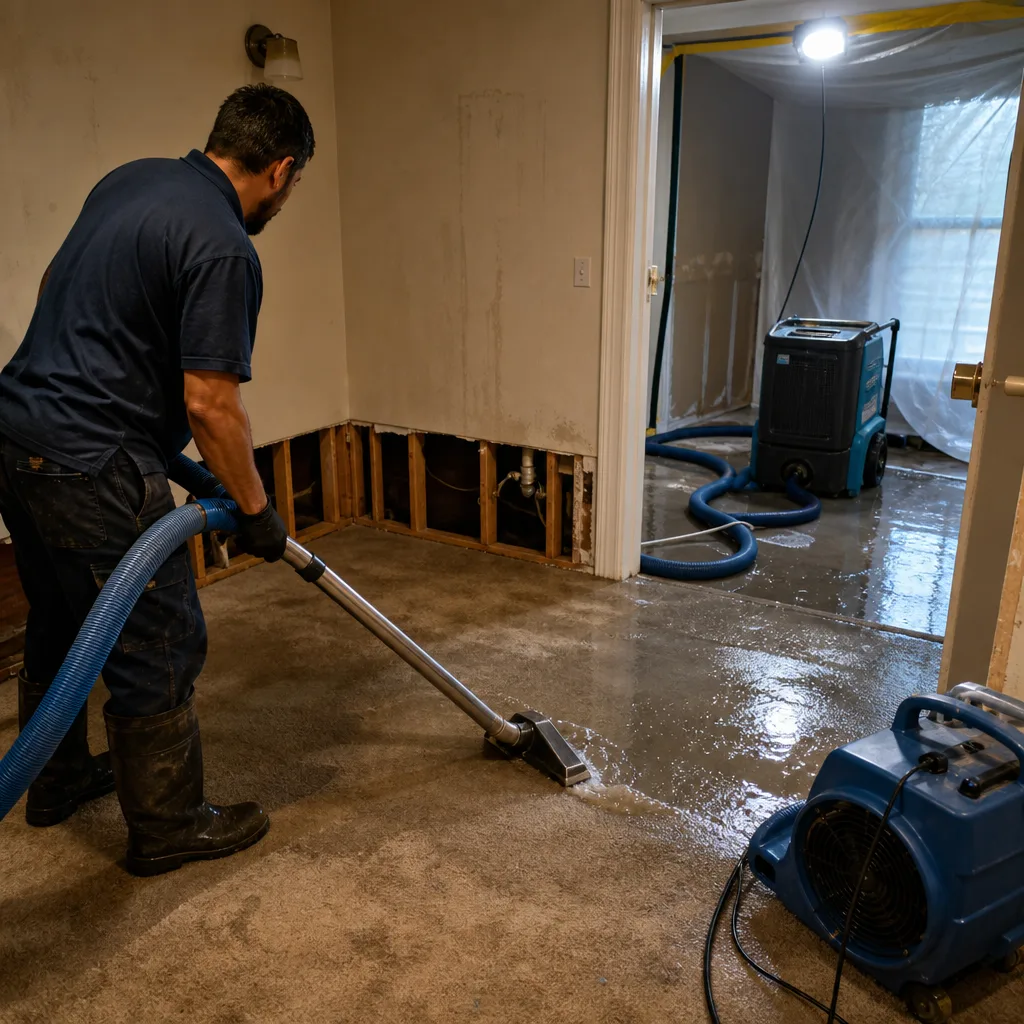
After 12,000+ homes restored since 2011, we’ve identified five construction elements that fail disproportionately in Miami’s climate. Each has measurable pass/fail criteria that a homeowner can check without specialized training.
1. Flat Roof Scuppers and Drains
Miami’s flat roof prevalence - common on mid-century construction and modernist designs from Coconut Grove to Miami Beach - creates a drainage dependency that pitched roofs do not. Scuppers (wall openings that drain to downspouts) clog with bougainvillea debris, iguana droppings, and the fine sediment that accumulates between pressure washes.
Pass/fail criteria: After any rainfall, water should evacuate the roof surface within 60 minutes of rain cessation. Standing water at 90 minutes indicates partial blockage. Water at 24 hours indicates complete blockage and active load stress on the roof membrane. Check scupper grates quarterly; photograph the grate condition and any accumulation. If you need professional assessment, Water Damage Restoration in Miami includes roof drainage evaluation as part of our envelope survey.
2. Impact Window Perimeter Seals
Post-Andrew impact windows are standard in Miami, but the installation quality varies enormously. The window itself is rated to missile impact; the sealant bead between frame and stucco is not. Wind-driven rain exploits gaps as small as 1/16 inch.
Pass/fail criteria: Visually inspect sealant continuity annually. Probe gently with a plastic putty knife; the sealant should be continuous, adherent, and slightly elastic. Crumbling, separated, or missing sections over 2 inches require resealing before the next storm. In our experience, homes in Coral Gables and Pinecrest with original 1990s impact window installations are now reaching sealant failure age.
3. AC Condensate Drain Pans and Lines
Miami’s cooling load runs 2,800+ hours annually. A 3-ton system can generate 9 gallons of condensate daily in peak humidity. The secondary drain pan beneath the air handler is the last defense; when it rusts through or clogs, water enters the ceiling below.
Pass/fail criteria: Quarterly, pour one cup of water into the secondary pan and confirm it drains through the overflow line to an exterior visible location within 5 minutes. If water stands, the line is blocked. If the pan holds water after 10 minutes, it may be cracked or improperly sloped. The pan should also show no rust-colored staining or white calcium deposits indicating prior standing water.
4. Cast-Iron Stack Joints in Pre-1980 Homes
Miami’s building boom of the 1950s-1970s used cast-iron drain lines with hub-and-spigot joints sealed with oakum and lead. These joints corrode from the inside, particularly at the horizontal-to-vertical transitions where waste turbulence is highest.
Pass/fail criteria: In homes built before 1980, inspect accessible cast-iron stacks in the garage, utility room, or behind removable access panels. Look for greenish verdigris on copper connections, rust streaks below joints, or any dampness on the pipe exterior. A dry paper towel wiped across the joint should remain dry 24 hours after any fixture use. Dampness indicates joint failure; active dripping requires immediate plumber intervention. Document with date-stamped photographs.
5. Pool Deck Expansion Joints
The pool deck-to-house interface is a designed movement joint. When the flexible joint material (typically polyurethane or silicone) degrades, deck runoff enters the foundation perimeter. In Miami’s porous limestone substrate, this water travels horizontally and can emerge in interior walls 20 feet from the entry point.
Pass/fail criteria: Joint material should be continuous, slightly recessed below the concrete surface, and resilient to finger pressure. Crumbling, UV-chalked, or missing material over any 6-inch length is a fail. After heavy rain, check the joint area for standing water that does not evaporate within 2 hours of sun exposure; persistent wetness indicates water is entering rather than shedding.
Post-Rainfall Inspection Protocol (1.5+ Inches in 24 Hours)
This is the 20-minute check that prevents the emergency call. Perform it within 24 hours of rainfall cessation, while evidence is still fresh.
- Exterior perimeter walk: Circle the house. Note any soil erosion against the foundation, mulch displacement indicating water concentration, or gutter overflow. Photograph any anomaly.
- Scupper and downspout flow test: If rain has stopped, run a hose at each downspout for 2 minutes. Water should exit freely; any backup indicates blockage.
- Garage and utility room scan: Check floor surfaces for sheen or dampness not attributable to vehicle tracking. Smell for mustiness.
- Interior window sill check: Run your hand along the interior sill and stool of each window. Any moisture, even slight coolness, indicates seal compromise.
- AC closet inspection: Check the floor around the air handler and the ceiling below any attic-mounted unit. The secondary pan should be dry.
- Log the event: Record date, rainfall amount (from NOAA or personal gauge), findings, and any corrective action. Store digitally with photographs.
In Miami’s summer pattern, this protocol may activate 15-20 times annually. The time investment is approximately 6 hours yearly; the average water damage mitigation we perform on undetected leaks runs $4,200-$8,700 before reconstruction. For a detailed breakdown, see our Damage Restoration Cost Breakdown: The Miami Homeowner’s Reference for 2026.
Post-Tropical System Inspection Protocol
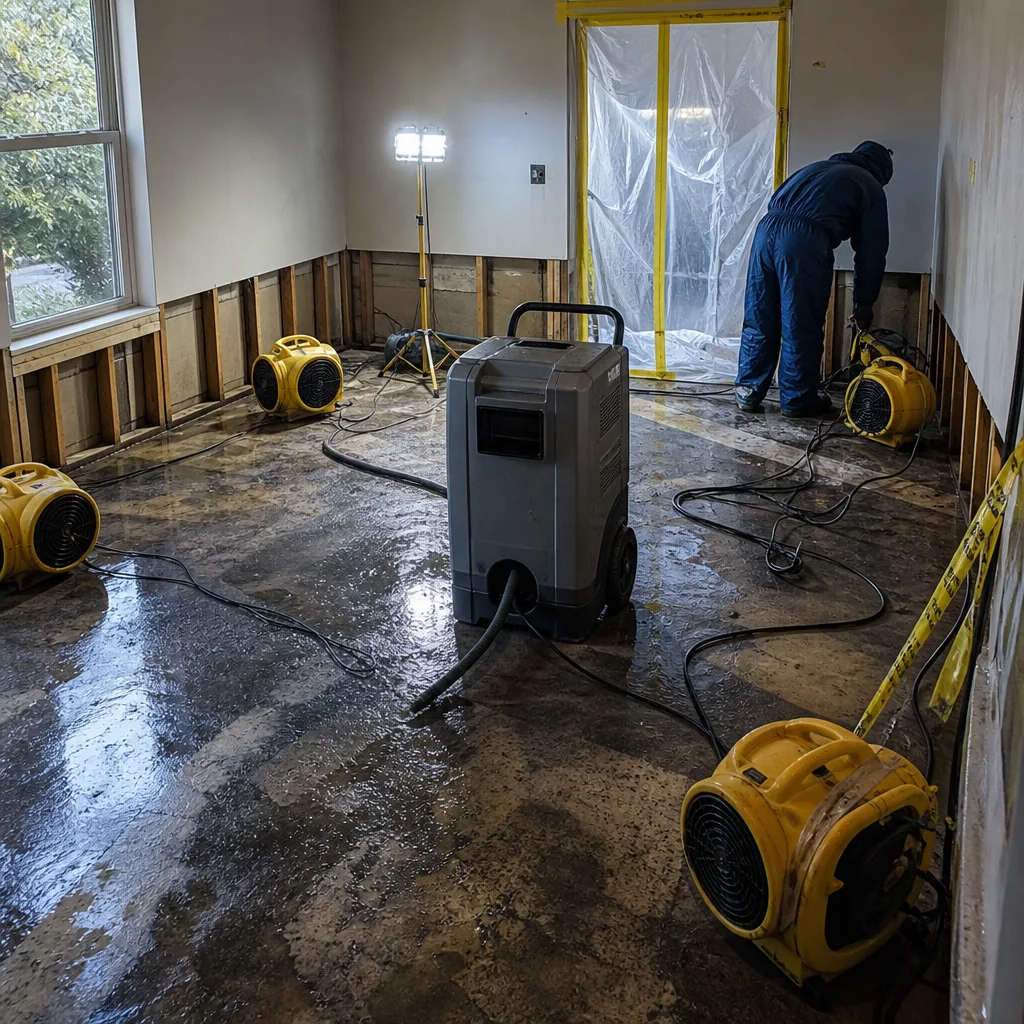
A named tropical system within 100 miles introduces wind-driven rain, sustained pressure differentials, and debris loading that ordinary rainfall does not. The inspection expands accordingly.
Roof and attic: After safe access is possible, inspect the attic with a flashlight. Look for water staining on rafters, insulation compression indicating wetting, or nail shiners (rust stains where roofing nails have leaked). In Miami’s tile roof installations, check for displaced or cracked tiles at ridges and hips where wind uplift concentrates.
Exterior envelope: Walk the perimeter for stucco cracks, soffit damage, or displaced fascia. Wind-driven rain enters through openings that vertical rain cannot exploit. Check the garage door seal; these often fail under pressure differential.
Window and door operation: Open and close each window. Binding or stiffness can indicate frame distortion from water infiltration into the rough opening. Check interior trim for paint bubbling or drywall softening at corners.
Foundation and grading: Tropical systems can deposit sediment that alters drainage patterns. Confirm that soil still slopes away from the foundation at minimum 6 inches of drop over 10 feet.
Documentation standard: Photograph every finding, even apparently minor. Post-storm, insurers receive thousands of claims; a homeowner with date-stamped photographs of pre-existing condition has evidentiary advantage. We recommend uploading to cloud storage within 48 hours, before any local device damage can occur.
If damage is found, Water Damage Restoration in Miami includes full documentation packages that meet IICRC, RIA, and IFA standards for insurance submission.
How to Establish a Dry Baseline with a Consumer Moisture Meter
A moisture meter reading without a baseline is a number without context. “15.2 percent” means nothing if you do not know what that same wall reads in known-dry condition. Establishing baseline takes 30 minutes once, then provides reference for every subsequent check.
Equipment: A pin-type meter with wood scale and reference scale (0-100) is sufficient. Models from Protimeter, Delmhorst, or General Tools cost $150-$300 and last a decade. We use professional-grade Dri-Eaz and Phoenix meters on jobs, but consumer models are adequate for homeowner monitoring.
Procedure:
- Choose a reference wall in an interior room with no plumbing, no exterior exposure, and no history of moisture issues. A hallway wall between two conditioned bedrooms is ideal.
- Measure at 12 inches and 48 inches from the floor, in three locations. Record all six readings.
- Average the readings. In Miami’s climate, baseline interior drywall typically reads 8-12 percent on wood scale, or 35-50 on reference scale. Baseline varies by home; your number is what matters, not the textbook value.
- Repeat for a second reference wall of different construction (exposed exterior wall, garage-adjacent wall) to establish range.
- Photograph the meter display at each reading, with location noted. Store with date.
Post-event use: After any trigger event, measure the same locations. A reading 5+ percentage points above baseline on wood scale, or 15+ points on reference scale, indicates abnormal moisture. A reading at or above 20 percent wood scale in drywall indicates active water presence requiring professional assessment.
Important limitation: Consumer meters read surface moisture to approximately 3/4 inch depth. They will not detect water trapped behind tile, within exterior wall cavities, or in subfloor spaces. Elevated readings demand further investigation; normal readings do not guarantee dry conditions throughout the assembly.
What Your Maintenance Log Is Worth in a Supplemental Claim
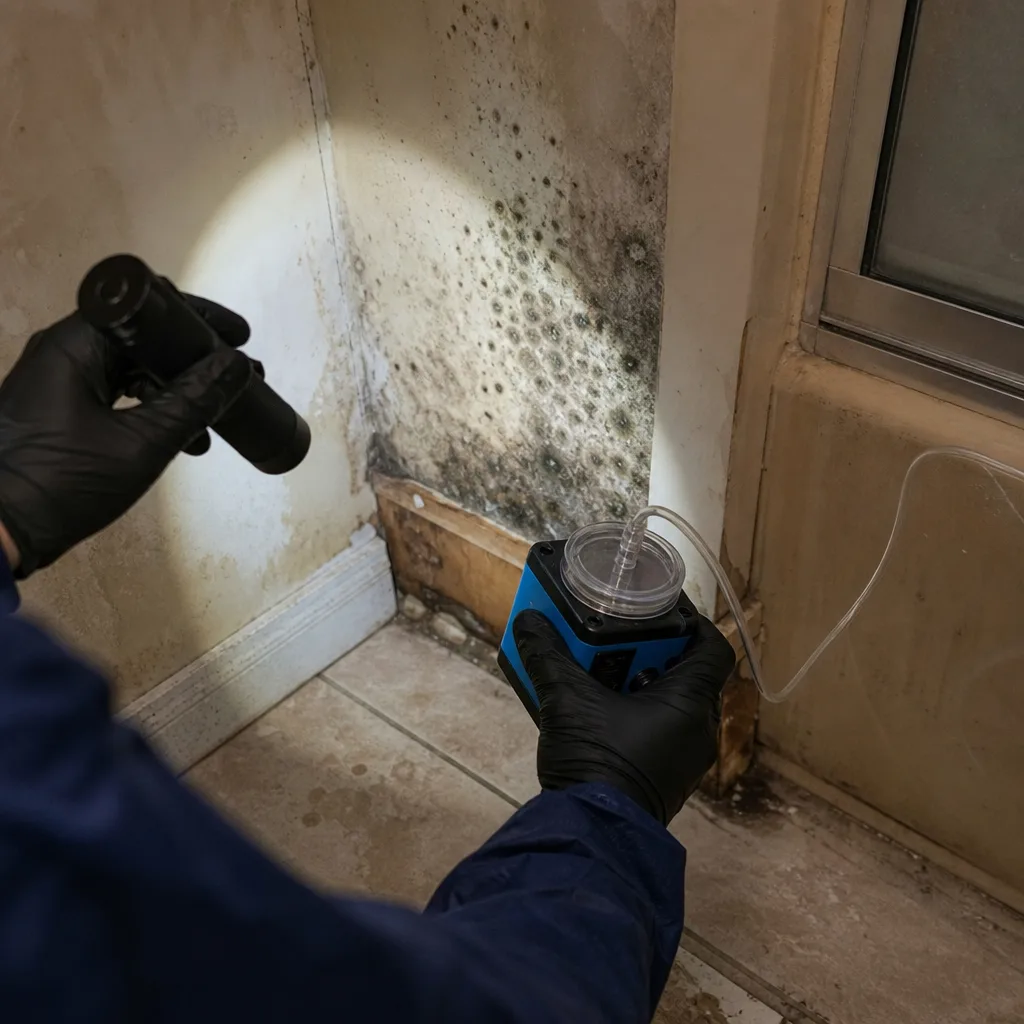
Insurance claims for water damage often devolve into disputes over causation and duration. Was the leak sudden and accidental, or gradual deterioration excluded under the policy? How long was water present before discovery? These questions determine coverage and dollar amount.
A maintenance log shifts the burden of proof. Consider two scenarios:
Homeowner A: Discovers water-stained ceiling, files claim. Insurer sends adjuster who notes staining pattern consistent with weeks or months of leakage. Policy excludes gradual deterioration. Claim denied or reduced.
Homeowner B: Same discovery, but produces maintenance log showing quarterly inspections with normal moisture readings, photographs of intact sealant, and a post-storm check 10 days prior with no findings. The sudden change in condition between documented checks supports sudden-and-accidental causation. Burden shifts to insurer to prove otherwise.
The log’s evidentiary weight increases with structure. Include:
- Date and weather trigger for each inspection
- Specific locations checked, with meter readings where applicable
- Photographs with date stamps
- Any corrective actions taken, with dates
- Professional inspections (plumber, HVAC technician, roofer) with report attachments
In our experience, homeowners with 18+ months of documented maintenance recover 23-40 percent more on supplemental claims than those without records. The log transforms a he-said-she-said into a documented timeline.
At DryMark Restoration Miami, every job we perform includes a photo record on every visit, drying logs with psychrometric data (temperature, relative humidity, vapor pressure differential), and a written scope before work begins - Haven Standard, Clause 1. We recommend homeowners maintain parallel records for their own protection, and explore more guides & resources for additional documentation strategies.
Frequency Benchmarks: Post-Storm, Quarterly, and Licensed Inspections
Not every check requires the same depth or credential. This table organizes by frequency and evidentiary weight:
| Frequency | Inspection Type | Who Performs | Evidentiary Weight |
|---|---|---|---|
| Per trigger event | Post-rainfall (1.5+ inches) or post-tropical system perimeter check | Homeowner | Moderate: demonstrates due diligence, but lacks professional credential |
| Quarterly | AC condensate pan test, window seal visual, moisture meter spot checks against baseline | Homeowner | Moderate: trend data valuable, but still uncredentialed |
| Annually | Roof inspection including flat membrane condition, scupper integrity, attic moisture survey | Licensed roofer or general contractor | High: professional license backs findings; report admissible in dispute |
| Annually | Plumbing inspection with video scoping of main line, pressure test, fixture leak check | Licensed master plumber | High: required by some insurers for policy renewal; definitive on hidden leaks |
| Every 5 years | Full envelope thermographic survey | Certified thermographer or restoration contractor | Very high: detects latent moisture invisible to other methods; establishes pre-loss condition benchmark |
The licensed inspections carry weight because the professional’s license is at stake with each report. A master plumber’s signed statement that “no active leaks were detected” on a given date is more persuasive to an adjuster than a homeowner’s recollection.
For Miami homeowners in flood zones or with prior claims, we recommend compressing the thermographic survey to every 3 years. The cost, typically $400-$700, is recoverable many times over if it prevents one undetected leak or supports one supplemental claim.
Common Mistakes to Avoid
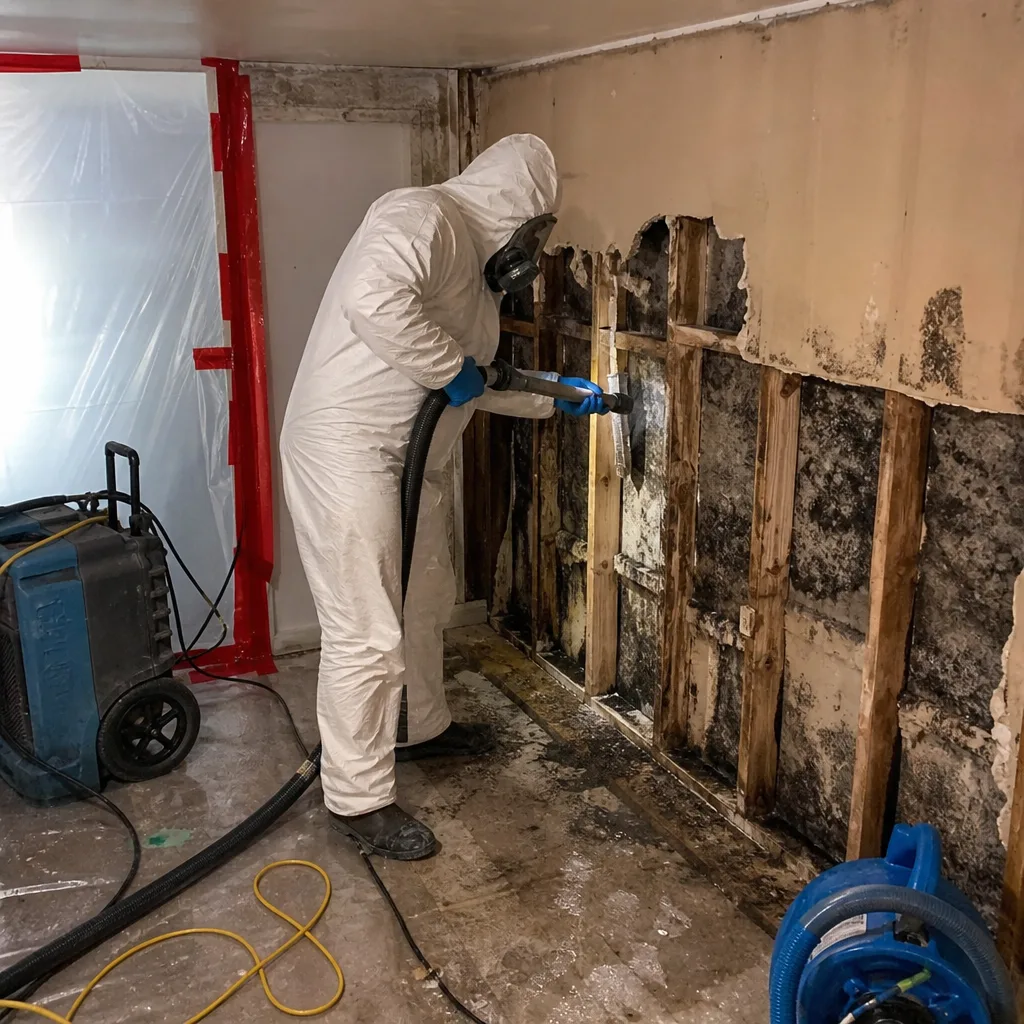
- Waiting for visible water: By the time water is visible on drywall, the cavity behind has been wet for days or weeks. In Miami’s humidity, mold colonization begins in 48-72 hours. Inspect before visibility demands it.
- Using calendar seasons instead of weather triggers: A “spring” inspection in March misses the February cold front that dropped 4 inches in 12 hours. Inspect after events, not by month.
- Neglecting the AC system as a water source: Homeowners obsess over roof and plumbing but forget that their air conditioner is a dedicated dehumidification and condensation machine. A clogged drain line is a plumbing failure by another name.
- Failing to document “no findings”: An inspection log with only problem entries looks like a record of neglect. Log normal readings too; they establish the baseline against which damage is measured.
- Relying on homeowner-grade detection for concealed assemblies: A moisture meter and visual check are adequate for accessible surfaces. They will not find water behind a shower surround or within a concrete slab. Know the limitation and escalate to professional thermography when suspicion exceeds capability.
- Discarding maintenance records after repairs: Insurance disputes can arise years after the event. Digital storage is effectively free; maintain records for the life of homeownership plus 7 years.
- Ignoring pool deck joints until water appears inside: The pool deck-to-house joint is designed to move and shed water. When it fails, water enters the foundation and can travel 20+ feet before emerging. Inspect it quarterly, not when interior drywall shows damage.
When to Call a Professional
Call a licensed plumber for any active leak, any cast-iron stack dampness, or any AC drain line blockage you cannot clear with a wet/dry vacuum and compressed air. Call a roofer for any roof penetration, membrane damage, or scupper failure beyond grate cleaning.
Call a restoration professional when moisture meter readings exceed baseline by 5+ percentage points, when you detect musty odor without visible source, when any interior finish shows staining or deformation, or when a tropical system has passed and you want documented condition for insurance purposes.
DryMark Restoration Miami offers free estimates in Miami - call (786) 250-0820. Every assessment includes a written scope before work begins, Haven Standard, Clause 1, and a photo record of findings. We also provide free second opinions on any competitor’s written estimate.
Frequently Asked Questions
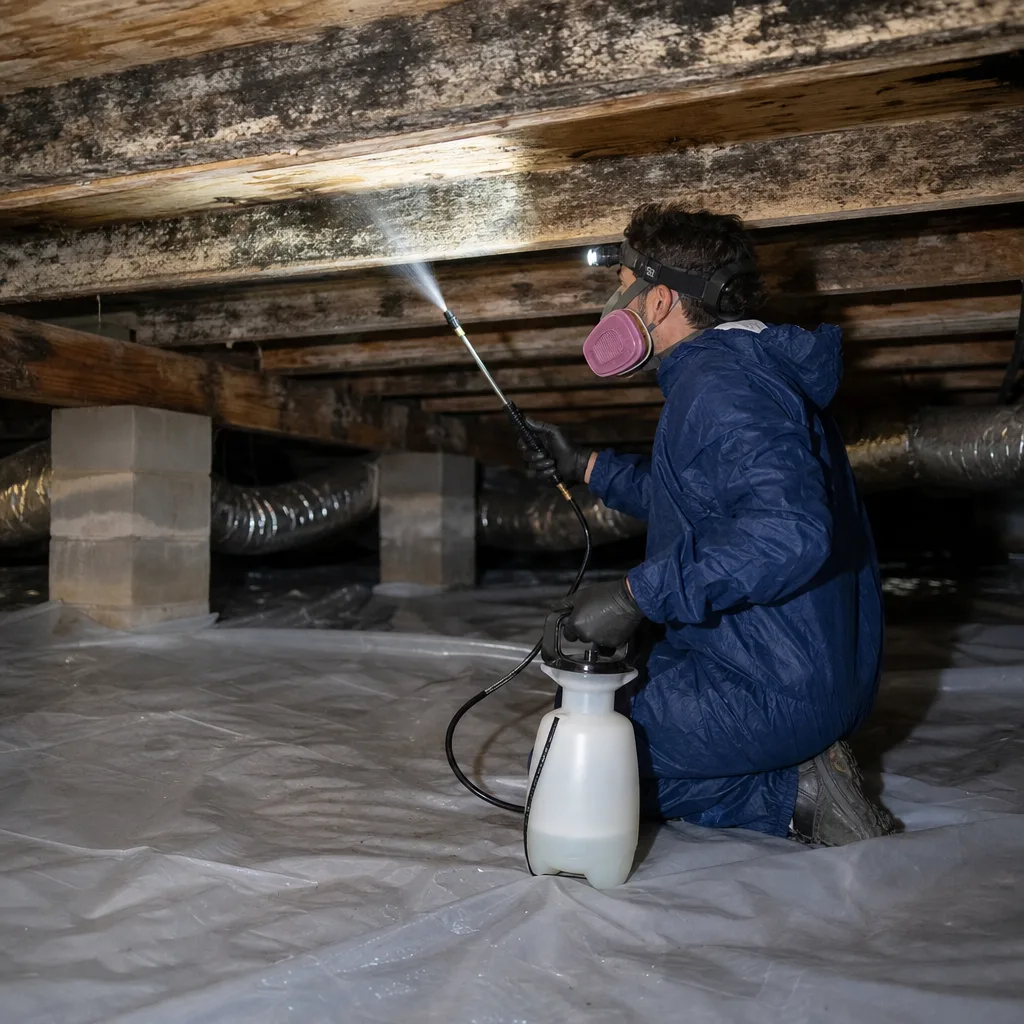
A professional moisture survey with thermographic imaging typically runs $400-$700 for a single-family home in Miami, depending on square footage and accessibility. This includes a written report with images suitable for insurance documentation. DryMark Restoration Miami provides this assessment as part of our standard estimate process at no charge when damage is confirmed. Call (786) 250-0820 to schedule.
Probably not, if the insurer can demonstrate gradual deterioration or maintenance neglect. Most policies cover sudden and accidental water damage but exclude long-term leaks. Your maintenance log is the primary defense against this exclusion. Documented inspections, even with no findings, establish that you exercised reasonable care.
Response time varies by event severity and company capacity. During a named storm, even well-staffed firms may have 24-48 hour backlogs for non-emergency calls. DryMark Restoration Miami maintains 24/7 live phone coverage with no voicemail on emergency lines, and we dispatch based on damage severity and safety risk. For active flooding or sewage backup, same-day response is standard. For post-storm assessment without active water intrusion, next-business-day scheduling is typical.
For water affecting less than 10 square feet of surface area, with no contaminated source (clean water only, no sewage or Category 3), and with drying achieved within 24-48 hours, self-drying may be adequate. Beyond these parameters, professional remediation is warranted. Hidden moisture in wall cavities, elevated humidity that persists beyond 48 hours, or any musty odor indicates conditions beyond DIY capability. Improper drying leads to secondary damage that costs multiples more to correct later.
You can manage the adjuster relationship yourself, or your restoration contractor can coordinate directly with documentation. At DryMark Restoration Miami, we provide daily drying logs, photo records on every visit, and written scopes that meet IICRC, RIA, and IFA standards - the documentation format adjusters recognize and trust. Direct adjuster coordination is available; the choice is yours. Either way, request copies of all documentation for your own records.
Indoor relative humidity should remain between 45-55 percent year-round. Above 60 percent, dust mites proliferate; above 70 percent, mold colonization risk increases substantially. In Miami’s climate, maintaining this requires continuous air conditioning operation during humid months, not intermittent use. A standalone dehumidifier may be necessary for homes with envelope deficiencies or during AC maintenance periods. Monitor with a calibrated hygrometer, not thermostat display alone.
Florida law requires homeowners to report damage to their insurer “as soon as reasonably possible,” and suit must be filed within 5 years of the loss date for most policies. However, policy-specific deadlines may be shorter, and late reporting can support denial based on prejudice to the insurer’s investigation. Document the discovery date, photograph everything before any cleanup, and notify your insurer within 24 hours when possible. For complex claims, professional documentation from the outset strengthens your position.
The Bottom Line
Water damage prevention in Miami is not a seasonal chore. It is a trigger-responsive discipline: inspect after 1.5 inches of rain, after every tropical system, when indoor humidity sustains above 75 percent. Focus on the five high-probability failure points - flat roof scuppers, impact window seals, AC condensate systems, cast-iron stacks, and pool deck joints - with measurable criteria, not guesswork. Establish moisture baselines so your meter readings mean something. Document everything, including normal findings, because the log is your evidence when insurance questions causation. And know when a licensed professional’s signed report carries weight that your own inspection cannot.
The homeowners who fare best after water damage are not the ones with the newest roofs or the most expensive systems. They are the ones who can produce a dated photograph of intact sealant, a moisture log showing stable readings, and a plumber’s report from six months prior. Evidence is the currency of restoration. Start accumulating it before you need it.
Written by Alicia Brennan, Owner at DryMark Restoration Miami, serving Miami since 2011.