
Free visual inspection and a written scope of work before any mitigation begins - photos, moisture readings, and drying logs go in your claim file
The scope we write is the scope we bill. Anything new gets shown to you, in writing, before we touch it.
24/7 Emergency Fire & Smoke Damage Restoration in Coral Gables
A kitchen fire in a Coral Gables home can leave smoke residue in wall cavities within hours, and the city’s 85% average humidity means odor compounds bind to porous surfaces faster than in drier climates. Call (786) 250-0820 now and a live person will answer, 24 hours a day, 7 days a week. Our crews dispatch throughout Coral Gables, from the Granada Boulevard corridor to the canal-front streets south of Miracle Mile, with a 45-minute response commitment for active fire damage.
We provide a free visual inspection on arrival, document every surface with photo records, and deliver a written price before any work begins. The first hour determines whether smoke odor becomes a permanent fixture in original lime plaster walls. The first 48 hours decide whether firefighting water triggers mold in coral rock cavities. Speed on the front end saves tens of thousands on the back end.
Understanding Fire & Smoke Damage Restoration Severity in Coral Gables Properties
Fire damage in Coral Gables operates on three severity tracks: the fire itself, the smoke and soot residue, and the water introduced by suppression. Soot residue types matter. Dry smoke residue from fast-burning, high-heat fires produces powdery, easily smeared particles that settle on horizontal surfaces. Wet smoke residue from slow, oxygen-starved burns is sticky, acidic, and penetrates porous oolitic limestone and lime plaster aggressively. Protein residue from kitchen fires is nearly invisible but carries a rancid odor that standard cleaning won’t touch.
Smoke migration follows pressure differentials and HVAC pathways. In a 1920s Mediterranean Revival home with original ductwork or no ductwork at all, smoke travels through wall cavities via balloon framing and limestone voids. Tertiary smoke damage, the odor that re-emerges weeks later, happens when residue settles in porous coral rock that wasn’t properly cleaned or sealed. Coral Gables’s historic housing stock, built between 1920 and 1955, lacks modern vapor barriers. Smoke-laden moisture wicks deep into limestone walls and original-growth pine framing. A crew that treats this like standard drywall construction will miss it. We’ve seen it.
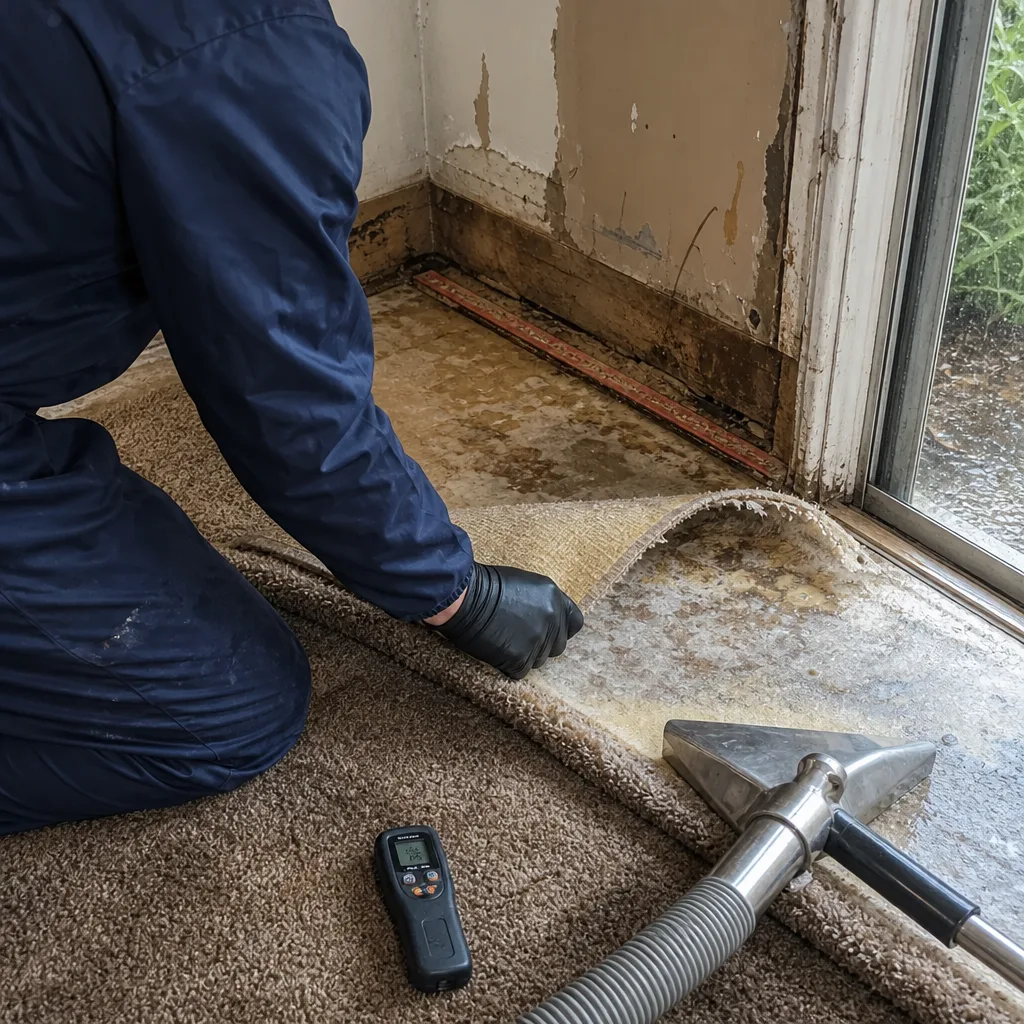
The water component is equally specific. Firefighting runoff in Coral Gables homes often starts as Category 2 water, gray water with chemical and particulate load from ash and soot. Within 24 hours in humid conditions, it degrades to Category 3, black water, as microbial growth accelerates in warm, saturated coral rock. Psychrometric data, temperature and relative humidity readings, guides our drying strategy. Vapor pressure differential, the force that drives moisture from wet materials to drier air, must be managed carefully with historic lime plaster, which can crack or delaminate if dried too aggressively.
Why Coral Gables Property Owners Choose DryMark Restoration Miami
- 45-minute response commitment to active fire damage calls in Coral Gables, with crews staged for the Granada Boulevard, Miracle Mile, and Cocoplum response corridors.
- 24/7 live answer - a real person, never an automated system or voicemail tree, picks up every call to our emergency line.
- IICRC-certified crews holding FSRT (Fire and Smoke Restoration Technician) and WRT (Water Damage Restoration Technician) credentials, with AMRT (Applied Microbial Remediation Technician) certification for the mold that follows fire suppression water.
- Free visual inspection on every call, with moisture mapping and thermal imaging included at no charge before any scope is written.
- Direct insurance billing and adjuster coordination, with photo-documented estimates in Xactimate format that carriers recognize and pay without dispute.
- One team from board-up to reconstruction - no handoffs between mitigation and rebuild contractors that delay permit approval with Coral Gables’s Historic Preservation Board.
Our Fire & Smoke Damage Restoration Process
1. Inspection & Assessment
We arrive with thermal imaging cameras, moisture meters calibrated for coral rock density, and hygrometers to measure ambient conditions. Every room is photo-documented. We identify soot residue type, smoke migration pathways, and water intrusion points from suppression. A written scope follows within hours, not days.
2. Emergency Board-Up & Tarping
Broken windows, compromised roofs, and exposed wall cavities are secured immediately. For clay barrel tile roofs common in Coral Gables, we source matching tiles or install temporary tarps that won’t shift in afternoon thunderstorms. Board-up includes perimeter security and weatherproofing to prevent secondary water damage.
3. Water Extraction & Structural Drying
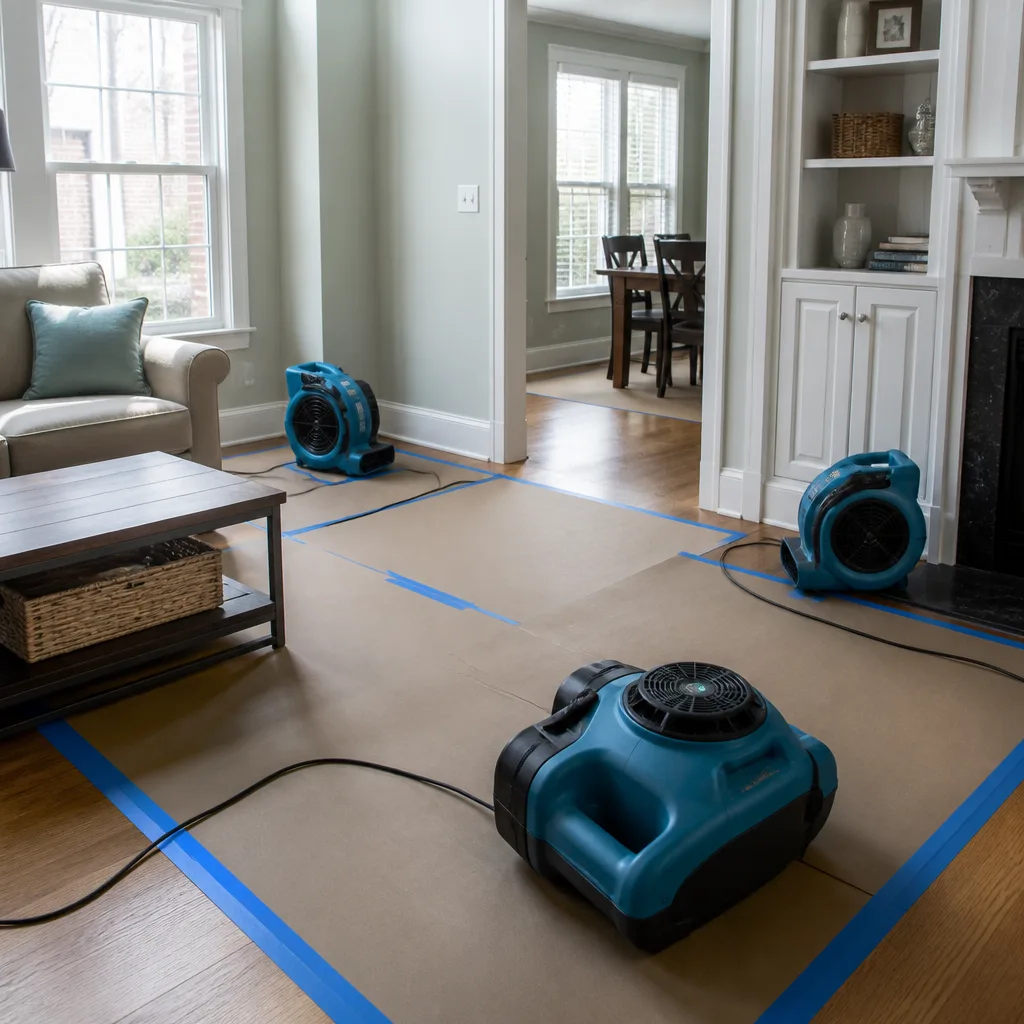
Firefighting water is extracted with truck-mounted systems, then structural drying begins with Dri-Eaz and Phoenix dehumidifiers sized to the cubic volume of each room. Air movers from XPOWER and B-Air create controlled airflow across wet surfaces. Daily moisture logs track specific humidity, grain depression, and material moisture content until readings stabilize within IICRC drying standards.
4. Smoke & Soot Cleaning
Dry smoke residue is HEPA-vacuumed before wet cleaning to prevent smearing. Wet smoke residue requires solvent-based cleaning agents selected for compatibility with lime plaster and coral rock. Protein residues from kitchen fires are treated with enzyme digesters. HEPA air scrubbers run continuously during cleaning to capture airborne particulate.
5. Odor Removal & Deodorization
Surface cleaning removes visible residue; odor removal addresses what remains in porous materials. We deploy thermal fogging, ozone treatment, or hydroxyl generators depending on occupancy status and material sensitivity. For historic lime plaster and coral rock, we often seal with specialized encapsulants that block odor migration without altering appearance, preserving material authenticity for Historic Preservation Board review.
6. Structural Fire Repair & Restoration
Reconstruction follows the written scope exactly. On contributing historic properties, we source period-appropriate stucco mixes, coral rock infill, and compatible finishes. Our Fire & Smoke Damage Restoration team coordinates directly with the Historic Preservation Board to secure permits before work begins, avoiding stop-work orders that delay reoccupancy.
Need Emergency Fire & Smoke Damage Restoration in Coral Gables Now?
Crews minutes away, answering live 24 hours a day. The sooner we start, the less it costs.
Working With Your Insurance Company
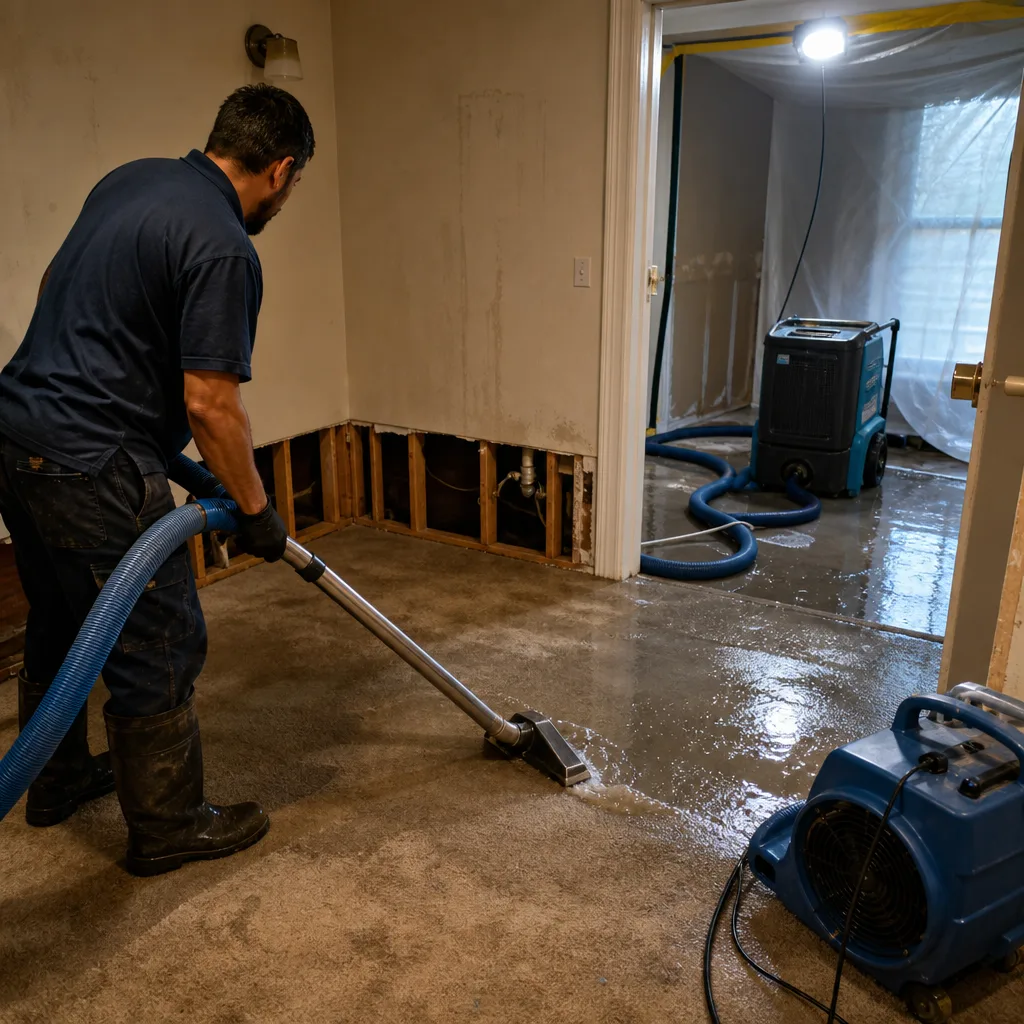
Insurance claims for fire damage fail most often on documentation gaps. We close those gaps from the first hour. Every visit produces a photo record, room by room, with timestamps. Moisture readings are logged daily. Drying equipment placement is diagrammed. The final estimate is a line-item Xactimate scope that adjusters can review and approve without back-and-forth.
We speak directly with your adjuster, provide supplemental documentation when hidden damage is found, and never begin reconstruction without carrier approval on the written scope. Our estimates are based on industry-standard pricing, not inflated or rounded figures. If you’ve received another contractor’s estimate, we offer a free second opinion, Haven Standard, Clause 7.
What We Provide Your Insurer
- Thorough documentation of the loss
- Photos of all damage, room by room
- Moisture readings and drying logs
- A detailed, line-item scope of work
- Direct coordination with your carrier
Built for Coral Gables’s Loss Calendar
January through March brings the dry season, when space heaters and fireplace use spike in historic homes with original wiring. February 2023 saw a cluster of electrical fires in pre-1950 properties near the Coral Gables Country Club, where knob-and-tube remnants still serve outbuildings and additions. April through June, lightning strikes peak. July through October is hurricane season, when lightning-caused structure fires combine with extended power outages that drive generator misuse. November and December return to holiday cooking and decorative lighting fires.
Year-round, the city’s canal-front properties face a secondary risk: fireboats and suppression systems can introduce saltwater into the damage profile, accelerating corrosion in original-growth pine framing and requiring specific cleaning protocols. The wet season’s near-100% humidity means any water intrusion from suppression reaches mold colonization thresholds in 24-48 hours, even when the fire itself seemed minor.
Fire & Smoke Damage Restoration Across Coral Gables’s Neighborhoods
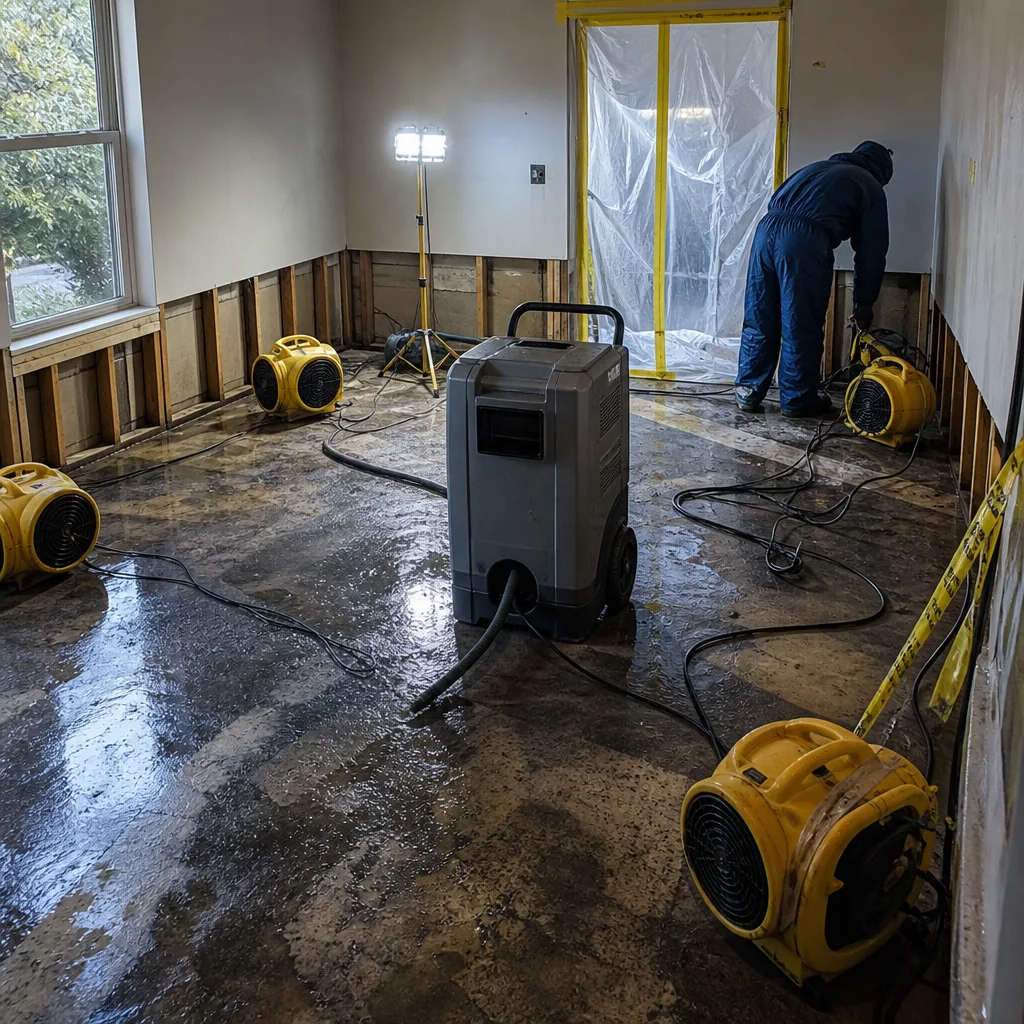
Granada Boulevard and the streets radiating north toward the Biltmore Hotel hold some of the city’s oldest 1920s estates, many with original clay barrel tile roofs and coral rock walls that demand material-matching after fire damage. Crews responding here carry spare barrel tiles and maintain relationships with local suppliers of period-appropriate stucco mixes. The Miracle Mile corridor mixes commercial and residential properties; upper-story residential fires in mixed-use buildings require containment strategies that protect ground-floor retail during business hours.
Cocoplum and the waterways south of Le Jeune Road present canal-front homes on original oolitic limestone foundations. We’ve found that moisture meters read 15-20% higher on saturated coral rock than on equivalent CMU block, and crews unfamiliar with the material routinely underestimate lateral wicking. North of Bird Road, the 1940s and 1950s ranch-style homes have different framing but often retain original lime plaster interiors that smoke penetrates aggressively. Each zone demands different equipment staging and different conversations with the Historic Preservation Board.
We responded to a kitchen fire in a 1930s Mediterranean Revival home off Granada Boulevard where smoke residue had settled into porous oolitic limestone walls and lime plaster. After board-up and containment, we used moisture mapping to find hidden smoke residue in wall cavities that a standard drywall approach would have missed, then applied antimicrobial treatment to the coral rock before structural drying with air movers and dehumidification. The final scope of work matched the home’s pre-loss condition without triggering a Historic Preservation Board stop-work order.
Specialized Fire & Smoke Damage Restoration Services We Offer in Coral Gables
Fire Damage Cleanup
We remove charred debris, ash, and compromised materials while protecting salvageable historic elements. On contributing properties, this means hand-cleaning coral rock rather than demolishing it, and testing lime plaster for delamination before deciding on spot repair versus full replacement. A written price precedes every demolition decision.
Smoke & Soot Removal
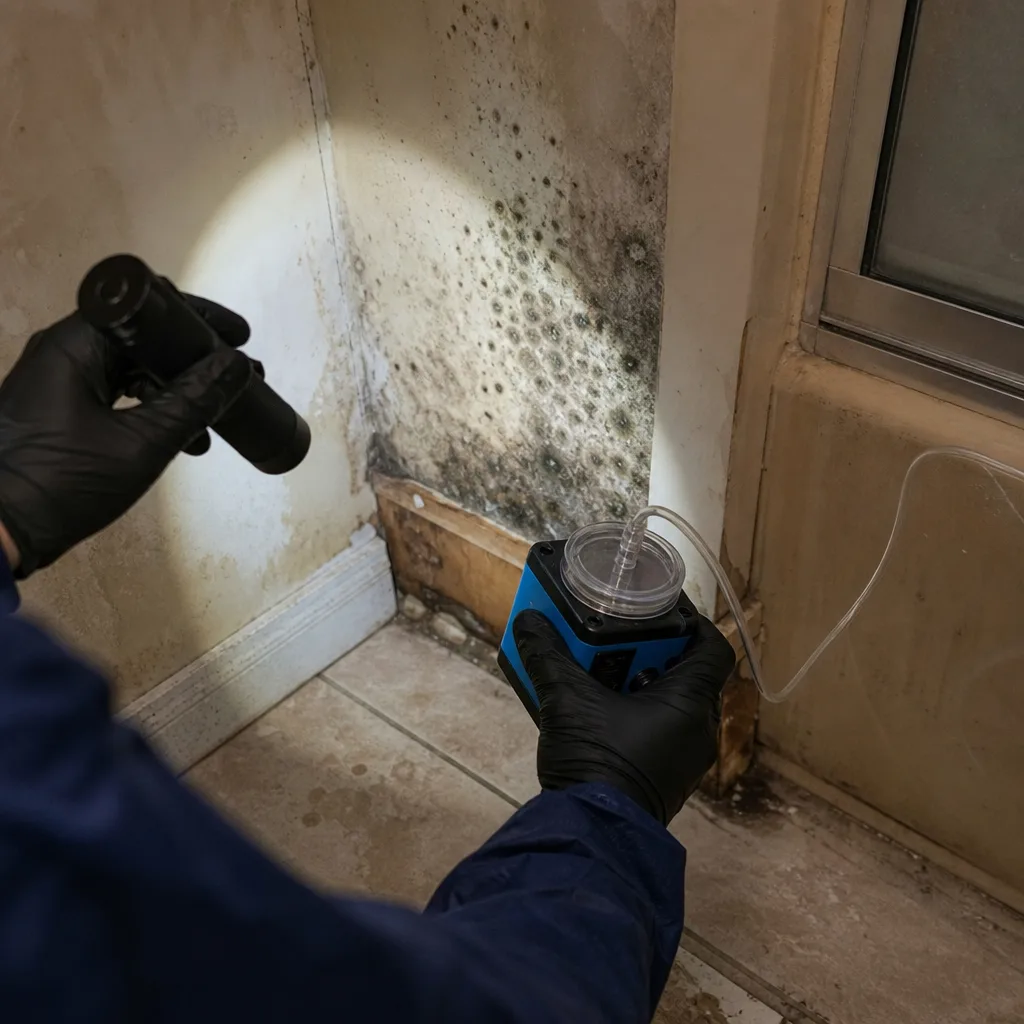
Different soot types demand different approaches. Dry soot on clay barrel tile is vacuumed first, then cleaned with pH-neutral agents that won’t etch the glaze. Wet soot on lime plaster requires solvent cleaning that won’t drive residue deeper. We identify residue type before touching a surface, document the classification, and adjust protocol accordingly.
Odor Removal & Deodorization
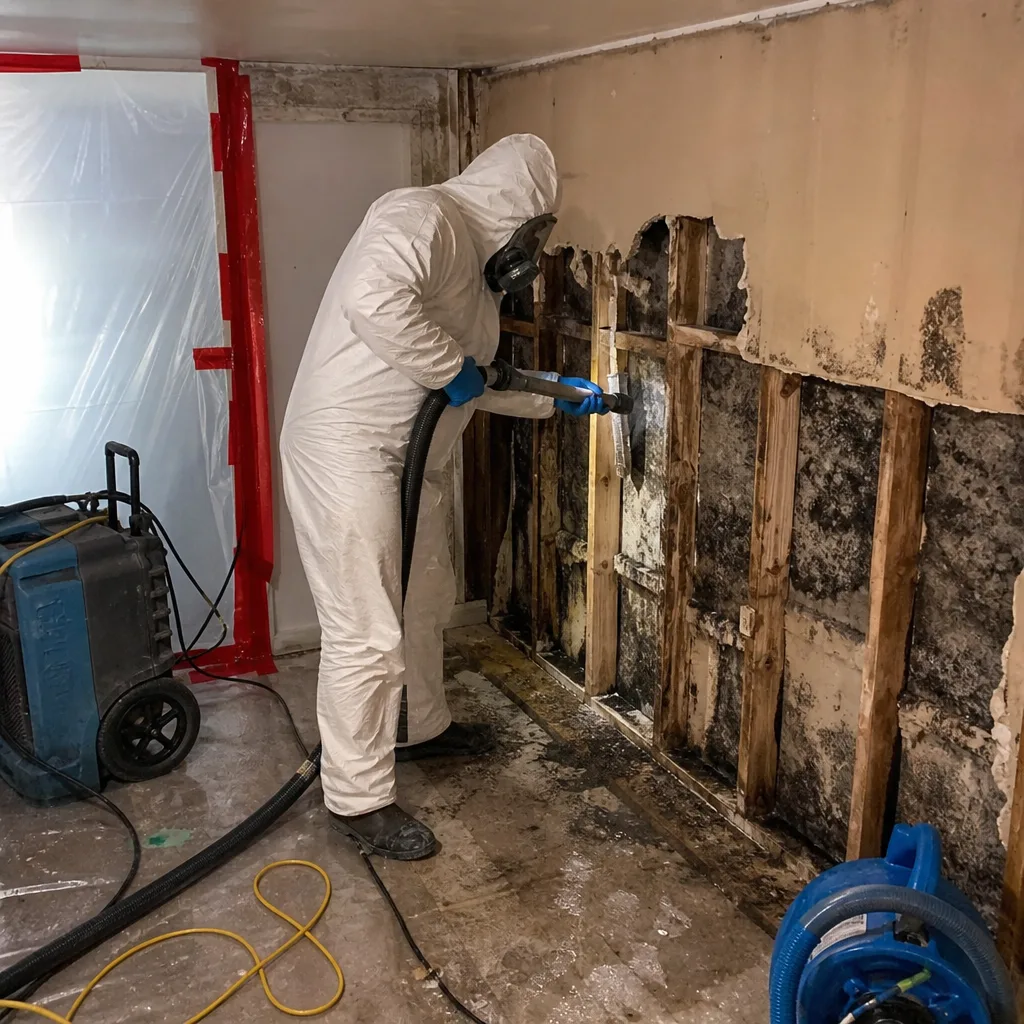
Smoke odor in Coral Gables’s porous historic construction doesn’t respond to surface cleaning alone. We deploy thermal fogging for unoccupied structures, hydroxyl generators for occupied spaces with sensitive materials, and specialized sealants for coral rock and plaster where odor has penetrated deeply. Each method is selected against material compatibility and Historic Preservation Board requirements.
Contents Cleaning & Pack-Out
Salvageable contents are inventoried, photographed, and packed out to our controlled cleaning facility. Non-salvageable items are documented for insurance replacement value. For Coral Gables homes with original built-ins, Cuban tile floors, or vintage fixtures, we assess on-site cleaning versus pack-out based on material sensitivity and space constraints during reconstruction.

Emergency Board-Up & Tarping
Immediate weatherproofing after fire damage prevents secondary water intrusion that compounds the loss. We secure broken windows with plywood cut to historic frame profiles, install roof tarps that won’t damage clay tile, and seal wall cavities with temporary barriers that meet city code while permit applications are prepared.

What happens when you call
- 1
A real person answersNo phone trees - you reach a local pro.
- 2
You get an upfront price rangeHonest numbers before anyone is dispatched.
- 3
A background-checked tech heads outLicensed & insured, dispatched right away.
- 4
You approve before work beginsNothing starts until you say go.
Fire & Smoke Damage Restoration Costs in Coral Gables, FL
Emergency board-up and tarping in Coral Gables typically runs $800-$2,400 depending on roof access complexity and the number of openings secured. Smoke and soot cleaning for a single room with standard finishes averages $1,200-$3,500; the same room with original lime plaster and coral rock, requiring hand-cleaning and material-matching, ranges $2,800-$6,500. Whole-home odor removal with thermal fogging or hydroxyl treatment starts at $4,500 and can exceed $12,000 for large historic properties with extensive porous surfaces.
Structural fire repair varies most widely. Replacing modern drywall and standard framing in a non-contributing property might run $85-$140 per square foot. Restoring a contributing historic property with period-appropriate materials, coral rock infill, and custom stucco matching can reach $200-$380 per square foot, before Historic Preservation Board permit fees. Insurance typically covers direct fire and smoke damage, plus water damage from suppression, less deductible. Out-of-pocket costs concentrate in upgrades beyond pre-loss condition, or in properties where coverage limits haven’t kept pace with reconstruction costs in Coral Gables’s appreciating market.
We deliver a written price before work begins, every time, Haven Standard, Clause 1. The free visual inspection produces a firm scope, not an estimate range that balloons later. Call (786) 250-0820 to schedule.
We Also Serve Cities Near Coral Gables
Our Coral Gables crews also respond to fire and smoke damage throughout the metro area, including Miami, Key Biscayne, Miami Beach, and Hialeah. Dispatch and scheduling are coordinated from our Miami office; crews serve each city locally with the same documentation standards and 45-minute active-damage commitment.
Serving Coral Gables, FL - Our Local Coverage Area
We’re based in the Coral Gables area and know this community well. Use the map below to see our service coverage - if you’re nearby, we can almost certainly help.
Coral Gables Fire & Smoke Damage Restoration Questions, Answered
Can you clean smoke damage in a Coral Gables historic home without replacing original lime plaster and coral rock?
Yes, in most cases we can clean and seal original lime plaster and coral rock rather than replacing it, which is often required to satisfy the Historic Preservation Board. We use dry soot removal, solvent cleaning compatible with historic materials, and penetrating sealants that block odor without altering appearance. Replacement becomes necessary only when plaster has delaminated from wood lath or coral rock has spalled from heat exposure. Call (786) 250-0820 for a free inspection and written scope.
How does the 24-48 hour mold window apply to fire and smoke damage in Coral Gables?
The same humidity that makes Coral Gables vulnerable to mold after water damage applies to fire suppression water, and often more aggressively because soot provides organic nutrients for microbial growth. In our climate, with relative humidity regularly above 80%, we begin structural drying within hours of arrival, not days. Our daily moisture logs track when materials drop below 16% moisture content, the threshold where mold colonization stalls. Delaying drying beyond 48 hours in a Coral Gables historic home with unsealed coral rock cavities almost guarantees secondary mold damage.
What is the difference between Category 1, 2, and 3 water when firefighting runoff enters a Coral Gables home?
Category 1 water is clean supply line water, rare in fire suppression. Category 2 water, gray water, is what most firefighting runoff starts as, carrying ash, soot, and chemical suppressant residue. Within 24 hours in warm, humid Coral Gables conditions, it degrades to Category 3, black water, with elevated bacterial and microbial load requiring more intensive cleaning and longer drying protocols. We test and classify water on arrival, document the classification with photos, and adjust our sanitization scope accordingly. Call (786) 250-0820 if you’re unsure what category you’re dealing with.
Do you provide emergency board-up and tarping for fire-damaged homes in Coral Gables?
Yes, board-up and tarping are standard first-response services, available 24 hours a day with our 45-minute commitment for active damage. We secure broken windows, compromised roof sections, and exposed wall cavities with materials that meet city code and protect against secondary water intrusion. For clay barrel tile roofs, we use specialized anchoring that won’t crack adjacent tiles. A written price for board-up is provided before work begins, Haven Standard, Clause 1.
How do you handle contents cleaning and pack-out for a fire-damaged Coral Gables home?
We inventory every item with photos, separate salvageable from non-salvageable contents, and pack out salvageable items to our controlled cleaning facility. Non-salvageable items are documented for insurance replacement value with make, model, and condition notes. For homes with built-in vintage fixtures or Cuban tile that can’t be removed, we clean on-site with methods selected for material sensitivity. The full inventory is provided to you and your adjuster as part of our standard documentation package.
How fast can your crew actually get to my Coral Gables property after a fire?
Our commitment is 45 minutes for active fire damage calls in Coral Gables, with crews staged for the Granada Boulevard, Miracle Mile, and Cocoplum corridors. A live person answers every call, 24 hours a day, and dispatches the nearest available team immediately. Response time to outlying Coral Gables addresses may extend slightly during simultaneous events, but we communicate expected arrival in real time. Call (786) 250-0820 now if you need immediate response.
Will my insurance cover fire and smoke damage restoration in Coral Gables?
Most homeowner policies cover direct fire damage, smoke and soot damage, water damage from suppression, and reasonable restoration costs to return the property to pre-loss condition. Coverage disputes typically arise around causation, coverage limits that haven’t kept pace with Coral Gables construction costs, or documentation gaps that slow approval. We provide Xactimate-formatted estimates, photo documentation, and direct adjuster coordination to minimize disputes. If you’ve received a denial or low offer, we offer a free second opinion on any competitor’s written estimate.
Can we stay in our Coral Gables home during fire and smoke damage restoration?
Occupancy depends on air quality, structural integrity, and the extent of odor treatment required. During active soot removal and thermal fogging, the home must be unoccupied. For limited-scope kitchen fires with contained smoke damage, we may establish a contained work zone allowing occupancy of unaffected areas. We test airborne particulate levels with laser particle counters and won’t certify a space for reoccupancy until readings meet IICRC standards. Your safety and the effectiveness of odor removal both depend on honest occupancy guidance, not convenience.
Fire and smoke damage in Coral Gables demands more than standard restoration protocol. It requires crews who understand how smoke migrates through balloon-framed limestone walls, how moisture meters read on coral rock, and how to document every decision for both insurance approval and Historic Preservation Board compliance. We’ve restored over 12,000 homes since 2011, every one with a written price before work started and a photo record when the crew left. The 365-Day Done Right Promise, backed by The Haven Standard, means if it’s not done right, we make it right.
Written by Alicia Brennan, Owner at Back to Dry Restoration, serving Coral Gables since 2011.
Fire & Smoke Damage Restoration in Nearby Areas