
Free visual inspection and a written scope of work before any mitigation begins - photos, moisture readings, and drying logs go in your claim file
The scope we write is the scope we bill. Anything new gets shown to you, in writing, before we touch it.
24/7 Emergency Water Damage Restoration in Homestead
Water damage in a Homestead home can escalate from contained to catastrophic in under an hour. Call (786) 250-0820 now and you’ll reach a live person, not a voicemail tree. Our crews are dispatched from our Miami office and typically reach Homestead properties in 45 minutes or less, including neighborhoods across the 33030 and 33034 ZIP codes. We provide a free visual inspection on arrival, document every surface with photo records, and deliver a written price before any work begins. The first hour determines whether water stops at the room where it entered or travels through concrete-block wall cavities into three more. In post-Andrew construction, that travel happens faster than most homeowners expect.
Understanding Water Damage Restoration Severity in Homestead Properties
We classify water damage by contamination level. Category 1 is clean supply-line water. Category 2 carries significant contamination from soil, roof grit, or storm debris. Category 3 is grossly contaminated and requires removal of affected porous materials. In Homestead, tropical systems and wind-driven panel failures routinely push category 1 into category 2 or 3 as water picks up exterior contaminants.
Moisture mapping with thermal imaging lets us trace water migration through concrete-block construction, where it can move laterally behind stucco cladding for rooms before surfacing. Structural drying uses psychrometric data, temperature, relative humidity, and vapor pressure differential to calculate exactly how much moisture must be removed from each cubic foot of air to dry materials without over-drying them. Our crews document these readings in daily drying logs that become part of your claim file.
The housing stock here matters. Most Homestead homes were rebuilt after 1992 under emergency-revised wind codes with hip roofs, hurricane straps, and elastomeric roof coatings. Those coatings, impact-window seals, and stucco cladding are now aging out together, creating multi-system failures where the entry point and the wet zone rarely match.
Why Homestead Property Owners Choose DryMark Restoration Miami
- 45-minute response commitment to Homestead properties from our Miami dispatch center
- 24/7 live answer by a real person, never an automated system or next-business-day callback
- IICRC-certified crews holding WRT (Water Damage Restoration Technician) and AMRT (Applied Microbial Remediation Technician) credentials
- Free visual inspection with photo documentation before any scope is written
- Direct insurance billing with adjuster coordination handled by our in-house claims team
- One team from extraction through reconstruction, no handoffs to unknown subcontractors
Our Water Damage Restoration Process
1. Inspection & Assessment
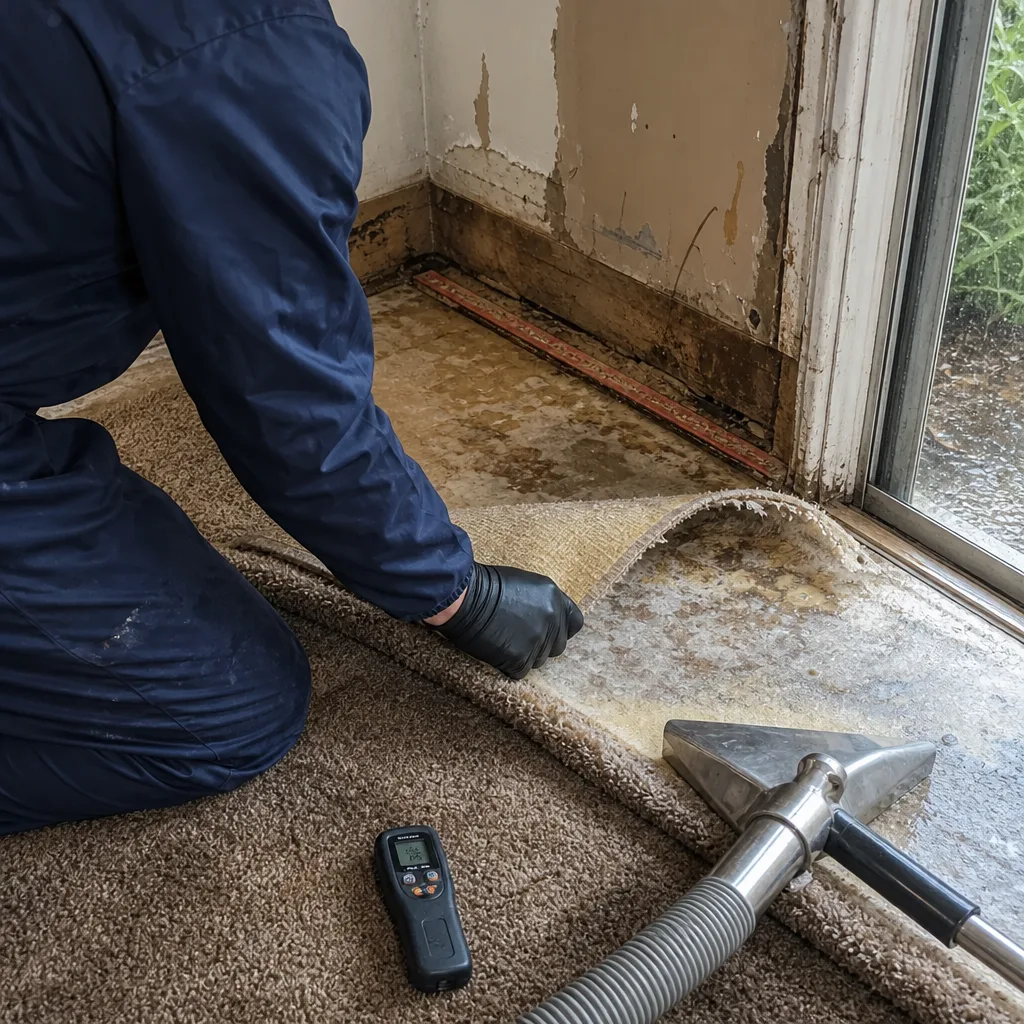
We arrive with moisture meters, thermal imaging cameras, and hygrometers to map the full extent of water migration. In Homestead’s concrete-block construction, we trace behind stucco and through wall cavities to find where water actually traveled, not just where it first appeared.
2. Extraction & Stabilization
Standing water is removed with truck-mounted extraction systems and portable units. We deploy containment barriers immediately in Homestead jobs, where humidity levels and shallow limestone substrate compress mold colonization timelines well below standard windows.
3. Drying & Dehumidification
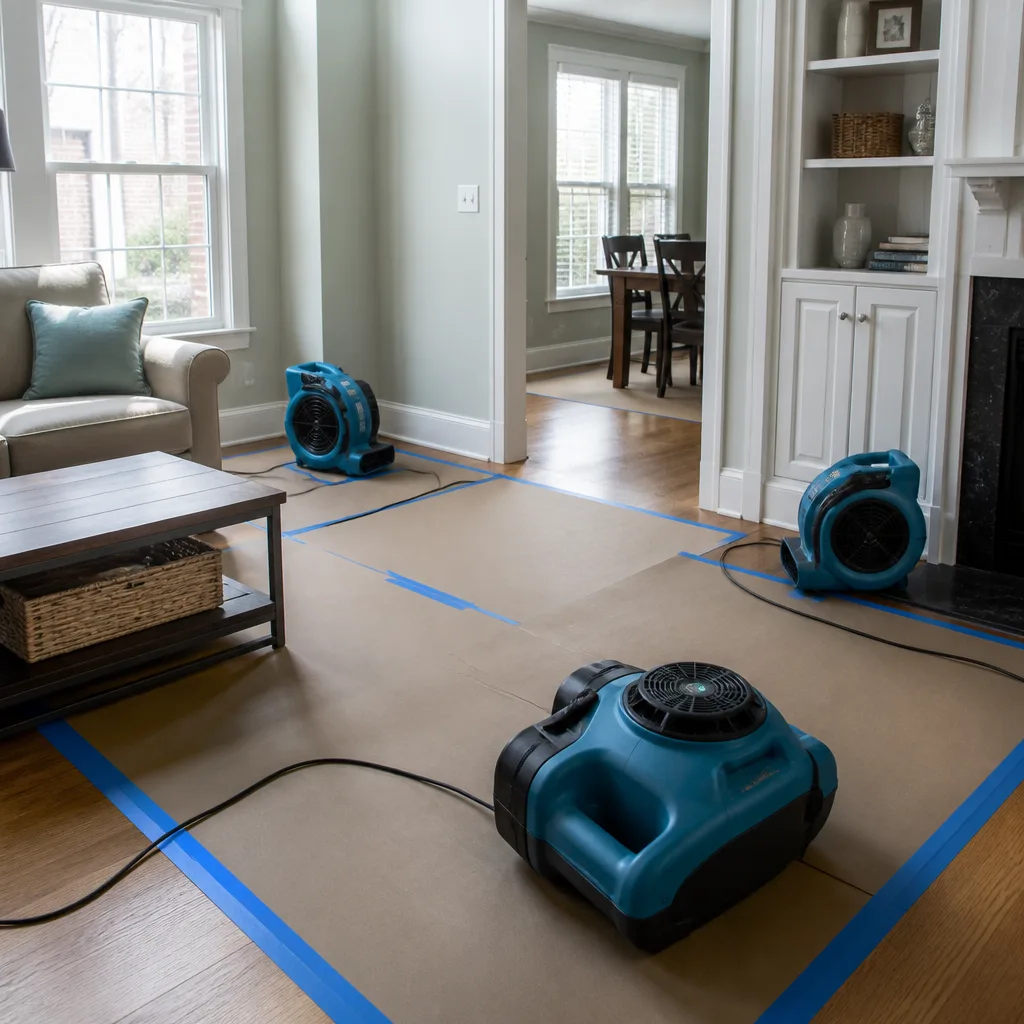
We position Dri-Eaz and Phoenix dehumidifiers with calculated air mover placement based on room volume and material porosity. Daily moisture logs track specific humidity, grain depression, and material moisture content until readings return to pre-loss baselines.
4. Cleaning & Sanitization
Antimicrobial treatment is applied to affected surfaces. For category 2 or 3 water intrusion, we remove contaminated porous materials per IICRC S500 standards rather than attempting to sanitize what cannot be restored.
5. Mold Containment & Air Scrubbing
Given Homestead’s humidity trap between the Everglades and Biscayne Bay, we treat mold containment as a first-step protocol, not a secondary assessment. HEPA air scrubbers run during drying to capture airborne spores, with negative air pressure maintained in contained zones.
6. Repairs & Restoration
Once drying is verified, our reconstruction team replaces removed materials, matches finishes, and restores the space to pre-loss condition. All work is documented with photo records and covered by our 365-Day Done Right Promise.
Need Emergency Water Damage Restoration in Homestead Now?
Crews minutes away, answering live 24 hours a day. The sooner we start, the less it costs.
Working With Your Insurance Company
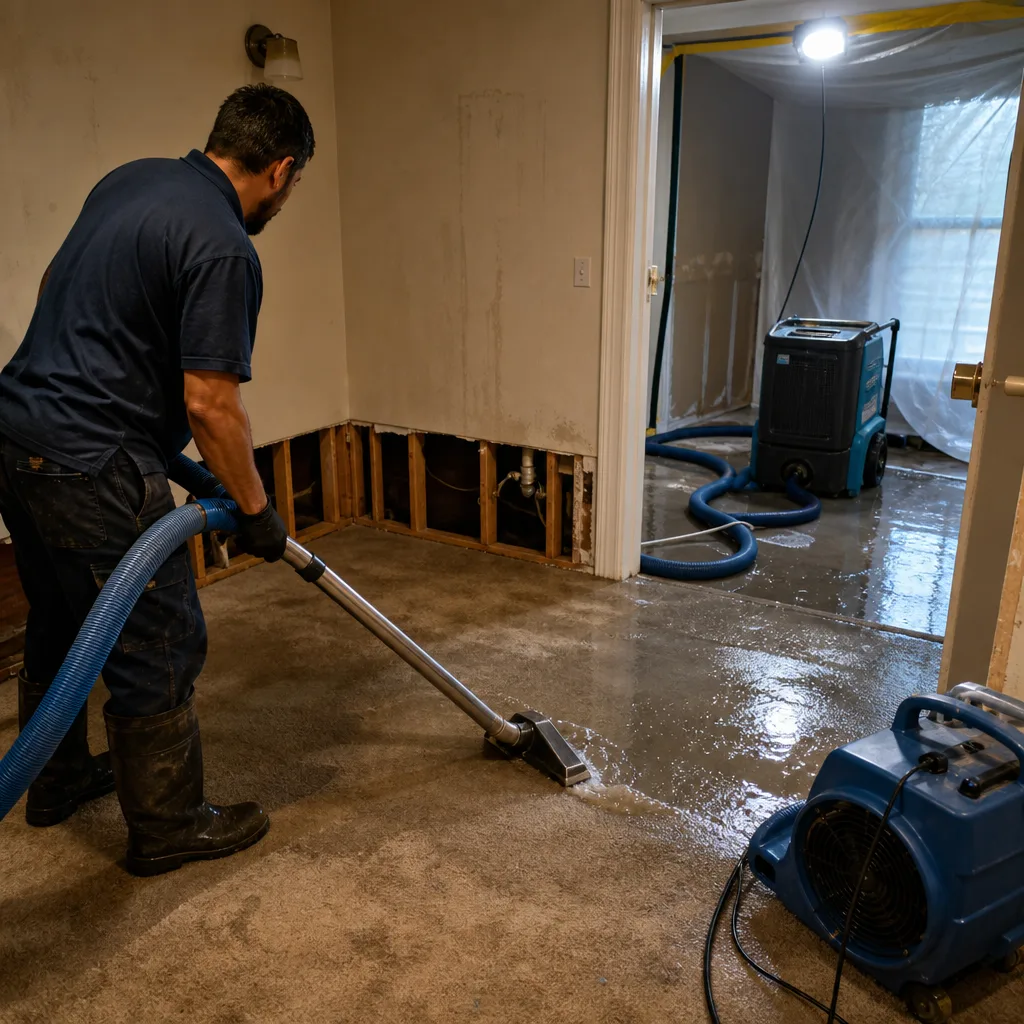
We built our documentation protocols around what adjusters actually need to approve a claim. From the first hour on site, we photograph every affected surface, record moisture readings by room, and maintain daily drying logs that show progressive improvement. Our estimates follow industry-standard Xactimate pricing with line-item detail. We communicate directly with your adjuster, provide supplemental documentation when scope expands, and never ask you to pay out of pocket and wait for reimbursement.
Our founder was a claims adjuster before starting this company in 2011. That background shaped every form we use.
What We Provide Your Insurer
- Thorough documentation of the loss
- Photos of all damage, room by room
- Moisture readings and drying logs
- A detailed, line-item scope of work
- Direct coordination with your carrier
Built for Homestead’s Loss Calendar
June through November is hurricane season, and Homestead sits at the southern tip of the Florida peninsula, first in line for systems tracking up from the Caribbean. Wind-driven rain finds aging elastomeric roof coatings, loose panel seams, and deteriorated impact-window seals on 30-year-old post-Andrew homes. Even tropical storms without hurricane designation can peel back roofing panels and force water through wind-rated door perimeters.
October through May brings dry-season irrigation cycles across South Dade’s agricultural corridors. The flat oolitic limestone substrate stays saturated, and slab-on-grade foundations wick groundwater upward through capillary action. We regularly respond to calls near Musselwhite Park and along North Krome Avenue where homeowners suspect roof leaks but the moisture source is actually migrating up from below.
Year-round, the humidity trap between Everglades moisture and Biscayne Bay air keeps ambient relative humidity high enough that any water intrusion becomes a mold risk faster than standard protocols assume.
Water Damage Restoration Across Homestead’s Neighborhoods
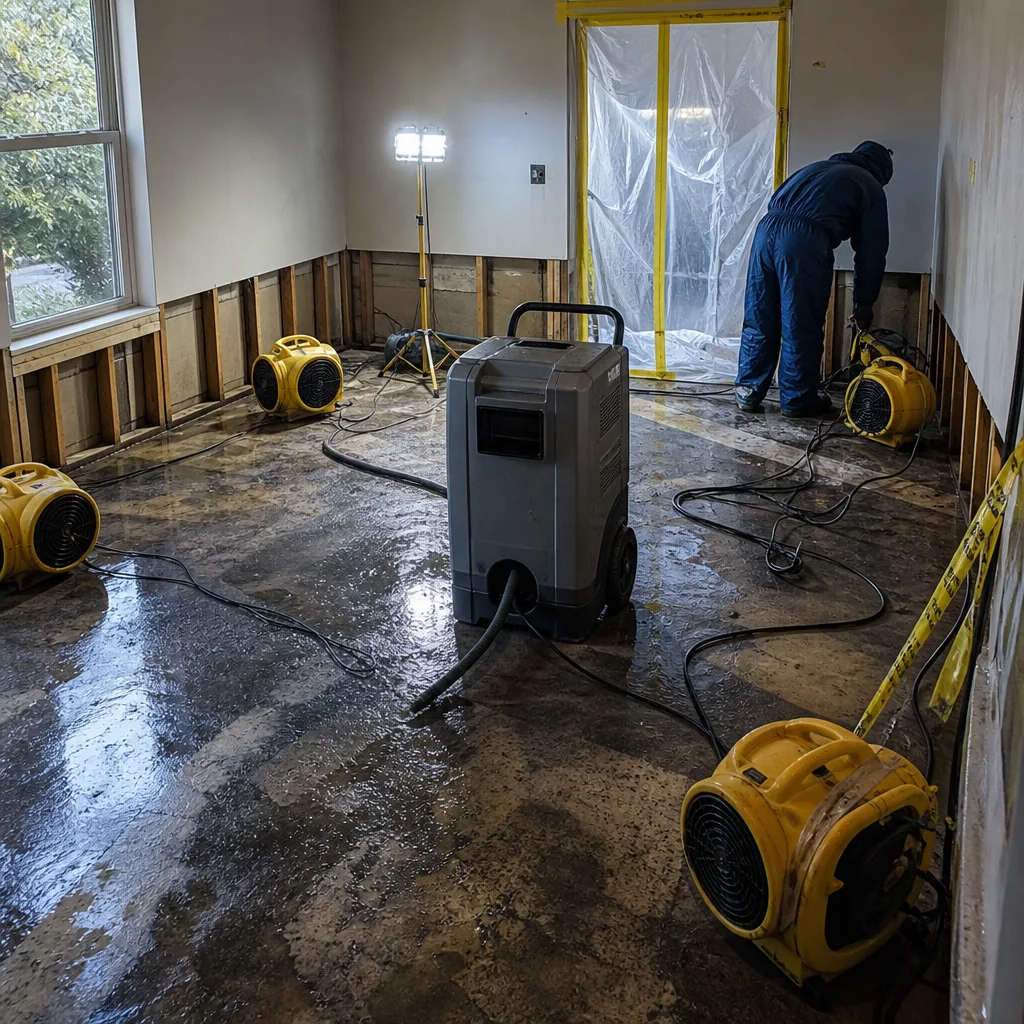
In Modello, off Southwest 312th Street, we see repeated patterns: aging post-Andrew hip roofs with original elastomeric coatings that crack at panel seams, allowing wind-driven water to pool over concrete-block wall plates. The water doesn’t show in the room below the breach. It travels through block cavities and emerges two or three rooms away, where a ceiling stain finally alerts the homeowner. Chasing the visible stain without moisture mapping misses the source entirely.
Near Leisure City Park and the agricultural blocks west of North Homestead Boulevard, slab moisture from shallow groundwater is the dominant loss type. Homeowners call for ceiling leak repair when the actual problem is oolitic limestone pushing water up through the slab. Our moisture meters tell the difference in minutes, but the wrong crew tears out drywall looking for a pipe that was never the issue.
Pre-Andrew structures near North Krome Avenue and the Historic Town Hall district carry single-pane jalousie windows and outdated tie-down hardware. These are chronic storm-damage entry points that newer construction doesn’t face. When a tropical system hits, water enters through multiple failure points simultaneously, requiring systematic documentation rather than spot repair.
Specialized Water Damage Restoration Services We Offer in Homestead
Emergency Water Extraction
Truck-mounted and portable extraction systems remove standing water from concrete-block homes, tile floors, and the shallow-pour slabs common in post-Andrew construction. We extract first, then map, because standing water continues migrating while you wait.

Structural Drying & Dehumidification
We deploy Dri-Eaz and Phoenix dehumidifiers with XPOWER air movers positioned for airflow across wet surfaces, not just into the room. In Homestead, drying timelines extend beyond standard projections because slab moisture from shallow limestone wicks back up as surface drying progresses. We account for this in our daily logs and equipment placement.

Flood Cleanup
Storm surge, overtopped canals, and agricultural runoff create category 3 contamination requiring removal of affected porous materials. We document contamination classification with photo evidence before removal begins, because miscategorized flood cleanup becomes a claim dispute six months later.

Burst Pipe Restoration
Pressure failures in copper and PEX supply lines, common in 1990s-era repipes, can release hundreds of gallons before shutoff. We extract, map migration through block walls, and document whether the loss is a sudden and accidental covered peril.
Ceiling & Roof Leak Water Damage
Post-Andrew hip roofs with aging panel seams and degraded elastomeric coatings fail under wind load in ways that don’t show immediately. We trace water from ceiling stains back to actual breach points, often finding the source is not the room where damage is visible.
Basement Water Removal
Homestead’s shallow water table and flat limestone substrate make true basements rare, but partial below-grade spaces and crawl areas in older construction near pre-Andrew districts require specialized extraction and vapor barrier assessment.
What happens when you call
- 1
A real person answersNo phone trees - you reach a local pro.
- 2
You get an upfront price rangeHonest numbers before anyone is dispatched.
- 3
A background-checked tech heads outLicensed & insured, dispatched right away.
- 4
You approve before work beginsNothing starts until you say go.
Water Damage Restoration Costs in Homestead, FL
Emergency water extraction in Homestead typically runs $500-$1,800 depending on affected square footage and water depth. Structural drying and dehumidification for a standard 1,200-square-foot zone ranges $1,200-$3,400, with Homestead jobs often trending toward the higher end due to extended slab-drying timelines. Category 3 flood cleanup with contaminated material removal starts around $2,800 and scales with the volume of porous surfaces affected. Ceiling and roof leak damage repair, including drywall, insulation, and finish restoration, generally falls between $1,500 and $5,200 depending on how far water traveled through block cavities before detection.
Insurance typically covers sudden and accidental water damage from supply lines, storm breaches, and wind-driven rain. Gradual leaks and maintenance-related failures are usually excluded. We provide a free visual inspection, document the loss cause with photo evidence, and deliver a written scope and price before any work begins. Bring a competitor’s written estimate and we’ll review it at no charge.
We Also Serve Cities Near Homestead
Our crews respond throughout Miami-Dade County, including Water Damage Restoration in Homestead and surrounding communities: Coral Gables, Key Biscayne, Miami, and Miami Beach. Dispatch and scheduling are coordinated from our Miami office; each area receives the same documentation standards and response commitment.
Serving Homestead, FL - Our Local Coverage Area
We’re based in the Homestead area and know this community well. Use the map below to see our service coverage - if you’re nearby, we can almost certainly help.
Homestead Water Damage Restoration Questions, Answered
How quickly can mold start after water gets into a Homestead home?
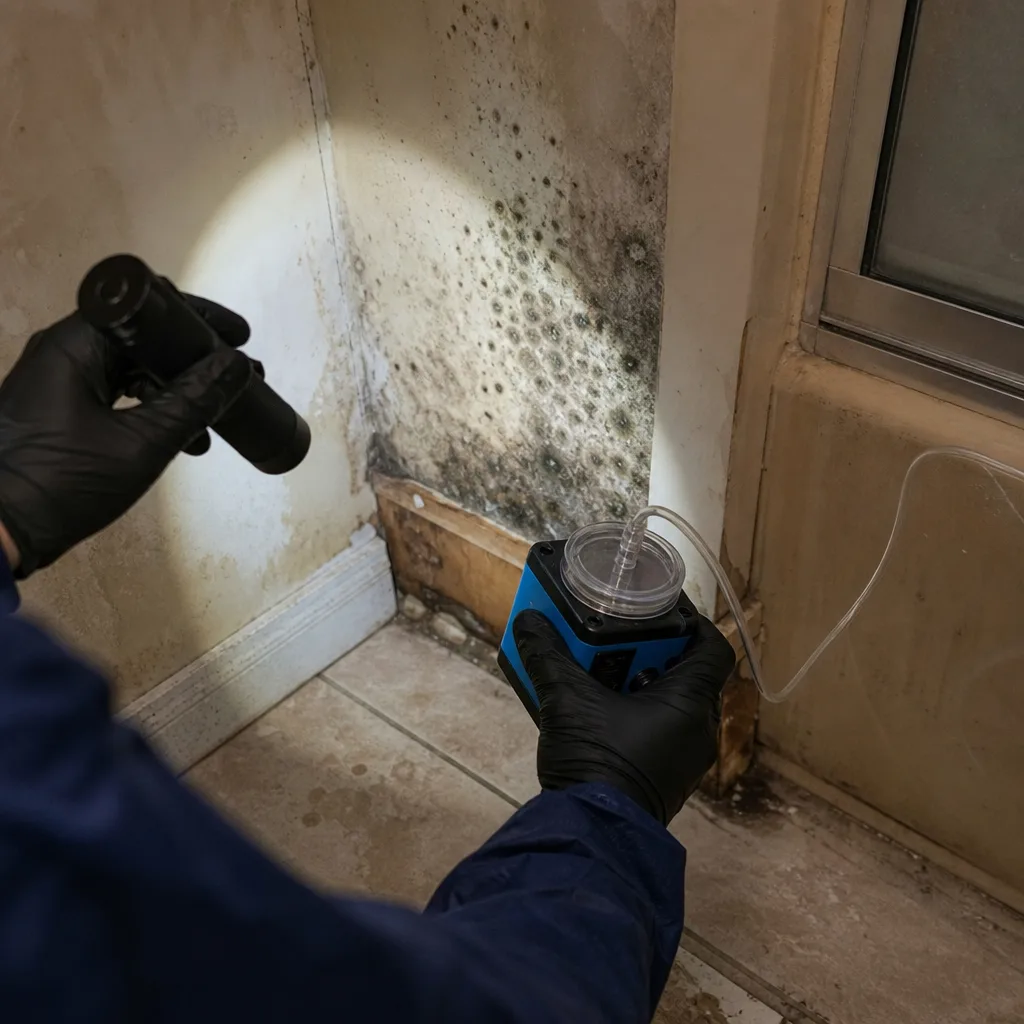
In Homestead, mold colonization can begin within 24 to 36 hours, faster than the standard 48-to-72-hour window used in drier climates. The humidity trap between the Everglades and Biscayne Bay keeps ambient moisture so high that spores germinate almost immediately upon finding a wet surface. We deploy containment and air scrubbing as a first step on every job, not a secondary assessment. Call (786) 250-0820 for a free inspection if you’ve had any water intrusion in the past day.
Why does a post-Andrew Homestead home take longer to dry than a newer Miami home?
Three-decade-old elastomeric roof coatings, impact-window seals, and stucco cladding are failing simultaneously, so water often enters through multiple points and travels through concrete-block wall cavities before surfacing. The actual wet zone is rarely the room with the visible stain. Moisture mapping through block construction takes longer, and the shallow oolitic limestone substrate under 33030 and 33034 wicks groundwater upward for weeks after surface water is gone. Call (786) 250-0820 and we’ll show you the moisture readings that explain your specific timeline.
Why do Homestead slabs keep reading wet weeks after the surface dries?
The flat, porous oolitic limestone beneath Homestead’s 33030 and 33034 corridors keeps the water table extremely shallow. After surface flooding recedes, ground saturation continues wicking upward through slab-on-grade foundations via capillary action. Our moisture meters detect this at depth even when surface readings appear normal. Extended dehumidification and calculated air movement are required to break the vapor pressure differential driving that upward migration. Call (786) 250-0820 for slab moisture assessment if your floors still feel damp.
How do I know if water from a storm-damaged door or panel is clean or contaminated?
Wind-driven water that has contacted soil, roof grit, exterior stucco, or agricultural irrigation runoff is category 2 at minimum, not category 1. We test and document contamination level with photo evidence before beginning cleanup, because miscategorization means drying materials that should be removed, or vice versa. The visible clarity of water is not a reliable indicator. Call (786) 250-0820 and we’ll classify it properly before any scope is written.
What actually fails first when a wind-rated door or window seal goes in Homestead?
The elastomeric weatherstrip gasket degrades first after 20 to 30 years of UV and salt-air exposure, creating a gap that wind-driven rain penetrates. On impact-rated doors and windows, the interlayer seal between glass and frame can also separate, allowing water into the frame cavity where it travels along the sill plate into adjacent walls. The failure is rarely visible until interior damage appears. Call (786) 250-0820 for moisture mapping that traces the actual path.
Will my insurance cover water damage restoration in Homestead?
Most standard homeowners policies cover sudden and accidental water damage from burst pipes, wind-driven rain through storm breaches, and similar immediate events. Gradual leaks, maintenance failures, and groundwater intrusion are typically excluded. We document the cause with photo evidence from the first hour, write industry-standard estimates, and coordinate directly with your adjuster to establish coverage before work proceeds. Call (786) 250-0820 for a free inspection and preliminary coverage assessment.
How long does structural drying take in a typical Homestead home?
Standard structural drying runs 3 to 5 days in climates with normal substrate drainage. In Homestead, the shallow oolitic limestone water table and high ambient humidity typically extend this to 7 to 10 days, with slab-on-grade homes sometimes requiring 12 to 14 days to reach pre-loss moisture content at depth. We don’t remove equipment until daily moisture logs document sustained readings at baseline. Call (786) 250-0820 for a timeline based on your specific construction and damage pattern.
Can I stay in my home during water damage restoration?
Occupancy depends on contamination level, equipment noise, and the extent of contained areas. Category 1 losses in limited areas often allow partial occupancy. Category 2 or 3 losses, or jobs requiring extensive containment and air scrubbing, may require temporary relocation for health and safety. We discuss this during the initial inspection and note any occupancy restrictions in your written scope. Call (786) 250-0820 to review your specific situation.
A homeowner on SW 312th Street in Modello called after a tropical system peeled back an aging panel on their post-Andrew hip roof; our Water Damage Restoration team found category 2 water pooling over a concrete-block wall plate and used moisture mapping to trace it three rooms away. We set containment, ran Dri-Eaz air movers and dehumidification across a 1,200-square-foot zone, applied antimicrobial treatment, and ran structural drying over nine days - longer than a standard Miami job because oolitic limestone kept pushing slab moisture back up. The drying logs we handed off showed the wall plate returned to pre-loss condition while the homeowner filed for wind-rated door and panel reinforcement.
Written by Alicia Brennan, Owner at DryMark Restoration Miami, serving Homestead since 2011.
Water Damage Restoration in Nearby Areas