
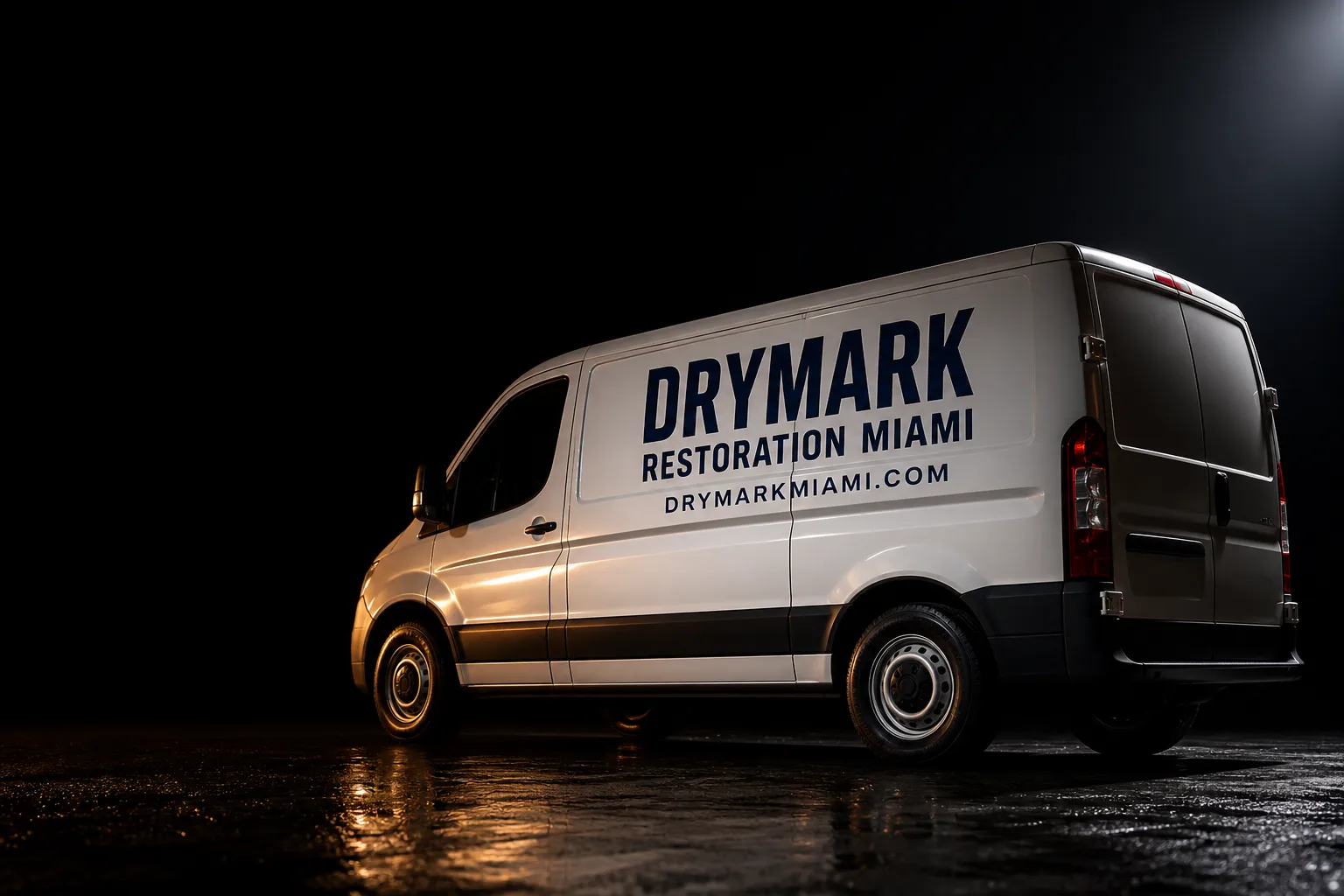
Free visual inspection and a written scope of work before any mitigation begins - photos, moisture readings, and drying logs go in your claim file
The scope we write is the scope we bill. Anything new gets shown to you, in writing, before we touch it.
24/7 Emergency Mold Remediation in North Miami Beach
Mold remediation in North Miami Beach typically costs $1,800-$6,500 depending on affected square footage and whether the job requires opening CBS block walls, and our crews can be on-site within 45 minutes of your call. Because North Miami Beach’s near-sea-level elevation and year-round humidity above 75% allow mold colonization within 48 hours of any water intrusion, same-day response is not a premium here; it’s the baseline for protecting your property and your claim. Call (786) 250-0820 now - a live person answers every time, 24 hours a day, with no voicemail trees while water is still moving through your walls.
We dispatch from our Miami (South FL) office and serve North Miami Beach properties locally, so our techs know the canal-laced drainage patterns that define loss events in this market. Every job starts with a free visual inspection and a written scope before any work begins, per Haven Standard, Clause 1. The first hour determines whether mold stays surface-level or colonizes the block cavities that run through most North Miami Beach homes built between the 1950s and 1970s.
Understanding Mold Remediation Severity in North Miami Beach Properties
Mold severity in North Miami Beach is graded by affected square footage, material classification, and whether the underlying moisture source originated as Category 1 (clean water), Category 2 (gray water), or Category 3 (black water). Our Mold Remediation team uses moisture mapping with thermal imaging and pinless meters to establish the full boundary of colonization, not just what is visible on the surface. In the CBS construction that dominates North Miami Beach’s residential core, we regularly find secondary mold behind intact drywall because concrete block wicks moisture vertically through capillary action, a behavior that does not occur in wood-frame markets.
Psychrometric data - temperature, relative humidity, and vapor pressure differential - drives our drying strategy. A vapor pressure differential of sufficient magnitude forces moisture from wet materials into the air, where dehumidification captures it. In North Miami Beach’s climate, achieving that differential requires contained structural drying with mechanical air movement, not passive dehumidification. Tertiary drying, the final phase where dense materials like concrete slab edges release bound moisture, often takes 3-5 days longer here than in drier inland climates. Homes with original flat or low-pitch built-up roofs add complexity: chronic slow leaks saturate insulation above ceilings while simultaneously driving humidity into attic spaces, creating dual-zone mold that demands separate containment strategies.
Why North Miami Beach Property Owners Choose DryMark Restoration Miami
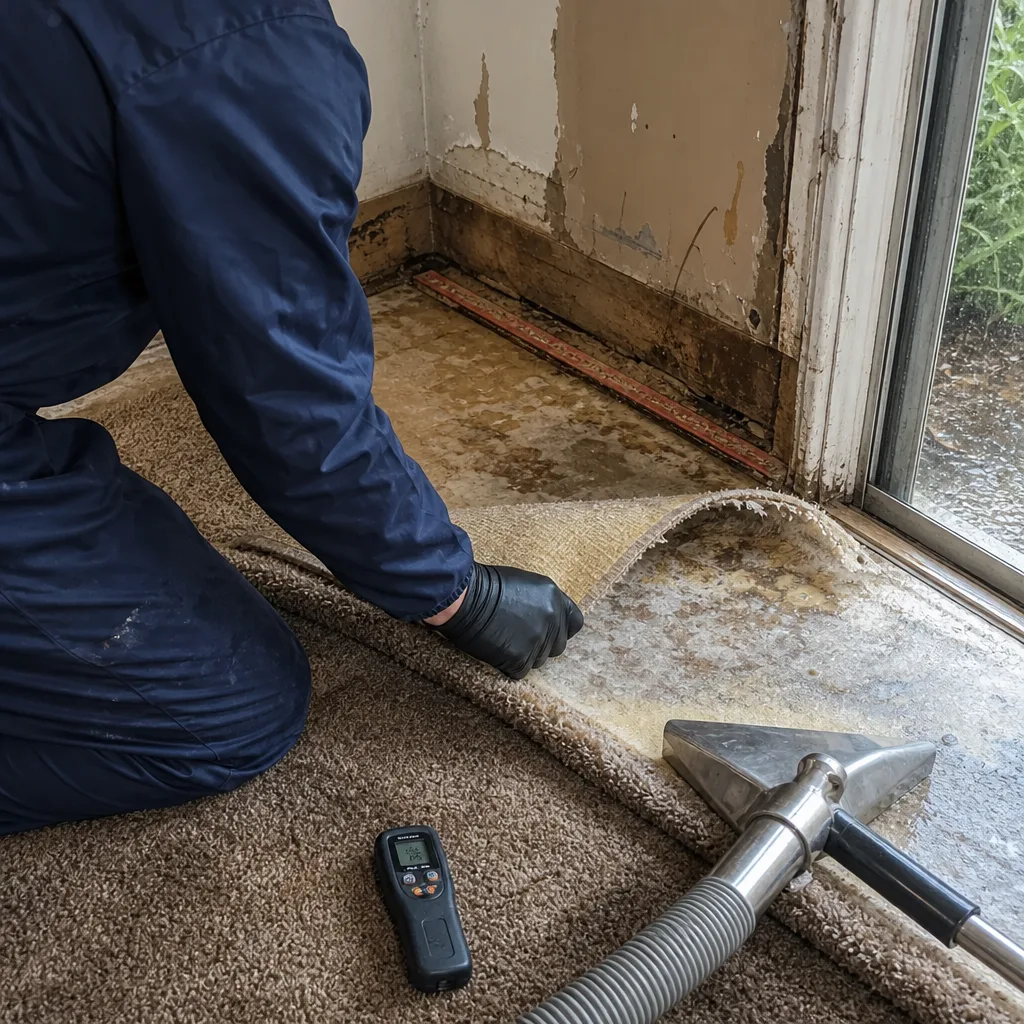
- 45-minute response commitment to North Miami Beach addresses, because mold colonization timelines do not negotiate with your schedule.
- 24/7 live answer - a real person, never an automated system, on every call to (786) 250-0820.
- IICRC-certified crews holding WRT (Water Damage Restoration Technician), AMRT (Applied Microbial Remediation Technician), and FSRT (Fire & Smoke Restoration Technician) credentials where cross-training applies to combined loss types.
- Free visual inspection with moisture readings documented before any commitment or contract.
- Direct insurance billing with photo-documented scopes that adjusters recognize and pay without dispute.
- One team from containment to reconstruction, so no handoff gaps between the crew that opens your walls and the crew that closes them.
Our Mold Remediation Process
1. Inspection & Assessment
We establish containment boundaries using moisture mapping, thermal imaging, and air sampling where indicated. In North Miami Beach, this always includes the lower 12-18 inches of exterior CBS walls and the slab perimeter, regardless of whether the roof shows damage. Our techs document every reading with photos for your insurance file.
2. Containment & Air Scrubbing
Negative-air containment with 6-mil poly barriers and HEPA-scrubbed exhaust prevents cross-contamination during remediation. We size air scrubbers to achieve 4-6 air changes per hour within the contained zone, measured with anemometers and logged.
3. Structural Drying & Dehumidification
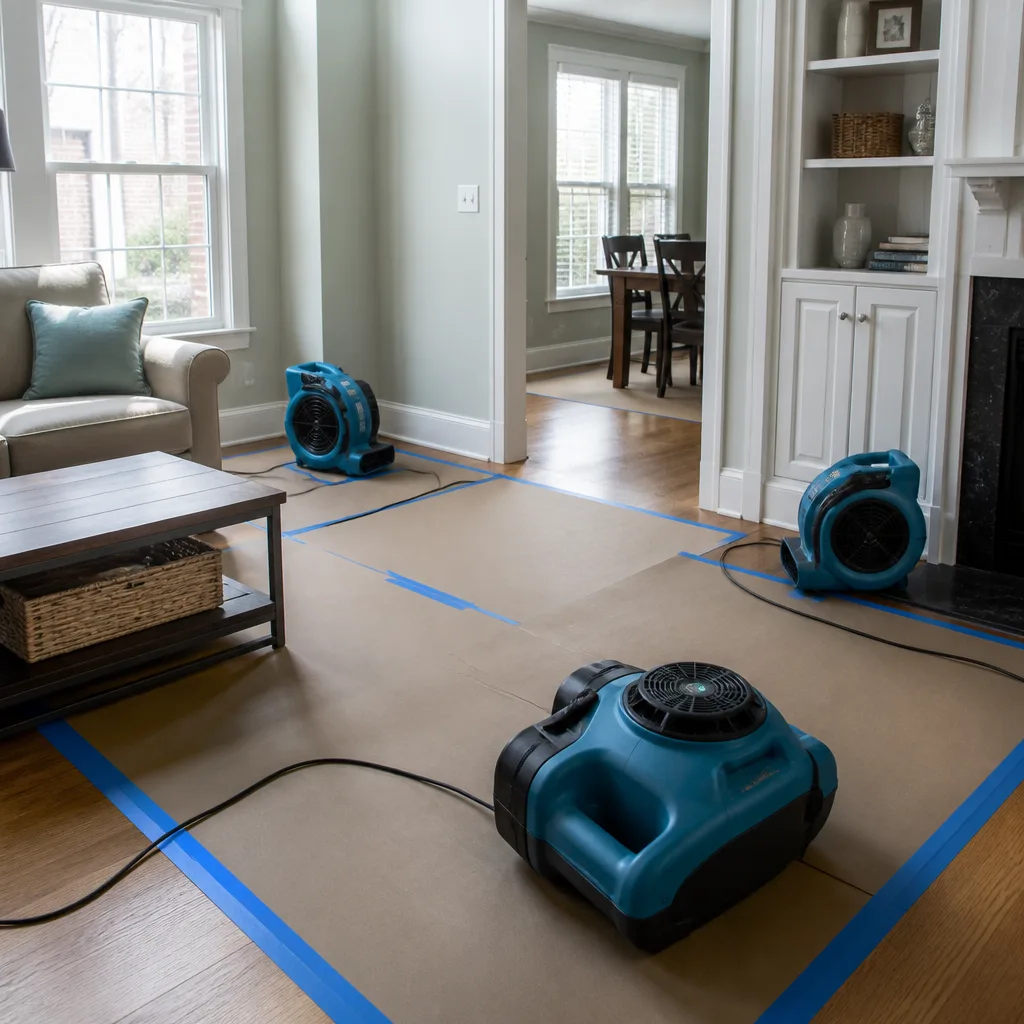
We deploy Phoenix dehumidifiers and XPOWER air movers to establish the vapor pressure differential needed to pull moisture from concrete block cavities. Injectidry panel systems attach directly to wall surfaces, forcing dry air into voids that conventional equipment cannot reach. Daily moisture logs track progress to IICRC S520 standards.
4. Cleaning & Antimicrobial Treatment
HEPA vacuuming removes spore-loaded debris before antimicrobial application. We treat all exposed surfaces within the contained zone, including the interior faces of opened block cavities, with EPA-registered products documented in your scope-of-work report.
5. Black Mold & Air Quality Restoration
Stachybotrys and other toxigenic species require extended containment and specialized PPE protocols. Post-remediation air sampling with laboratory analysis confirms spore counts at or below outdoor baseline levels before containment comes down. We coordinate third-party clearance testing when your insurer or municipal code requires independent verification.
6. Repairs & Moisture Control Systems
Our reconstruction crew replaces removed drywall, baseboards, and flooring to match existing finishes. We install permanent moisture and humidity control solutions - supplemental dehumidification, improved drainage, or vapor barriers - to prevent recurrence in North Miami Beach’s saturated climate.
Need Emergency Mold Remediation in North Miami Beach Now?
Crews minutes away, answering live 24 hours a day. The sooner we start, the less it costs.
Working With Your Insurance Company
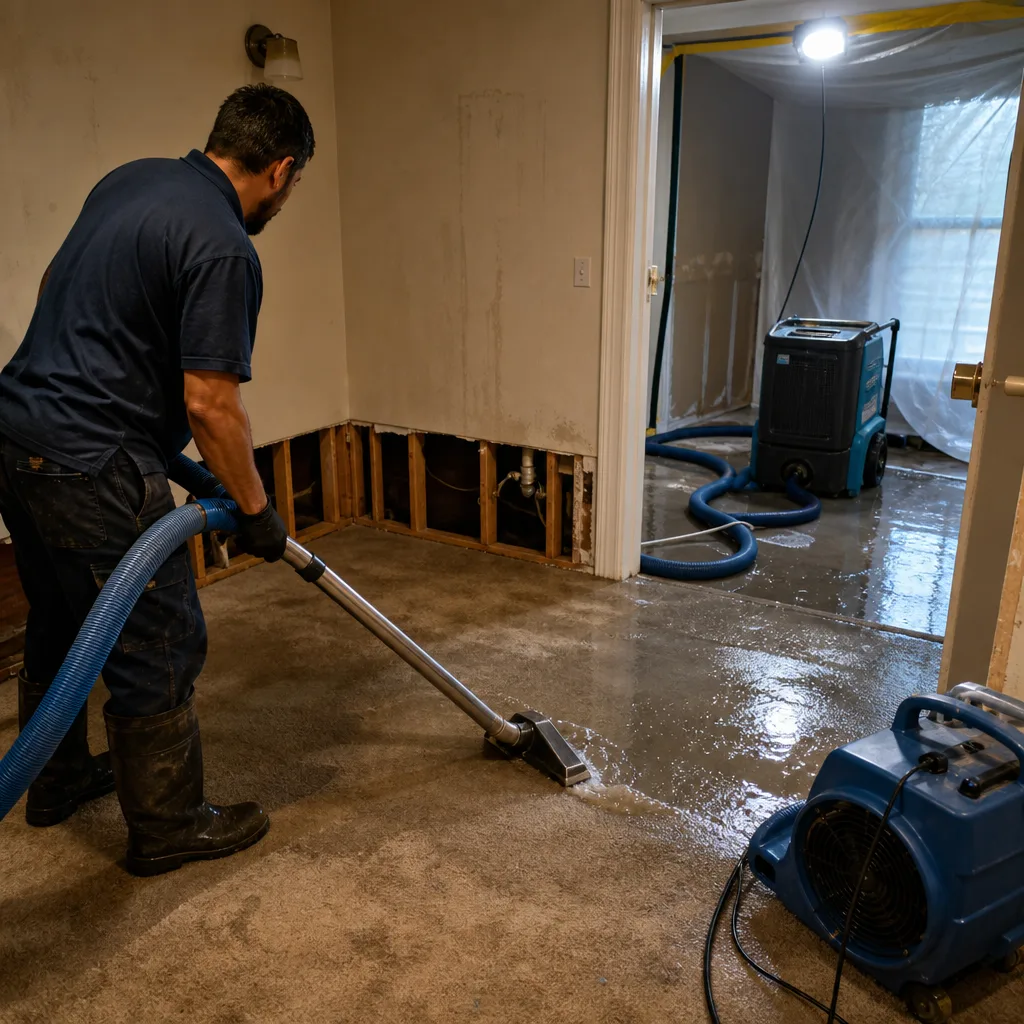
Insurance claims for mold damage fail most often at the documentation stage, not the damage stage. Back to Dry Restoration was founded in 2011 by a former claims adjuster who built the company around exactly that gap. We begin documenting from the first hour: photos of the loss scene, moisture readings with equipment serial numbers, and a written scope before any remediation starts. Our estimates follow industry-standard Xactimate pricing that carriers recognize, and we communicate directly with your adjuster to resolve scope questions before they become payment delays.
For Mold Remediation in North Miami Beach, this documentation discipline matters especially. Bottom-up moisture intrusion from canal overflow or storm-drain backup often produces damage patterns that adjusters from barrier-island markets have not encountered. Our photo records and drying logs demonstrate that the work performed matches the loss mechanism observed, reducing the back-and-forth that stalls claims.
What We Provide Your Insurer
- Thorough documentation of the loss
- Photos of all damage, room by room
- Moisture readings and drying logs
- A detailed, line-item scope of work
- Direct coordination with your carrier
Built for North Miami Beach’s Loss Calendar
January through March brings dry-season cold fronts that stress aging galvanized supply lines in 1960s-era homes, producing slow leaks inside block walls that homeowners mistake for humidity. April through October is the core risk period: afternoon thunderstorms overtop canal banks, particularly the Snake Creek Canal (C-9) system, while the flat terrain traps runoff against slab foundations. Hurricane season peaks August through October, but named-storm losses here are less common than the repetitive “nuisance flooding” that saturates the same properties three or four times per rainy season. November and December see the highest mold-discovery call volume, as owners return from summer travel or finally notice the mustiness that accumulated during months of closed windows and air conditioning set to 78 degrees.
Year-round, North Miami Beach’s relative humidity above 75% means that any water intrusion event, even Category 1 clean water from a supply line, crosses the threshold to actionable mold risk within 48 hours. That timeline compresses further in homes with original flat roofs where chronic attic humidity pre-loads the structure with moisture.
Mold Remediation Across North Miami Beach’s Neighborhoods
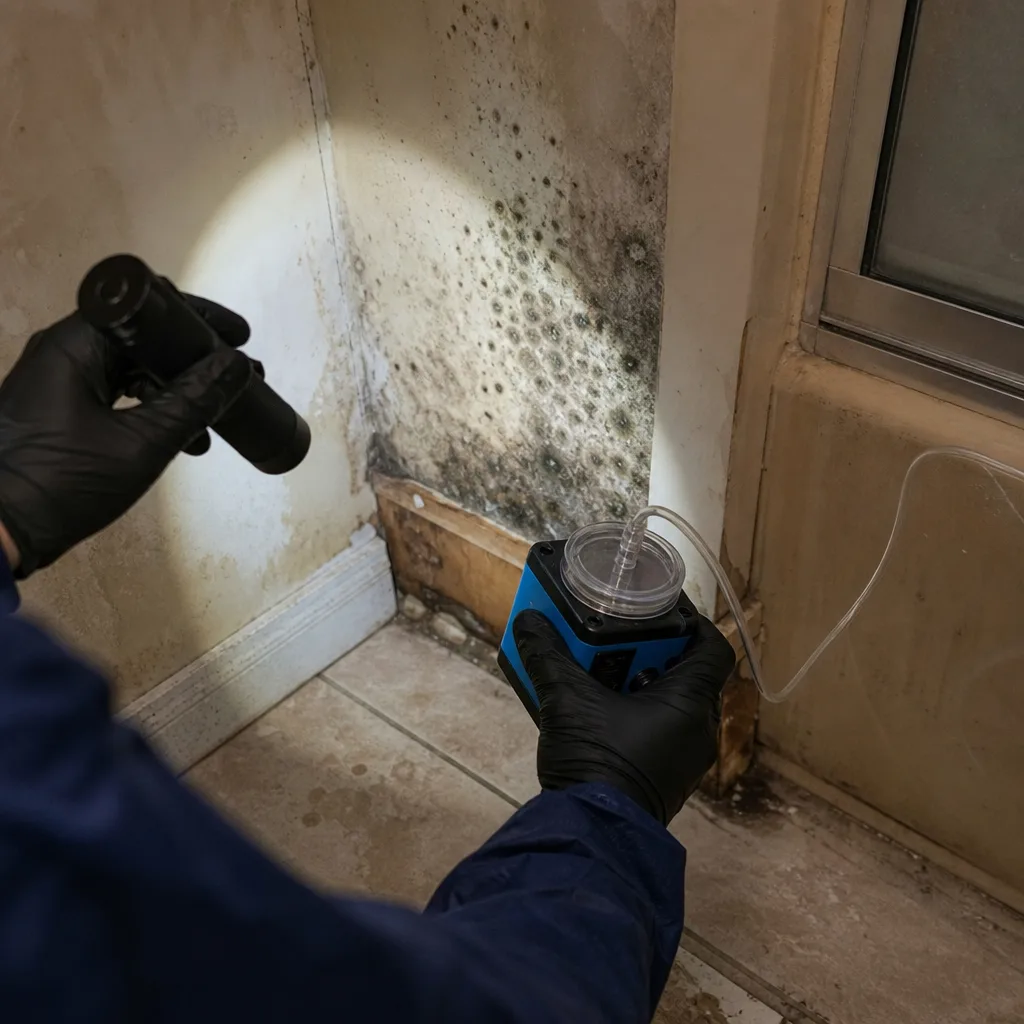
Our response routes cover the full North Miami Beach grid, and the work looks different in each zone. In Biscayne Gardens, the 1950s-1960s CBS ranches on the canal fingers near the C-9 see bottom-up wicking after every heavy rain; we have opened the lower walls on dozens of these homes and found moisture readings above 20% while the roof decking read dry. Scott Lake properties, particularly the mid-century single-family homes between NE 167th Street and the canal, experience the same pattern with added complexity from mature tree canopies that keep exterior walls shaded and slow natural drying.
The Eastern Shores area, closer to the Intracoastal, includes some of the city’s newer construction, but even 1980s-1990s townhomes here sit on slab foundations with the same capillary vulnerability. We have treated multiple units where storm-drain backup flooded parking slabs and wicked into first-floor walls overnight. The greystone and garden-apartment corridors along NE 163rd Street and NE 172nd Street present their own challenge: aging built-up roofs with ponding issues that create top-down leaks simultaneous with bottom-up slab moisture, requiring dual containment zones and extended drying timelines. Our crews know which streets flood first, which buildings have original galvanized plumbing, and where the canal levels crest after a typical afternoon thunderstorm.
Specialized Mold Remediation Services We Offer in North Miami Beach
Mold Inspection & Testing
Our inspections in North Miami Beach always include the lower wall perimeter and slab edge, not just visible surfaces. Air sampling and ERMI/HERSTMI-2 dust analysis identify species and spore load, but the physical moisture map determines where the problem lives. We provide written findings with photos, moisture readings, and a recommended scope before any remediation work.
Mold Removal
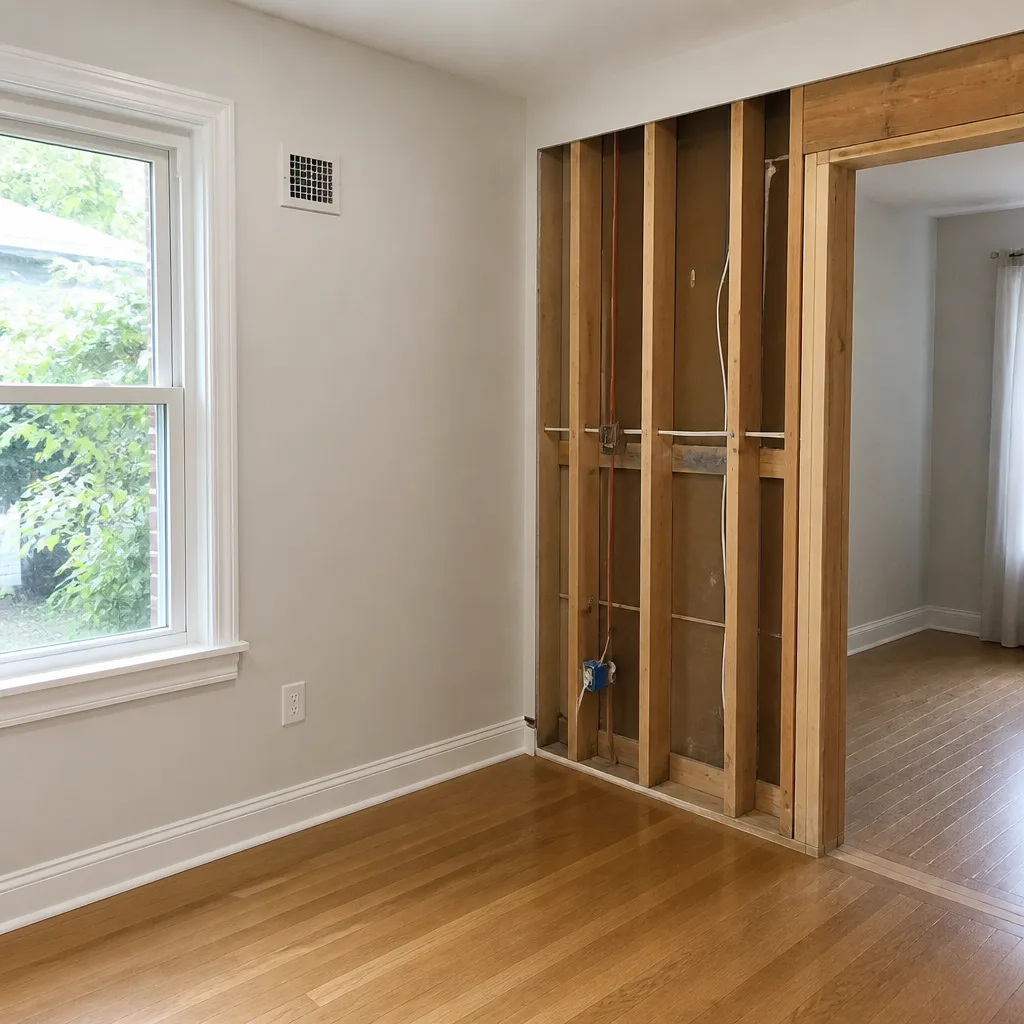
Removal in CBS construction means more than surface cleaning. We remove affected drywall, insulation, and baseboards to expose block cavities, then HEPA-vacuum and treat all accessible surfaces. In North Miami Beach’s humidity, incomplete removal guarantees recurrence within one rainy season.
Black Mold Remediation
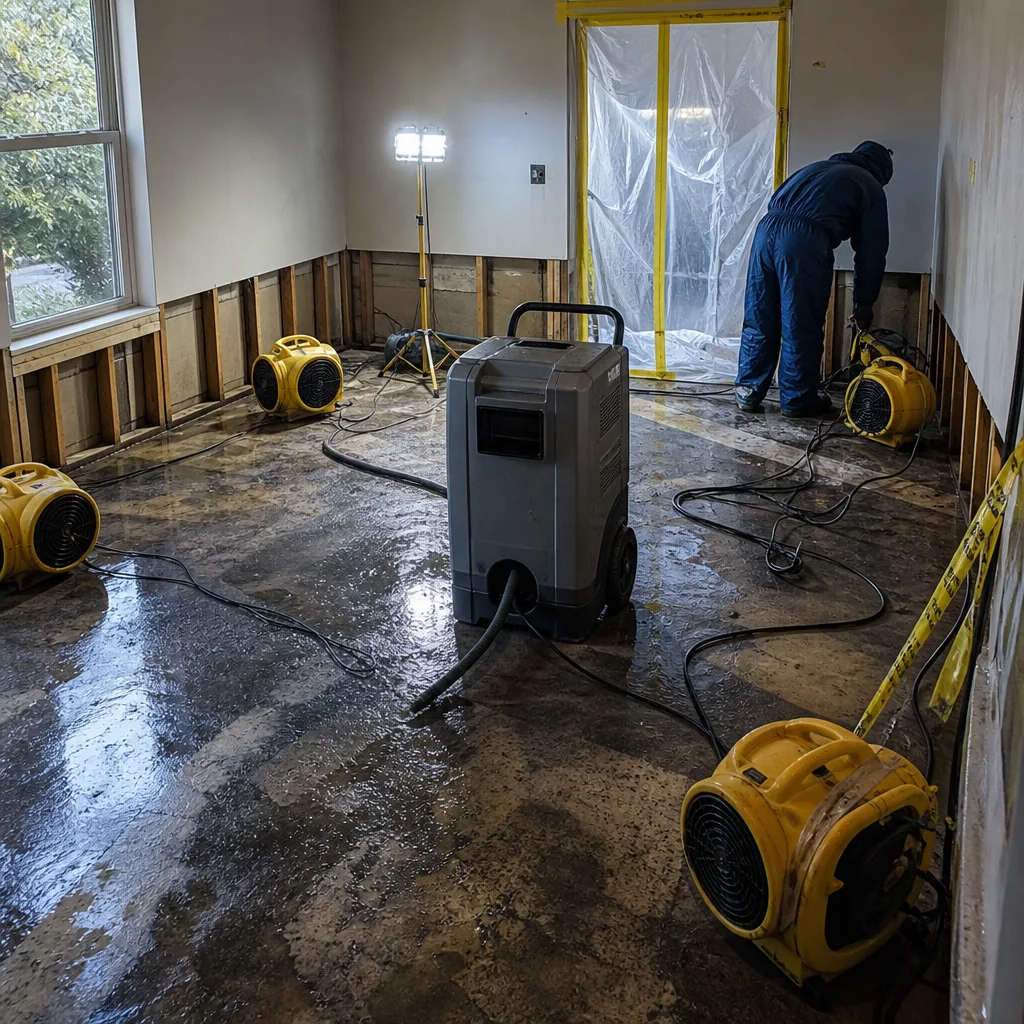
Stachybotrys chartarum and other toxigenic molds require extended containment, negative-air isolation, and specialized PPE. We follow IICRC S520 protocols for fungal remediation, with post-remediation air sampling to confirm clearance. Documentation for your insurer includes chain-of-custody records for all laboratory samples.
Air Quality Restoration
After remediation, we restore breathable indoor air through source removal, HEPA filtration, and controlled ventilation. In North Miami Beach’s climate, we also evaluate your HVAC system’s humidity management capacity, as air conditioning alone often cannot maintain the 30-50% relative humidity range that prevents regrowth.
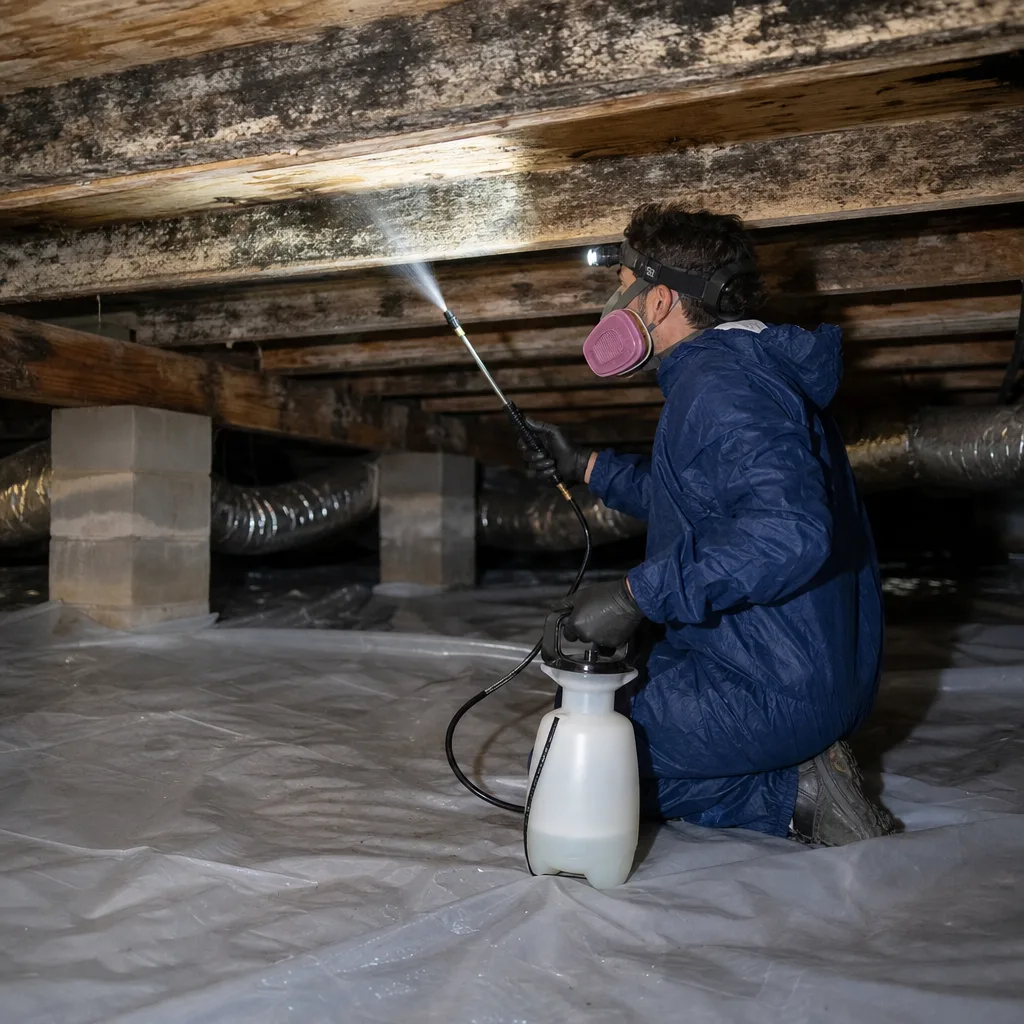
Crawl Space Treatment
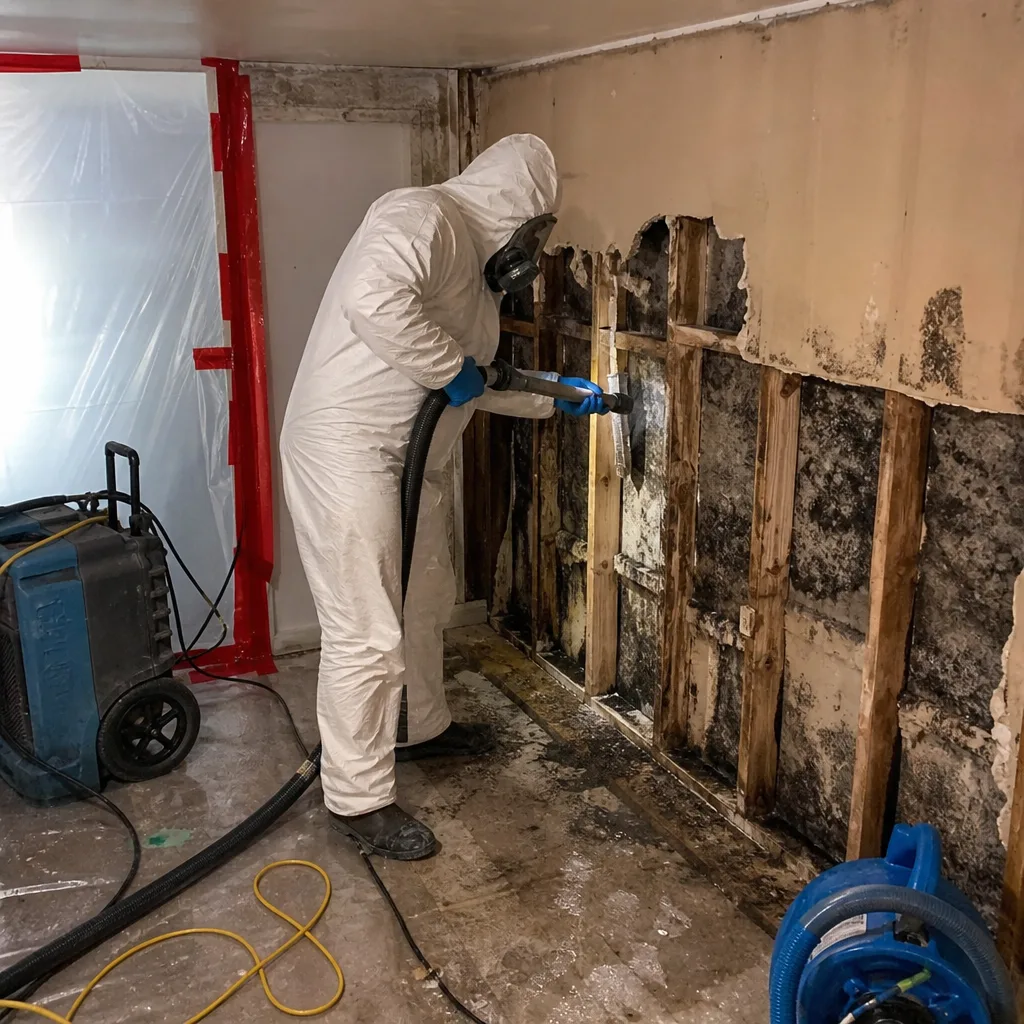
While slab-on-grade construction dominates North Miami Beach, some 1950s-era homes and additions have crawl or plenum spaces beneath raised floors. These areas require vapor barrier installation, dehumidification, and sometimes structural drying of floor joists. We inspect and treat these zones with the same moisture-mapping discipline applied to above-grade spaces.
Moisture & Humidity Control
Permanent moisture control is the only way to break the cycle in North Miami Beach’s climate. We install whole-home dehumidification, improve drainage gradients, and seal slab perimeters where wicking occurs. Every humidity control system we specify is sized to the specific cubic footage and air leakage profile of your home, not a generic square-footage chart.

What happens when you call
- 1
A real person answersNo phone trees - you reach a local pro.
- 2
You get an upfront price rangeHonest numbers before anyone is dispatched.
- 3
A background-checked tech heads outLicensed & insured, dispatched right away.
- 4
You approve before work beginsNothing starts until you say go.
Mold Remediation Costs in North Miami Beach, FL
A typical contained mold remediation of 100-200 square feet in a North Miami Beach CBS home runs $1,800-$3,200, including opening lower walls, HEPA remediation, antimicrobial treatment, and basic drywall repair. Jobs requiring full room remediation with block-cavity drying, air scrubbing, and third-party clearance testing range $3,500-$6,500. Whole-home treatments with multiple containment zones, HVAC decontamination, and reconstruction can exceed $8,000.
What moves the price: the square footage of visible and hidden colonization, whether Category 2 or 3 water requires biohazard protocols, the need for third-party air sampling, and the extent of reconstruction. Insurance typically covers mold remediation when the underlying water damage is a covered peril, such as sudden plumbing failure or storm-driven canal overflow. Long-term maintenance issues, slow leaks over months, or flood damage without appropriate coverage may fall to the homeowner. We provide a written price before any work starts, per Haven Standard, Clause 1, and we offer a Free Second Opinion on any competitor’s written estimate. Call (786) 250-0820 for an exact scope and price - estimates are free.
We Also Serve Cities Near North Miami Beach
Our crews respond throughout the metro area from the same South FL dispatch center, with the same 45-minute commitment to Hollywood, Miami Gardens, Hialeah, and Miami. Each city’s housing stock and loss patterns differ, and our scopes reflect those differences rather than applying a uniform template.
Serving North Miami Beach, FL - Our Local Coverage Area
We’re based in the North Miami Beach area and know this community well. Use the map below to see our service coverage - if you’re nearby, we can almost certainly help.
North Miami Beach Mold Remediation Questions, Answered
Why do North Miami Beach homes get mold in the lower walls even when the roof never leaked?
Because North Miami Beach sits in a low-lying grid of South Florida Water Management District canals, including the Snake Creek Canal (C-9) on its northern edge, water routinely enters properties from below-grade wicking into slab-on-grade CBS walls rather than from roof or window leaks. The concrete block construction common in 1950s-1970s homes here draws moisture upward through capillary action, so the lower 12-18 inches of exterior walls can read above 20% moisture while the roof decking stays dry. After a week of afternoon storms pushed water over the bank of the Snake Creek Canal near Scott Lake, we answered a call from a 1968 CBS ranch house where the owner smelled mustiness but saw no ceiling stains. Our techs pulled baseboards and found moisture readings above 20% in the lower 14 inches of the north-facing block wall, so we set up containment, ran Injectidry panels against the block cavities, and used Dri-Eaz air movers with a Phoenix dehumidifier to dry the slab perimeter - then applied antimicrobial treatment once drying logs confirmed the wall was back to pre-loss condition. The homeowner was surprised the damage came from canal-driven yard flooding, not the roof, and we closed the job with a full scope-of-work report for their insurance. Call (786) 250-0820 if you smell mustiness with no visible leak - we’ll find where it’s coming from.
How fast can mold start after a canal overflow or plumbing leak in North Miami Beach?
In North Miami Beach’s climate, with year-round relative humidity consistently above 75%, mold colonization can begin within 24-48 hours of any water intrusion event. That timeline is shorter than in drier inland markets because the ambient air already carries enough moisture to sustain fungal growth without additional drying time. Same-day response is the local market baseline, not a premium service. Call (786) 250-0820 for immediate dispatch - a live person answers 24 hours a day.
What does it mean when restoration pros classify water as Category 1, 2, or 3?
Category 1 water originates from a clean source, such as a broken supply line, and poses no immediate health risk. Category 2 water, or gray water, contains significant contamination and can cause discomfort or sickness if contacted or consumed, examples including dishwasher discharge or sump pump failures. Category 3 water, or black water, is grossly contaminated and can contain pathogenic, toxigenic, or other harmful agents, such as sewage backup or canal overflow that has picked up soil, chemicals, and microbial content. In North Miami Beach, canal overflow and storm-drain backup often test as Category 3 due to agricultural and urban runoff, which changes both the remediation protocol and the insurance documentation required. Call (786) 250-0820 - we’ll classify your loss on arrival and explain what it means for your scope and your claim.
Does a flat or low-pitch built-up roof common on 1950s-1970s North Miami Beach homes change the mold remediation approach?
Yes. Original flat or low-pitch built-up roofs in this housing stock are prone to chronic ponding and slow leaks that saturate insulation and ceiling materials over months or years, creating a top-down moisture source simultaneous with the bottom-up wicking that defines canal-adjacent properties. Remediation scopes must address both zones with separate containment strategies, and the attic or plenum space often requires independent drying and treatment. We have treated multiple North Miami Beach homes where the roof leak and the slab wicking were discovered only after opening walls revealed dual-zone mold colonization. Call (786) 250-0820 for inspection that checks both pathways.
Will you need to open walls or pull baseboards to remediate mold in a concrete block home here?
In most cases, yes. North Miami Beach’s CBS construction means mold frequently colonizes the interior faces of block cavities and the gap between drywall and block, areas inaccessible without removing baseboards and opening the lower wall section. Surface cleaning or antimicrobial spray without opening these spaces leaves active colonization in place, and rebound is nearly guaranteed in this humidity. Our scopes specify exactly what opens, what stays intact, and how we restore finishes afterward. Haven Standard, Clause 1: the written price includes all opening and reconstruction before work begins. Call (786) 250-0820 for a scope that shows you exactly what will happen in your home.
How long does mold remediation take in a typical North Miami Beach home?
Contained remediation of a single affected area typically requires 3-5 days of active work plus 2-3 days of drying verification before antimicrobial treatment and reconstruction begin. Jobs requiring block-cavity drying with Injectidry systems often extend to 7-10 days because concrete releases bound moisture slowly, especially in North Miami Beach’s ambient humidity. Whole-home treatments with multiple containment zones and HVAC decontamination can run 2-3 weeks. We provide a written timeline with the written price before any work starts. Call (786) 250-0820 for a schedule specific to your loss.
Can my family stay in the home during mold remediation?
For contained remediation of a single room or isolated area, occupants often remain in the home with the HVAC isolated from the contained zone. For whole-home treatments, Category 3 water losses, or toxigenic species like Stachybotrys, temporary relocation is recommended and sometimes required by your insurance policy’s additional living coverage. We specify occupancy status in the written scope before work begins, with documentation for your adjuster if relocation is necessary. Call (786) 250-0820 to discuss your specific situation.
What certifications should I look for in a North Miami Beach mold remediation company?
Look for IICRC WRT (Water Damage Restoration Technician) and AMRT (Applied Microbial Remediation Technician) credentials at minimum, with FSRT (Fire & Smoke Restoration Technician) relevant for combined loss types. Ask for license numbers that can be verified with the state, and confirm that the company carries general liability and pollution liability insurance specific to microbial remediation. Background-checked, uniformed technicians who arrive with named credentials are the standard we maintain. Call (786) 250-0820 and we’ll provide our documentation before we step into your home.
Written by Alicia Brennan, Owner at Back to Dry Restoration, serving North Miami Beach since 2011.
Mold Remediation in Nearby Areas