
Free visual inspection and a written scope of work before any mitigation begins - photos, moisture readings, and drying logs go in your claim file
The scope we write is the scope we bill. Anything new gets shown to you, in writing, before we touch it.
24/7 Emergency Mold Remediation in Deerfield Beach
Mold remediation in Deerfield Beach typically costs $1,800-$6,500 depending on containment complexity and whether the job involves a single-family home or a multi-unit condo stack. Most jobs begin with a free visual inspection, and crews can be on-site within 45 minutes of your call. Call (786) 250-0820 now - a live person answers, 24 hours a day, no voicemail trees.
Deerfield Beach’s subtropical humidity means any water intrusion crosses the mold-growth threshold within 48-72 hours. That timeline compresses further in the 1970s-1980s oceanfront and Intracoastal condominium towers along A1A, where original galvanized plumbing corrodes in salt-air and hard South Florida water, and where a single pipe failure can cascade through six to ten vertically stacked units before anyone smells it. Our crews are dispatched from our Miami (South FL) office and serve Deerfield Beach locally.
Understanding Mold Remediation Severity in Deerfield Beach Properties
Mold jobs in Deerfield Beach sort into three containment tiers. Tier 1 covers isolated surface growth under 10 square feet, usually in single-family CBS homes west of Federal Highway where a roof leak or stucco breach let moisture into one room. Tier 2 involves moderate colonization in multiple rooms or HVAC zones, common after slow plumbing leaks in the flat-roofed homes near Quiet Waters Park. Tier 3 is whole-unit or multi-unit containment with negative air pressure, HEPA scrubbing, and third-party clearance testing - the standard protocol for A1A and Intracoastal condos where post-Surfside milestone inspections have opened walls to reveal decades of concealed growth.
The water that feeds mold matters as much as the mold itself. Category 1 water is clean supply-line discharge. Category 2 carries significant contamination, think washing-machine overflow or dishwasher drain backup. Category 3 is grossly contaminated, sewage or Intracoastal backflow, and any porous material it touches must be removed, not cleaned. In Deerfield Beach’s older condo towers, what starts as Category 1 often becomes Category 2 or 3 as it wicks through shared chase walls picking up decades of sediment, corrosion, and prior leak residue.
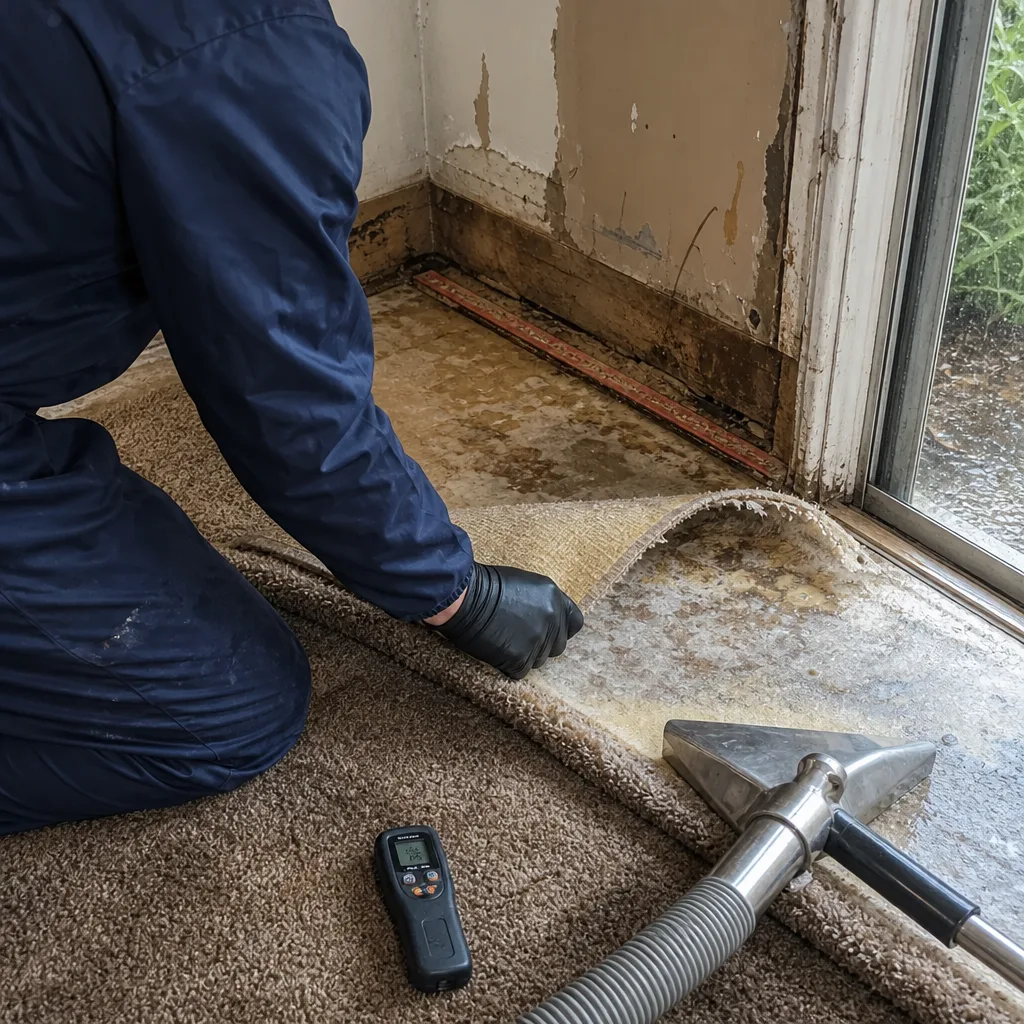
Our crews document every moisture reading with calibrated thermohygrometers and thermal imaging. Psychrometric data - temperature, relative humidity, and vapor pressure differential, the force that drives moisture through materials - is logged daily to IICRC S520 and RIA standards. This documentation becomes your insurance claim’s backbone.
Why Deerfield Beach Property Owners Choose DryMark Restoration Miami
- 45-minute response commitment to Deerfield Beach addresses, measured from dispatch confirmation to crew arrival, because mold spreads exponentially in 72% relative humidity.
- 24/7 live answer by a real person, never an automated system or next-business-day callback queue - emergency lines ring through to our Miami dispatch center around the clock.
- IICRC-certified crews holding WRT (Water Damage Restoration Technician), AMRT (Applied Microbial Remediation Technician), and FSRT (Fire & Smoke Restoration Technician) credentials where cross-training applies to multi-loss scenarios.
- Free visual inspection with moisture mapping and thermal imaging before any commitment or charge.
- Direct insurance billing with photo-documented scopes submitted to your adjuster, not just your carrier’s intake line.
- One team from containment through reconstruction, so the crew that opens your walls also closes them to the building’s approved finish schedule.
Our Mold Remediation Process
1. Inspection & Assessment
We map moisture with FLIR thermal imaging and penetrating probes, identify the water source, classify the contamination level, and photograph every affected surface. In Deerfield Beach’s A1A condos, we also review the building’s ARB-approved interior panel schedule before proposing any wall opening.
2. Containment & Air Filtration
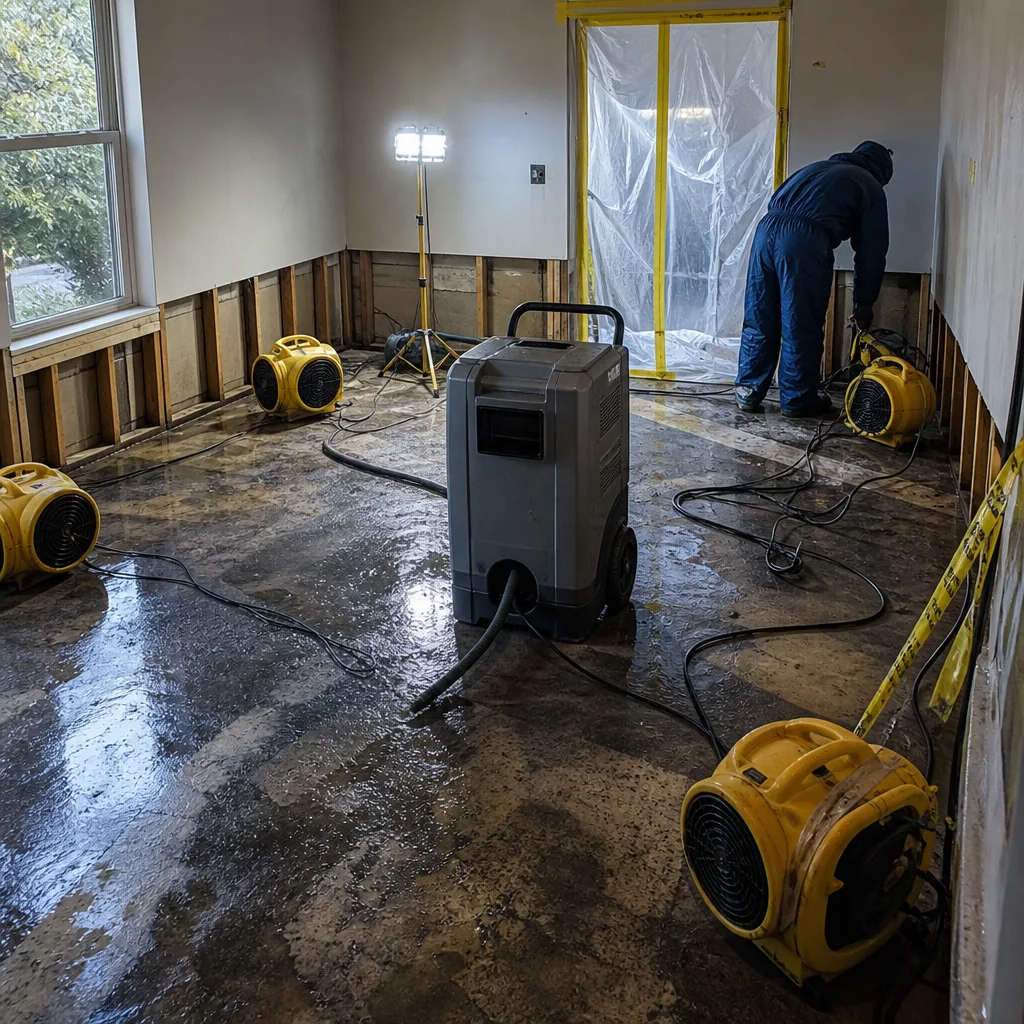
Polyethylene barriers seal the work zone under negative air pressure. HEPA air scrubbers (Dri-Eaz and Phoenix DefendAir units rated at 99.97% efficiency at 0.3 microns) run continuously to prevent cross-contamination through shared HVAC or plumbing chases.
3. Drying & Dehumidification
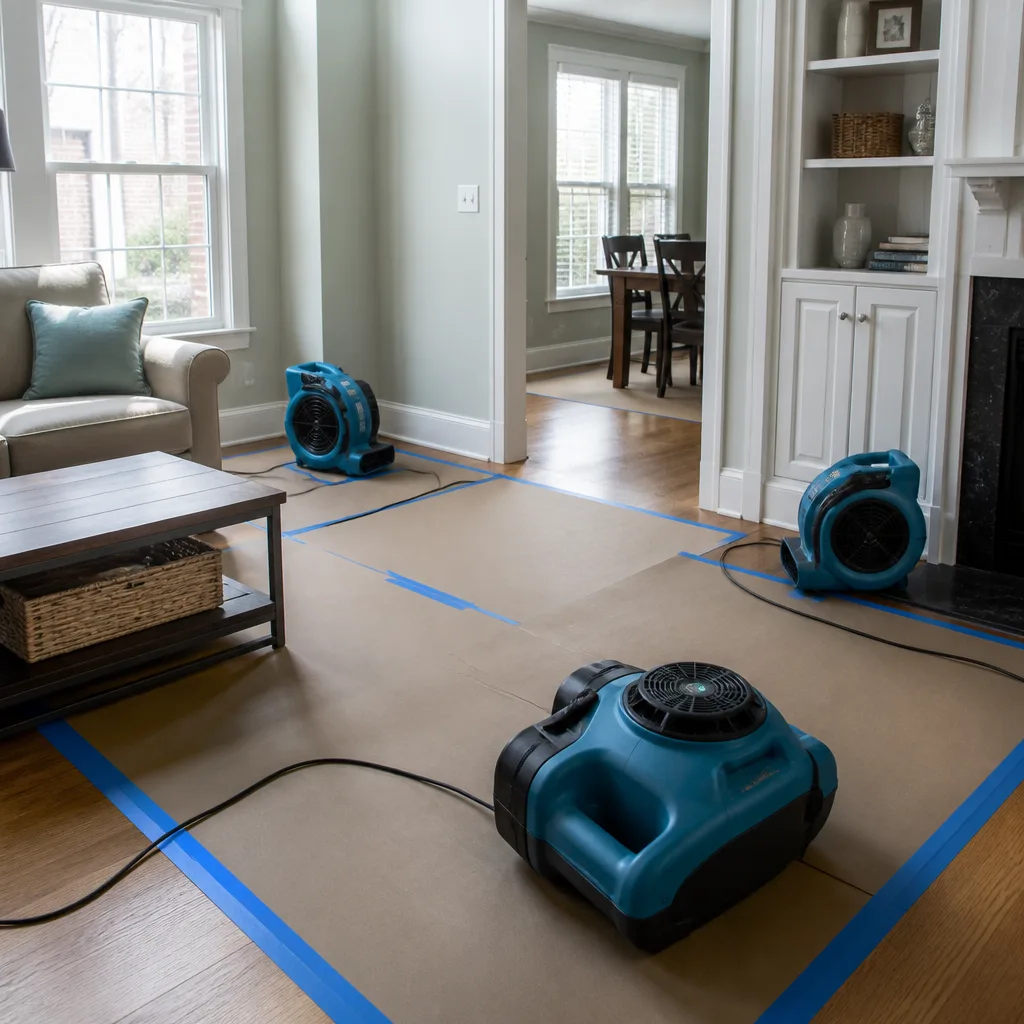
We deploy LGR dehumidifiers and axial air movers to drop the structure to 30-50% relative humidity, the range that halts active mold growth. Daily moisture logs track progress to IICRC S500 standards, with readings taken at identical probe points each visit.
4. Cleaning & Antimicrobial Treatment
HEPA vacuuming removes spore-bearing debris, followed by EPA-registered antimicrobial application to non-porous surfaces. Porous materials that test above clearance thresholds are removed and disposed of as regulated waste.
5. Black Mold & Air Quality Restoration
For toxigenic species including Stachybotrys chartarum, we extend HEPA scrubbing runtime and add activated-carbon filtration. Post-remediation air sampling by an independent third party verifies spore counts at or below outdoor baseline before clearance.
6. ARB-Compliant Repairs & Restoration
Drywall, paint, and finish materials match the building’s approved schedule. We coordinate with your HOA’s property manager and submit finish samples for ARB approval before installation, so your rebuilt wall passes inspection on first review.
Need Emergency Mold Remediation in Deerfield Beach Now?
Crews minutes away, answering live 24 hours a day. The sooner we start, the less it costs.
Working With Your Insurance Company
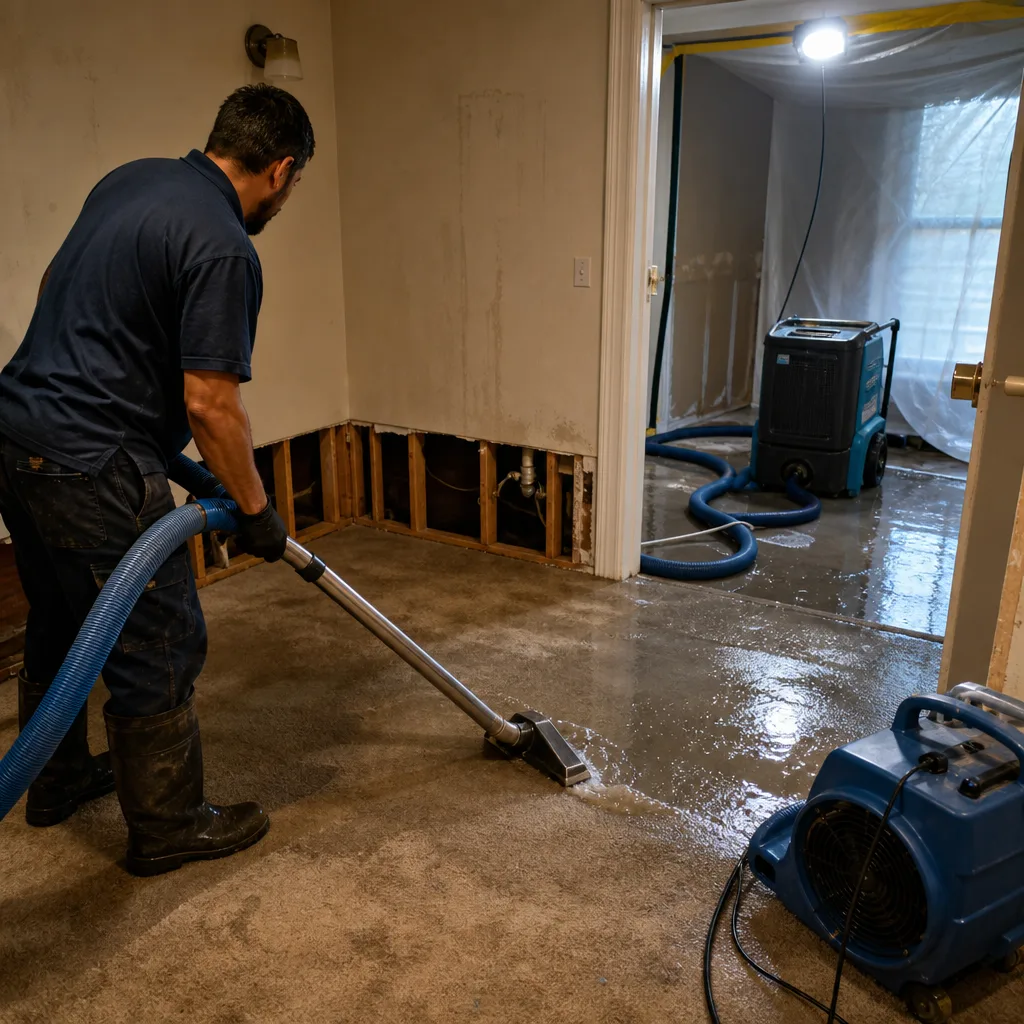
Every mold claim in Deerfield Beach starts with documentation that would survive a desk audit. We photograph the loss from entry to exit, log moisture readings at defined intervals, and produce a line-item scope in Xactimate format that your adjuster can open without translation. Our Mold Remediation team has handled stacked-unit claims across A1A towers where one pipe failure triggered six separate unit-owner policies plus the HOA’s master policy. We know which carrier takes which portion of a shared chase wall, and we document the boundary so no one disputes it later.
Haven Standard, Clause 1: your written price before any work starts. No exceptions. The scope you sign is the scope we execute. If the adjuster requests supplements, we document the change and submit it for approval before proceeding, so your out-of-pocket never surprises you.
What We Provide Your Insurer
- Thorough documentation of the loss
- Photos of all damage, room by room
- Moisture readings and drying logs
- A detailed, line-item scope of work
- Direct coordination with your carrier
Built for Deerfield Beach’s Loss Calendar
January through March brings the dry season, but it’s also when snowbirds return to find leaks that ran undetected through their absence. April and May shift to pre-hurricane preparation, with roof inspections that open old repairs and reveal mold in soffits and attics. June through November is hurricane season proper, and Deerfield Beach’s Atlantic exposure means storm surge from east-tracking systems and Intracoastal backflow from sustained onshore flow. Any roof compromise or window failure in that window saturates insulation and wall cavities before the wind even dies down.
December often delivers the year’s highest humidity as cold fronts stall over warm Gulf Stream water, pushing dew points into the 70s. In the 1960s-1980s CBS homes west of Federal Highway, that moisture finds every crack in aging stucco and every low-slope roof seam that heat-cycled through another summer. Year-round, the salt-air accelerates corrosion in original plumbing, so the leak that starts in January and the leak that starts in July follow the same path: through the wall, into the cavity, feeding mold behind paint that still looks fine from the living room.
Mold Remediation Across Deerfield Beach’s Neighborhoods
The A1A corridor from the Deerfield Beach International Fishing Pier south to the Boca Raton line is dominated by 1970s-1980s concrete mid-rise and high-rise condominiums. These buildings carry original galvanized and early-copper plumbing that fails predictably at joints and bends, and their shared chase walls mean one leak propagates vertically through multiple floors. Our crews are familiar with the specific ARB requirements of buildings like the Royal Colonial and the Cove - the approved paint sheens, the drywall textures, the baseboard profiles that must match exactly.
West of Federal Highway, the Hillsboro Shores and Deerfield Highlands areas shift to single-family CBS construction on larger lots. Here the failure modes are roof-related: flat or low-slope modified bitumen that ponds after storms, or tile underlayment that degraded after decades of UV exposure. Mold in these homes tends to start in attics and soffits, then migrate through ceiling penetrations for recessed lighting and HVAC returns.
The Cove neighborhood and the Intracoastal Waterway docks present their own pattern: elevated humidity from water proximity, plus boats and lifts that concentrate salt spray against exterior walls. Stucco in these areas weeps moisture inward through hairline cracks that never quite dry out. We’ve treated multiple homes near the Deerfield Island Park access where the mold source traced to a single failed weep screed that trapped condensation against the block wall for years.
Quiet Waters Park and the residential streets immediately west represent a transitional zone: older homes on smaller lots with mature landscaping that holds moisture against foundations, plus newer infill construction where additions created roofline intersections that leak in driving rain. Crawl space treatment is more common here than on the beachside, where slab-on-grade dominates.
Specialized Mold Remediation Services We Offer in Deerfield Beach
Mold Inspection & Testing
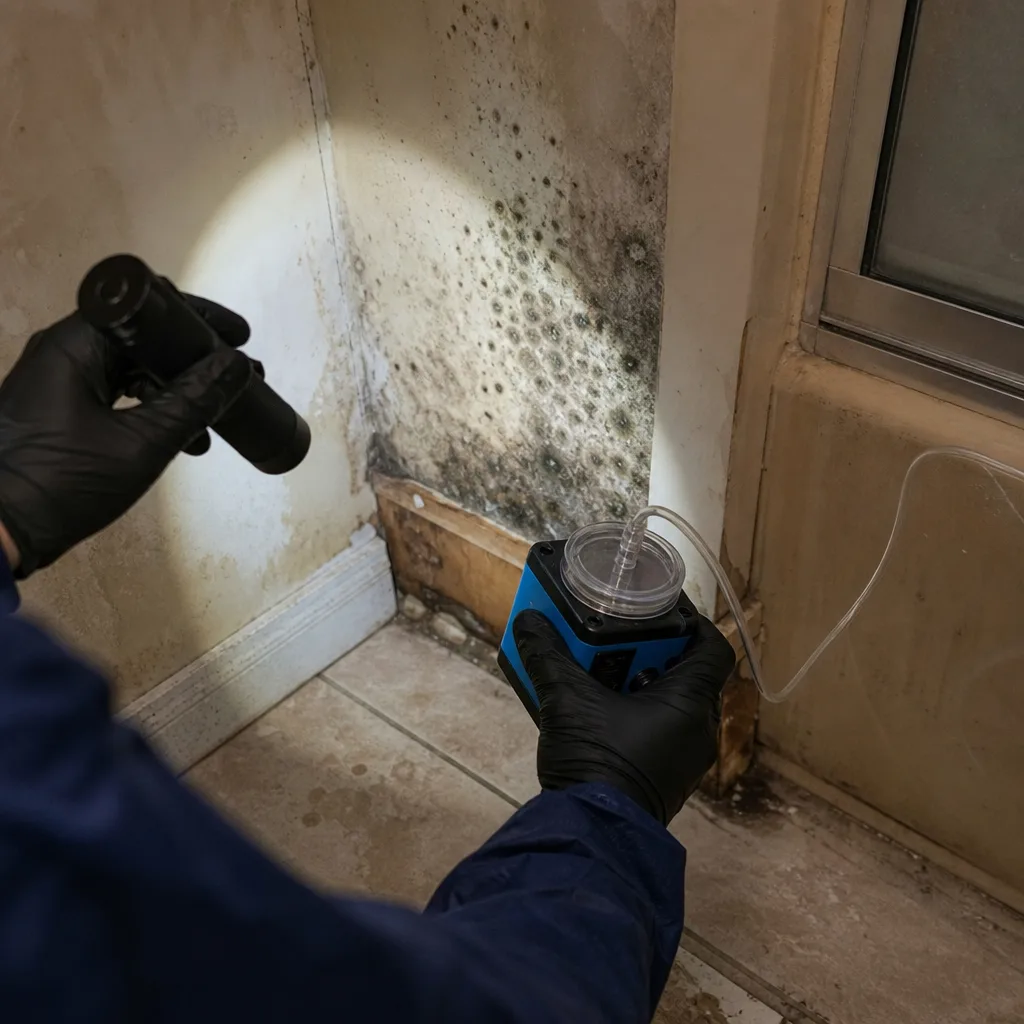
Our inspections start with moisture mapping and thermal imaging, not guesswork. In Deerfield Beach’s A1A condos, we specifically probe shared chase walls and ceiling cavities where original plumbing runs, because that’s where post-Surfside inspections are finding concealed colonization. Air and surface samples go to independent labs; we don’t perform our own testing to avoid conflict of interest.
Mold Removal
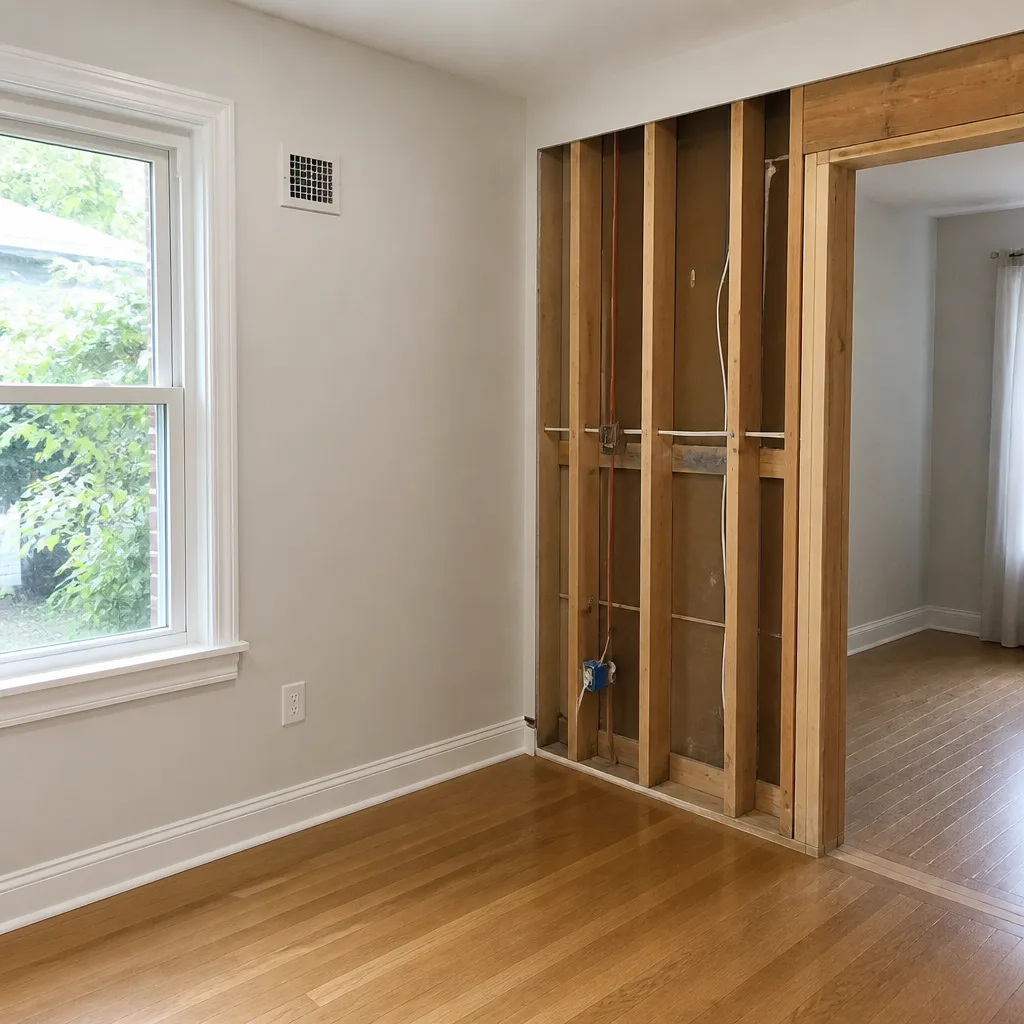
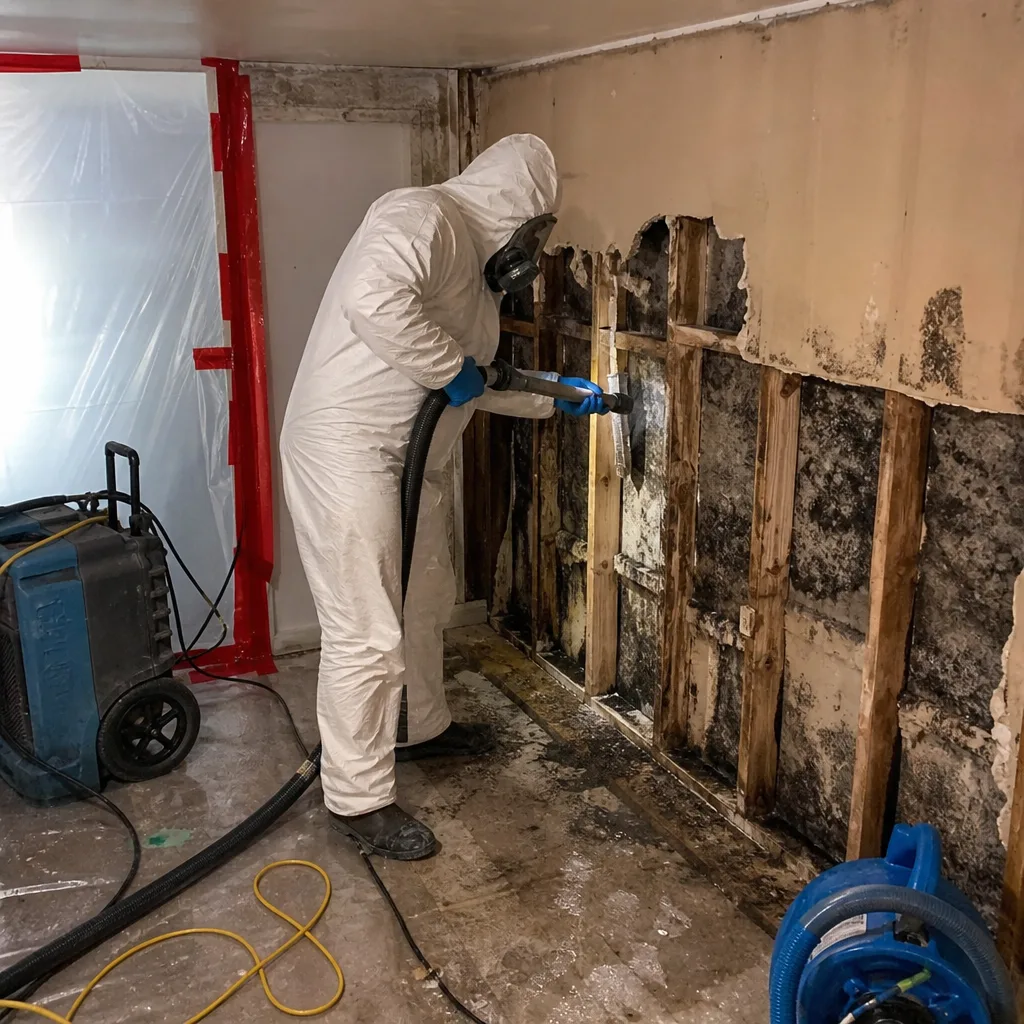
Removal follows IICRC S520 protocols: containment, negative pressure, HEPA filtration, then controlled demolition of non-salvageable materials. In Deerfield Beach’s milestone-inspected buildings, removal often precedes reconstruction that must match ARB-approved finishes, so we document every layer we strip for the association’s records.

Black Mold Remediation
Stachybotrys and other toxigenic species require extended HEPA scrubbing runtime and often activated-carbon secondary filtration. We don’t use scare tactics, but we don’t minimize either. In Deerfield Beach’s humid climate, black mold behind water-damaged drywall is a documented health concern, and our protocols reflect that with third-party clearance testing before reoccupancy.

Air Quality Restoration
Post-remediation, we restore breathable air through extended HEPA filtration and, where HVAC systems were affected, duct cleaning with negative-air whips and contact vacuuming. In condo buildings with shared ventilation, we coordinate with building engineers to isolate zones and prevent recontamination.

Crawl Space Treatment
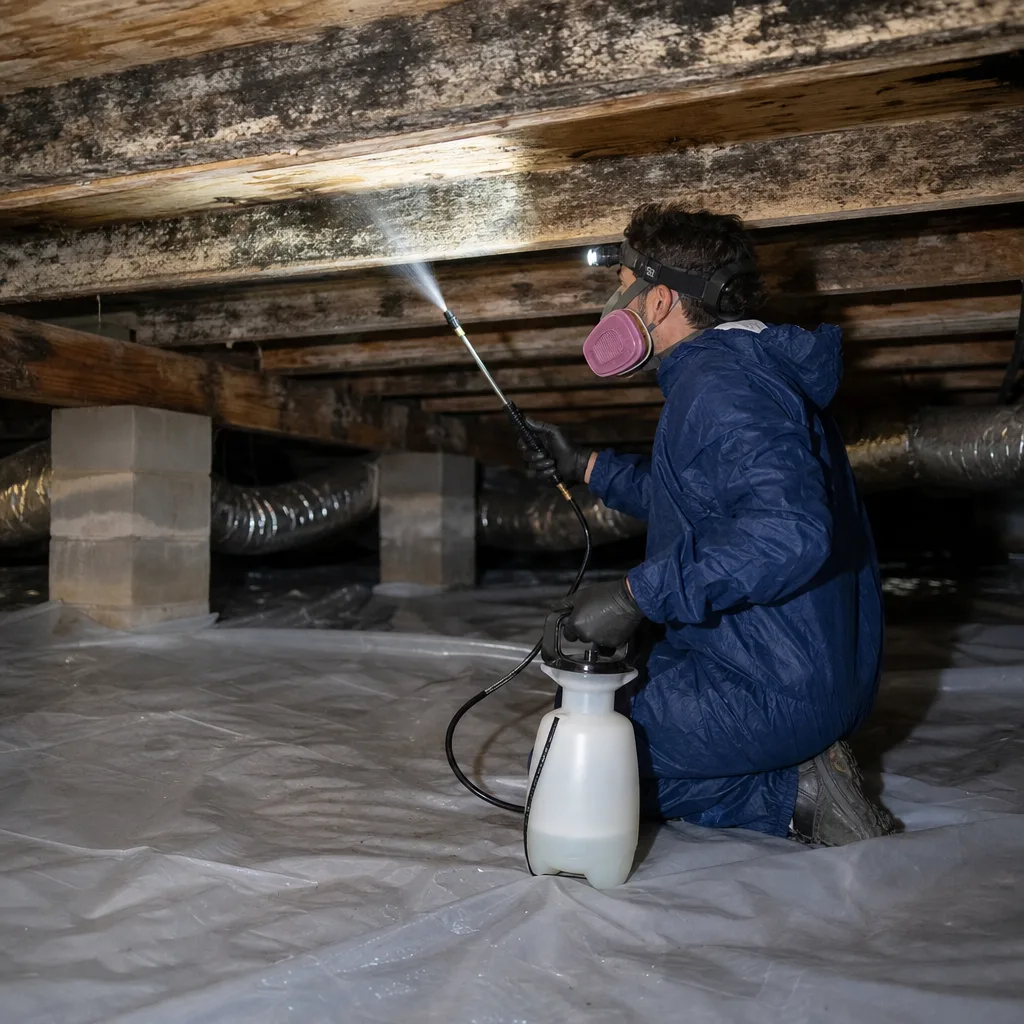
Less common in beachside Deerfield Beach but relevant west of Federal Highway, crawl space treatment addresses ground moisture vapor through vapor barrier installation, dehumidification, and structural drying. We seal vents, install conditioned-air supply where appropriate, and treat framing with borate-based preservatives.
Moisture & Humidity Control
The permanent fix for mold is controlling the water that feeds it. We install permanent dehumidification, improve ventilation design, and specify building envelope repairs that stop intrusion at its source. In Deerfield Beach’s climate, a 50% relative humidity ceiling is the target; we specify equipment and maintenance intervals to maintain it.
What happens when you call
- 1
A real person answersNo phone trees - you reach a local pro.
- 2
You get an upfront price rangeHonest numbers before anyone is dispatched.
- 3
A background-checked tech heads outLicensed & insured, dispatched right away.
- 4
You approve before work beginsNothing starts until you say go.
Mold Remediation Costs in Deerfield Beach, FL
Typical mold remediation in Deerfield Beach runs $1,800-$6,500, with most single-family jobs falling in the $2,500-$4,200 range. Small, contained surface treatments in one room start near $1,800. Multi-unit condo stacks with shared chase wall contamination range $4,500-$6,500 and often higher if third-party clearance testing and ARB-coordinated reconstruction are required.
What moves the price: square footage of containment, number of affected rooms, whether HVAC ductwork requires cleaning, the category of water that caused the mold (Category 3 adds disposal and PPE costs), and whether the job requires independent clearance testing. Insurance typically covers mold remediation when it results from a covered water loss, but policies vary on mold caps and secondary-damage exclusions. We review your policy language and document the causal chain so your adjuster has what they need.
Haven Standard, Clause 1 applies: your written price before any work starts. Bring a competitor’s written estimate and we’ll review it free - our Second Opinion service. No obligation, no pressure.
We Also Serve Cities Near Deerfield Beach
Our crews respond throughout the corridor: Deerfield Beach, Boca Raton to the south, Pompano Beach to the north, and inland to Coconut Creek and Margate. Same documentation standards, same live-answer dispatch, same written-price guarantee.
Serving Deerfield Beach, FL - Our Local Coverage Area
We’re based in the Deerfield Beach area and know this community well. Use the map below to see our service coverage - if you’re nearby, we can almost certainly help.
Deerfield Beach Mold Remediation Questions, Answered
Do I need HOA or ARB approval before you start mold remediation in my Deerfield Beach condo?
Yes, in virtually every A1A and Intracoastal condominium, opening walls or altering finishes requires prior Architectural Review Board approval. We submit our proposed scope, finish samples, and matching specifications to your property manager before work begins. Skipping this step can turn necessary mitigation into a violation that delays dry-out until mold has colonized further. Call (786) 250-0820 and we’ll coordinate the ARB submission as part of your project.
A pipe leaked in the unit above mine - how do you stop mold from spreading through the shared walls?
We establish containment on both sides of the shared chase, run negative air pressure in the affected cavity, and HEPA-scrub the entire vertical stack. Moisture mapping identifies every unit with elevated readings, not just the obvious ones. Treating this as a single-unit job misses cross-contamination that shows up weeks later in adjacent units. We document each unit’s condition separately for individual insurance claims.
What’s the difference between Category 1, 2, and 3 water in a mold job?
Category 1 is clean water from a supply line; Category 2 carries contamination like washing-machine discharge; Category 3 is grossly contaminated sewage or floodwater. The category determines what can be cleaned versus what must be removed. In Deerfield Beach’s older condo towers, Category 1 water often becomes Category 2 or 3 as it wicks through decades of sediment in shared walls. Call (786) 250-0820 for a free assessment of your specific situation.
How do you handle replacements so my repaired wall matches the rest of the building?
We obtain the building’s approved interior panel schedule before opening any wall. Drywall texture, paint color and sheen, baseboard profile, and trim details are matched exactly. Our field vignette: when a washing-machine hose failed on the 8th floor of a 1976 Intracoastal tower off A1A, our crew ran moisture mapping across nine stacked units, found Category 3 water in shared chase walls, and coordinated our scope with the HOA’s ARB so rebuilt walls matched the approved schedule on first review.
Will you coordinate with my HOA’s master policy and my individual unit policy?
Yes. Stacked-unit pipe failures routinely involve both the HOA’s master policy (typically covering shared building elements like chase walls and risers) and individual unit-owner policies (covering interior finishes and contents). We document which materials fall under which policy, submit separate line-item scopes, and communicate directly with both adjusters. This coordination is standard for our A1A condo work and prevents the coverage disputes that delay payment.
How fast can your crew actually get to Deerfield Beach?
Our 45-minute response commitment is measured from dispatch confirmation to on-site arrival. Live phone coverage is available 24 hours a day, 7 days a week with no voicemail on emergency lines. In Deerfield Beach’s humidity, every hour of delay expands the contamination zone. Call (786) 250-0820 now.
How long does mold remediation take from start to clearance?
Single-family jobs typically run 3-5 days of active work plus 24-48 hours for third-party clearance testing. Multi-unit condo stacks with shared chase walls run 7-14 days depending on ARB approval timelines and the number of affected units. We provide a written schedule with your scope, and daily moisture logs document progress so you know where the job stands.
Can my family stay in the home during mold remediation?
For Tier 1 containment in a single room, often yes with the work zone sealed and HVAC isolated. For Tier 2 or 3, or any job involving toxigenic species, we recommend temporary relocation until clearance testing confirms safe reoccupancy. We don’t guess at safety; we reference the third-party lab results. Your written scope includes our reoccupancy recommendation based on the specific contamination profile.
Written by Alicia Brennan, Owner at Back to Dry Restoration, serving Deerfield Beach since 2011.
Mold Remediation in Nearby Areas